

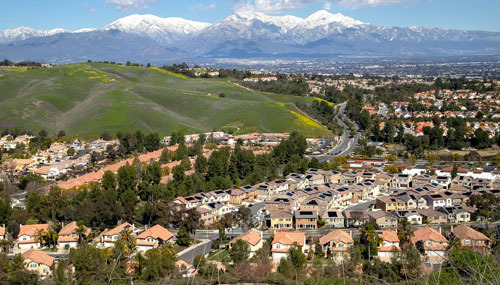
Today, I want to introduce my neighborhood, Chino, CA, step by step from the beginning.
I hope this will be helpful for those interested in this area or considering moving here.
In fact, while organizing this, I was surprised to discover some facts about my own neighborhood that I didn't know.
Chino is a city located in San Bernardino County, California.
It is about 35 miles east of downtown Los Angeles and sits at the western edge of the Inland Empire region.
The area covers approximately 29.8 square miles and was officially incorporated as a city in 1947. It uses two zip codes, 91708 and 91710, and the area code is 909.
The population is around 95,055, making it a mid-sized city. In terms of racial composition, Hispanics make up 52.89%, Asians 21.70%, Whites 15.28%, and Blacks 5.96%.
The Asian percentage, which includes a Korean community, is quite high, so there are more Asian markets and Korean restaurants, like H Mart, than you might expect.
The median household income is $104,682, which is relatively high even within California. I was honestly a bit surprised when I first saw this number.
Compared to the image of the Inland Empire, the income level is quite high.
Many people might think that the name Chino is related to China, but the actual origin is a bit different.
During the Spanish colonial period and the Mexican rule, "chino" was used to refer to people of mixed Asian descent, including Chinese.
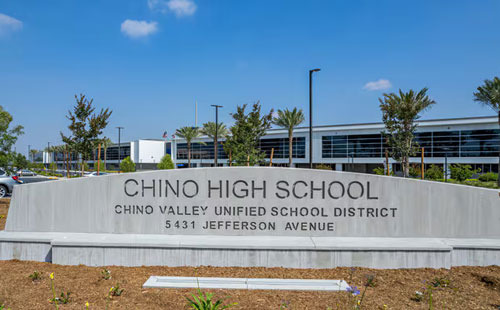
According to the most well-known local legend, in the 1840s, a Native American chief living in this area was given the nickname "Chino" by Spanish settlers due to his curly hair and unique appearance, and later, the ranch in the area was named Rancho Santa Ana del Chino, which solidified the place name.
In the late 19th century, with the arrival of the railroad and the development of agriculture, Chino grew into a center for dairy farming and agriculture.
It was once famous as one of the largest milk-producing areas in the United States, and you can still find traces of that history throughout the city.
When you think of Chino, you can't overlook its dairy farming history. At one time, there were over 400 dairies in the area, and more than 400,000 dairy cows were present.
This was during its peak in the 1970s, but now urbanization has progressed significantly, making it hard to find those traces.
However, the city name itself holds that history. As you drive on the highway, you can still occasionally see areas that have a ranch-like feel. That scenery strangely brings a sense of comfort.
Today's Chino has well-developed residential and commercial areas, and the educational environment is not bad. Highways 60, 71, and 83 run through or are adjacent to the city, so many people commute to LA or Orange County. I remember feeling really unfamiliar when I first came to this neighborhood.
The Hispanic culture is strongly felt, and it is not as glamorous as LA.
But as I lived here, I realized that the natural blend of these diverse cultures is truly the unique character of Chino.
What information are you most curious about regarding Chino?
Is it about schools, housing prices, or restaurant recommendations? Let me know in the comments!
I will delve deeper into that topic in the next post.
 ElecLicense


 US Regional Information Local News |
 nero kim |
 OC Real Estate Business Information |
 Nevada Vegas UNLV |
 My Love DS |
 Raccoon Ramen Night |



 The Bread Lover Runs on Bread |
  Respect Rooftop Bro |
  My Town My Way Blog |
  Hawaiian Dooly Mom |
  Roman Pan |
  Key spots |
  Community Cross |
  Oz's Wow Company |
  Wenda |
  Nuchuhan Exploration BLOG |
  Who's watching? |
  Strawberry Pancake Warrior |
  What can make money? |
  Egg Steamed Pot |
  New Jersey News Local Stories |
  Study Abroad Life Know-How Tips |
  Leapfrog Move |