
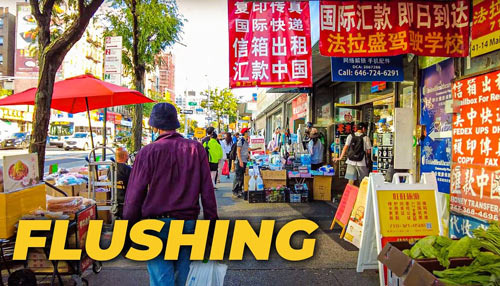
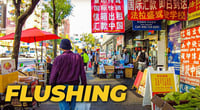
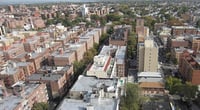
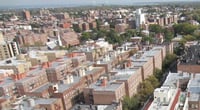
Flushing's evenings have a peculiar charm. As the sun sets and you walk down Main Street, the restaurant signs begin to light up one by one, and elderly shoppers carrying bags slowly head home. You can hear both Korean and Chinese being spoken. However, for those who remember Flushing from long ago, walking these streets today brings a strong sense of how much has changed over the years.
Korean people began to settle in Flushing in earnest during the 1970s and 1980s. At that time, immigrants coming to New York had few options. Their English was limited, and they didn't have much money. Manhattan was expensive, and Flushing was a place where they could afford rent while taking the subway into Manhattan.
Thus, one by one, they gathered. They opened restaurants, laundries, and markets. Churches were established, along with hospitals, pharmacies, real estate offices, and hair salons. Those who arrived first helped newcomers find jobs and navigate apartment hunting. In hindsight, Koreatown wasn't a neighborhood that was planned; it was a community that formed as immigrants banded together to survive.
However, the atmosphere began to change in the 2000s. Especially around the time of the 2008 financial crisis, the presence of the Chinese population and capital in Flushing grew significantly. Of course, the Chinese community had been established in Flushing long before that. Taiwanese immigrants laid the groundwork early on, followed by Hong Kong immigrants, and then a rapid increase in immigrants from mainland China began to change the landscape of the area.
Centered around Main Street, Chinese restaurants, markets, banks, real estate offices, travel agencies, and medical facilities quickly multiplied. With the influx of Chinese development capital, new buildings began to rise where old low-rise commercial buildings once stood. There are now many instances where Chinese signs have replaced the Korean signs that used to be commonplace.
The Korean business district gradually shifted eastward. It moved towards Bayside along Union Street and Northern Boulevard, and Korean families who found stability began to relocate to Bayside, Little Neck, Great Neck, and Long Island. Some even crossed over to New Jersey.
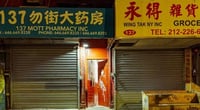
As a result, those who remember the old Koreatown in Flushing may feel a sense of melancholy. Korean shops that once thrived are closing, replaced by new signs. Restaurants that aged alongside their regular customers are disappearing one by one. This doesn't mean that the Korean business district has completely vanished. There is still a strong Korean presence along Northern Boulevard. However, the center has shifted, and the era when Koreans filled the heart of Flushing is passing.
Perhaps this is the nature of a city like New York. The first arrivals create a foundation, and then newcomers come in and change the city again.
As I walk the streets of Flushing in the evening and see an elderly Korean person, I sometimes think about this. That person was likely in their twenties or thirties when they first came to America. They probably opened a store without speaking much English and worked late into the night. They lived for decades to provide for their children and secure a home.
But one day, they look up to find their hair has turned gray, and the neighborhood they built is becoming one of different languages and generations.
This may be the reality of an immigrant's life. At first, they struggle to carve out their place in America. Just when they think they've finally settled in, the world changes around them.
That's why I find an old Korean sign in Flushing oddly comforting.
It's not that it's old and nostalgic.
It feels like there is still a piece of someone's youth behind that sign.
 DreamCore77
 JoseonWiggle


 Arizona AZ Cowboy |
 Valley Hong |
 Mr Oh |
 ollege Mom |

 Helpful Life Stories |
 TwinBee |
 Mist inn |
 Vasila's Newlywed Blog |

 Living in the Eastern United States |

 nova nova |
 springw |
 Woooooah |
 frostpup |
 chocopup |
 Angeles Choi |
 My Heart Popper |
 comova |
 vintago |
 Sky Way |
 Top Beaches |
 folyfoly |
 ground |
 averagestudent |
 hot chocolate |
 SODA MAKER |
 james kim |
 All About Cars |
 lomira98 |
 calmbridge |