

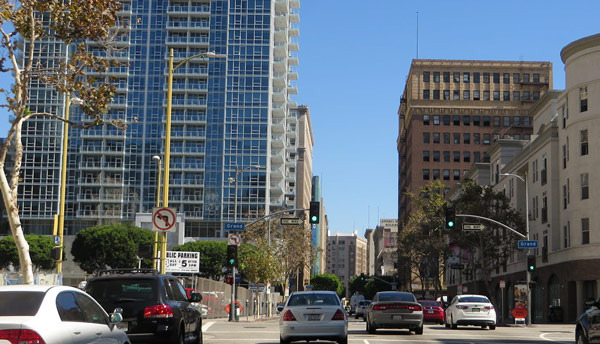
These days, when discussing the real estate market, news about the commercial real estate crisis is frequently seen.
The current office market in major cities like LA is being evaluated not just as a simple economic downturn, but as a fundamental shift in its structure.
The biggest change is in demand. After the pandemic, remote and hybrid work was thought to be a temporary trend, but it has now become a standard operating method for companies. Since employees are not coming to the office every day, companies no longer need large office spaces. There are increasing cases of reducing space, cutting contracts, or even not relocating at all if unnecessary.
The result is serious and frighteningly simple. Vacancies are increasing. This is not just an economic issue but a structural change resulting from a shift in work methods. On top of this, rising interest rates have added further pressure. In the past, commercial real estate was considered a stable asset.
With low-interest loans to buy buildings and rent them out, the structure was to survive on interest. However, interest rates have skyrocketed. The burden of interest has increased while rental income has decreased. When cash flow collapses, loan repayments inevitably become unstable. This is why the market is struggling now.
The numbers are also alarming. The delinquency rate for office loans in the commercial mortgage-backed securities market has risen to 12.34%.
This is the highest level since related statistics began. In the meantime, the financial sector has been using a 'survival strategy' of extending maturities to buy time. This is known as extend and pretend. However, now there are indications that this strategy is reaching its limits. The atmosphere suggests that it is no longer possible to just keep postponing.
This year's situation is even more burdensome. Approximately $100 billion in commercial real estate loans are reaching maturity. Analysis suggests that more than half of these may struggle with normal repayments. Some may buy time through changes in conditions, but a significant number could face foreclosure or sale. Already, about $25 billion in CMBS loans have not been resolved even after their maturity. Pressure continues to build within the market.
The office building Equitable Plaza on Wilshire in LA has entered special management due to loan repayment issues. When the vacancy rate exceeds 40%, it becomes difficult for the revenue structure to hold up. The fact that such cases are increasing is seen as more significant in the market. The problem is not limited to specific areas but is appearing as a trend.
Another concerning aspect is the financial sector. The debt related to U.S. commercial real estate is about $5 trillion. A significant portion of this is held by regional banks. Large banks have the strength to endure. However, small to mid-sized banks, which have a high proportion of commercial real estate, will inevitably face greater burdens. If defaults increase, the weaker links in the financial system may start to shake.
That said, it is hard to believe that an immediate financial crisis-level collapse is imminent. The risks for large banks are still manageable. Policy authorities are also continuously monitoring the situation. However, one thing is clear: the office market is unlikely to return to its previous state. As long as remote and hybrid work do not disappear, the recovery in demand will be limited.
To summarize the current situation: this is more of a structural adjustment than a temporary recession. Offices are under pressure. In contrast, assets like logistics centers and data centers are seeing increased demand. This indicates that not all commercial real estate markets are the same.
Ultimately, the realistic expression for viewing the current market is this: rather than worrying about whether a crisis will come, a quiet structural decline is already underway. Two major trends, interest rates and work methods, have changed simultaneously. This change is an environmental shift rather than a cycle. Using old formulas to calculate will lead to misreading the market.
Real estate results always vary by region and asset type. However, when looking solely at the office market, the atmosphere is clear.
It is more about prolonged pressure than a fear of a sudden drop. The true state of the current commercial real estate market is closer to that.







 moo moo |
 ultron78 |
 garlic bread |
 Sugar Cream Door Bulletproof Noodles |
 urbanmint |
 Weekend Movie Blog |
 Beauty, Health, Lifestyle Blog |
 coloradoman |
 Superman Cat Blog |
 Noodle Noodle |
  Tonky |
  viroma |
  cookie |
  Live and that's it |
  Alright Twain |
  eatontown blog |
  HAWAII Korean Church News |
  Amore |
  linex |
  Balancework |
  laro90 |
  MEDBIO American Doctor Blog |
  SWAT TEAM BLK |
  DREAM BIG |
  frostbite |
  330 Forever My Love |
  El Dorado |
  dralix58 |
  Gorama Round |
  Skydiving |