

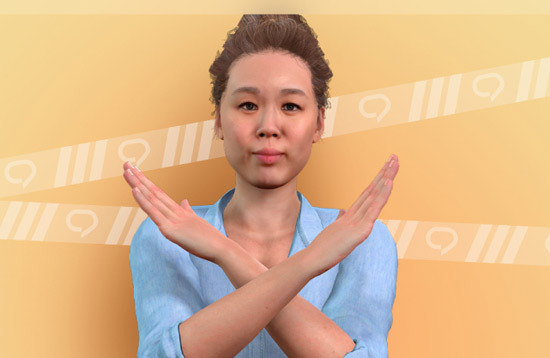
Hello. I am an ordinary Korean housewife living near LA with my husband and daughter.
Today, I want to talk about that one phrase my friends always throw at me when I go back to Korea: "After living in America for 15 years, you must be a native speaker of English now?"
I'm writing this blog to shatter that illusion. It's a bit burdensome that everyone thinks you will naturally become fluent just by living in America.
When I first came to America, I was quite confident. I had a top score in English on the college entrance exam and a TOEIC score in the 800s.
I thought there was nothing I wouldn't understand at the airport, and I was sure I would do well.
But as soon as I arrived, I froze when I heard the phrase "How are you doing today?" I couldn't respond at all.
In my head, I was spinning the textbook phrase "I am fine, thank you, and you?" but what came out of my mouth was "Uh... yes." Seeing myself respond with "yes" to a question about how I felt, I realized that immigrant life wouldn't be easy.
Since then, every time I stand in line at the grocery store, I find myself fiddling with my phone or rummaging through my shopping cart, unnecessarily busy to avoid making eye contact with the cashier.
But there is a reason why my English isn't improving. This area of LA is just a second Seoul. In the morning, I go to H-Mart and say, "Please cut 2 pounds of pork belly." At lunch, I go to Bukchangdong Sundubu and say, "Spicy seafood, please add more kimchi." In the afternoon, I go to a Korean hair salon and say, "Please do a natural root touch-up." In the evening, I watch Korean dramas on Netflix.
There are many times when the only English I speak all day is at Starbucks when I say, "Iced latte, venti, please." Friends who attend English academies in Korea know more words than I do.
Real difficulties began when my kids started school. PTA meetings, playdates. The speed at which American moms talk is like an F1 race. When the moms here laugh among themselves, I try to time my laughter and awkwardly join in with a "Haha." I have no idea why they are laughing.
One day, a teacher said my child is "outgoing," and I thought it meant they liked to go out and was worried, but later I found out it was a compliment for being sociable. I came home, listened to my husband explain, and kicked myself under the blanket.
And the final blow is my habit of randomly overusing "good for you."
Whenever someone says something, "good for you" automatically pops out. If a mom says her child participated in a piano competition, I say, "good for you." If another mom says her husband got promoted, I say, "good for you."
But if someone says they went to the hospital because they were sick, I also say, "good for you." .....
Suddenly, everyone around me goes quiet. Only then do I realize that it was completely inappropriate for the situation.
Making phone calls is still a horror movie for me. When I call an insurance company, a stream of incomprehensible accented English pours out. After shouting "Pardon?" a few times, I eventually use the cheat code, "Sorry, my English is not good." Then the other person suddenly speaks slowly as if they are talking to a kindergarten student.
But if you ask me if this life is unhappy, I would say not at all. Now I have equipped myself with the ultimate boss called shamelessness.
If I can't think of a word, I push through with gestures, body language, and K-body language. I don't care if my grammar is wrong. I'm spending my own money to buy things, so I should be confident; who else will do it for me? Above all, there are really many people like me in LA. We understand each other with our clumsy English and sometimes chat in Korean to relieve the fatigue of the day; it makes me think, what's the big deal about this life?
For those who thought everyone in America speaks English well, did my story shatter that illusion a bit?
The important thing is not English proficiency, but the resilience of us housewives who are feeding our families, raising our children, and getting through each day in a foreign land.
So what if I can't pronounce "water" and say "wawter" or "wawer" and end up pointing to water with my finger? To all the busy moms in America juggling rides for kids and grocery shopping, and to those studying English in Korea, keep it up!







 fortbliss |
 Folding Instructions |
 yentra |
 Cali M Law Group |
 quanta7 |
 Old English |
 US Home Buying Information Home Insurance |
 U.S. Military Recruitment Information |
 K-POP TV News |
 Archaic Kim |
  Tora Tora |
  yellowbutter |
  Dolly |
  US Embassy |
  NYC saladbar |
  Finding Superfoods |
  lightyear |
  song bang |
  vexomo |
  Indiana Jones |
  meloncat |
  novapixel |
  mortrix |
  Esther 1983 |
  Moscow Kim |
  My Two Way |
  toastyfox |
  FLORIDA Acus |
  tracker |