

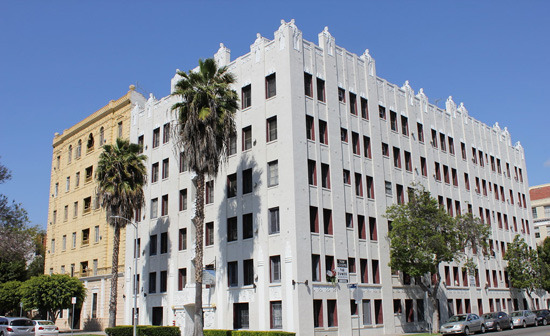
Recently, a common question in LA is, "The news says people are leaving LA because it's expensive, so why aren't home prices and rents dropping?"
Logically, if the population decreases, housing demand should drop, leading to lower home prices. However, LA seems to defy this market logic, maintaining high rents and home prices. Recent statistics show that in 2025 alone, about 10,000 people left the city of LA, and over 62,000 people left LA County as a whole.
Yet, home prices and rents remain among the highest in the U.S. Who is supporting these expensive homes? To understand this irony, we need to look at specific market prices and three underlying structural secrets.
The 'Economic Disparity' Between Those Leaving and Those Arriving
The answer is simpler than you might think. It's because the economic levels of those leaving and those entering are different.
Many of the people leaving LA are lower-middle-class renters who can no longer afford the skyrocketing living costs. They move to places like Texas, Nevada, and Arizona in search of better living expenses. In contrast, those filling their spots are high-income professionals, remote workers from big tech and media companies, and domestic and international investors with capital.
So, while the sheer number of people may have decreased, the average purchasing power and willingness to pay of the remaining housing demand has significantly increased. This so-called 'wealthy minority' that can afford higher prices is replacing existing residents, leading to gentrification on a citywide scale.
The Chronic Supply Shortage in the LA Real Estate Market
For decades, housing supply has not kept pace with population changes or household formation rates. Stringent development regulations, complex building permit processes, California's strict environmental regulations (CEQA), and local opposition (NIMBY) have all contributed to the enormous time and cost involved in building a new apartment complex. Rising construction material and labor costs have further exacerbated the supply drought.
As a result, the actual cost of living in LA is reaching unimaginable levels.
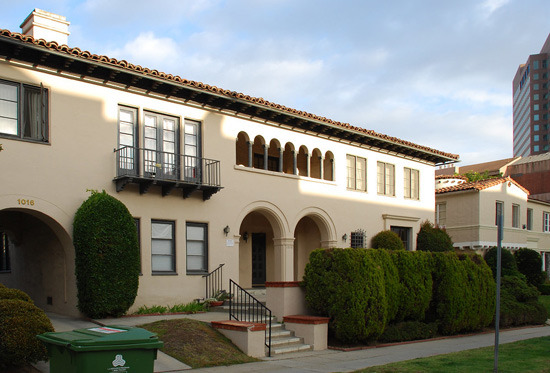
[Key Indicators of the LA Housing Market as of 2026]
Median Home Sale Price in the City: Approximately $970,000 ~ $1,025,000
Average Monthly Rent in the City: Approximately $2,200 ~ $2,500 (for a 1-bedroom)
Median Rent in Preferred Areas: Culver City approximately $3,150, Santa Monica approximately $3,500
Even just to live in a one-bedroom apartment, you need to pay rent ranging from $2,200 to $3,500 a month, which is the current reality in LA. Just because some people have left doesn't mean there are vacant homes piling up; rather, a small number of asset holders are still fiercely competing over an already insufficient housing supply.
The 'Mortgage Rate Trap' Locking Up Listings
Another critical macroeconomic factor is that existing homeowners are not putting their homes on the market.
Homeowners who bought their homes with fixed-rate mortgages at around 3% before and during the pandemic have no reason to sell in the current high-interest environment, where rates hover around 6-7%. If they sell their current home and move to another, they would have to take out a new loan at a much higher interest rate.
This has led to a 'lock-in effect,' where existing homes that should be on the market are completely locked up. While the number of buyers may have decreased, the available properties are disappearing at a much faster rate, preventing prices from falling and even causing them to rise.
Once, Los Angeles was a land of opportunity where dreams were pursued. It was a dynamic city where the film industry, music, and immigrants from around the world came together to strive for success.
However, today's LA is increasingly transforming into a city of cold capital. Young artists and startup founders are packing their bags, unable to endure the suffocating rent, while hardworking middle-class families are being pushed to the outskirts or to other states. And that glamorous void is being filled with the capital of high-income asset holders.
For those who expected that the population decline in LA would lead to a crash in home prices, the market is responding with cold statistics. The issue is not the people but the lack of 'homes available for purchase.' In this irony, the most bitter truth may be that what is disappearing most rapidly in LA is not the population itself, but the 'hope' that ordinary people can own a home in this city.
 mintcitytraveler1973
 Beer Man




 garlic bread |
 Sugar Cream Door Bulletproof Noodles |
 urbanmint |
 |
| 
 Premium Gas Camp |
 Weekend Movie Blog |
 coloradoman |
 Victory 1988 |
 Superman Cat Blog |
 Beauty, Health, Lifestyle Blog |
  Round and Round Children's Song Kingdom |
  Mia Flori |
  nova nova |
  healthy |
  leaves |
  sparkling |
  maryland park |
  persiste |
  conte |
  blueman |
  Going Once |
  Eldorado 88 |
  cherrydino |
  middlekick |
  Moscow Kim |
  nivex85 |
  quanta7 |
  Tomato Health Club blog |
  horse |