

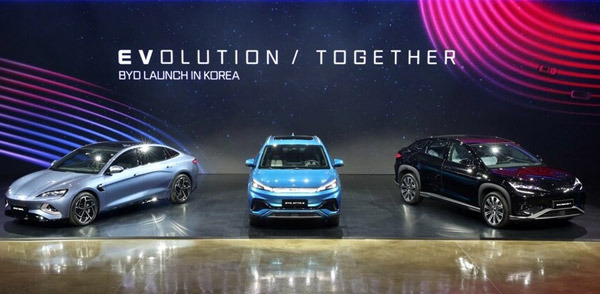
These days, when I talk to my family in Korea, there's a common question. "Hey, how much is it to buy a BYD there?"
My answer is always the same. "You can't buy it. They don't sell it at all."
Then everyone asks why the U.S. doesn't just import the cars that consumers want to buy.
I understand that sentiment. But still, the U.S. blocks Chinese electric cars. And it's not just one party; both the Democrats and Republicans are in agreement on this.
When was the last time you saw both parties in Washington come together like this? It shows that this is not a trivial matter.
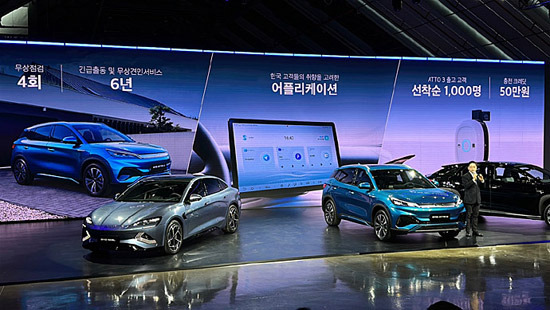
First, let's look at the numbers. The average price of a BYD car sold in Europe is $45,083. The entry-level model starts at $28,000.
So if BYD enters the U.S. market, Tesla, Ford, and GM won't be able to compete on price.
Even a simple comparison shows it's over ten thousand dollars cheaper. And that's for the same class of vehicles.
Here, Koreans might ask, "Isn't that a good thing for consumers?" In the short term, yes.
But this isn't just about price competition. It's a game to swallow the entire industry whole.
The reason China can lower EV prices so much is simple. The government subsidies are enormous.
If American car companies compete under the same rules, they will all lose money.
If Detroit collapses once? It's over. It would take 30 years to rebuild.
Look at what happened to the semiconductor industry. Once they lost it, they are now spending billions of dollars just to regain it.
That's why Trump imposed a 100% tariff on imported Chinese cars. In other words, a $28,000 BYD would become $56,000 in the U.S.
Zero price advantage. And now, a bill called the 'Connected Vehicle Security Act' has come out in Congress.
It was co-sponsored by Republican Senator Bernie Moreno and Democratic Senator Elissa Slotkin. It's a bipartisan effort.
The real point of this bill is different. It's a security issue.
These days, a car is not just a car. It's a smartphone on four wheels. It has cameras, microphones, GPS, and internet connectivity.
It records your driving routes every day. Autonomous driving data is sent to the cloud.
Where does that data go? To Chinese company servers. According to China's National Intelligence Law, if the Chinese government requests it, they have to hand it over.
If someone living next to a U.S. military base drives a BYD, that car records and sends data about who comes and goes every day.
So as of 2026, it is virtually impossible for an individual to bring a BYD into the U.S., register it, and drive it.
It's not just one or two barriers; there are five barriers in total. Let's look at them one by one.
Barrier 1: Tariffs. 100%. 100% is just the starting point, and there are additional tariffs, import taxes, registration fees, and certification fees that follow.
Barrier 2: No formal registration allowed. In the U.S., to operate a vehicle, you must obtain NHTSA (National Highway Traffic Safety Administration) and EPA (Environmental Protection Agency) certifications.
Barrier 3: Blocking third-country circumvention. This is the truly scary part for the U.S. BYD could build factories in Mexico and Brazil and try to claim, "This is a Mexican product" to benefit from USMCA (United States-Mexico-Canada Agreement). But the U.S. government was already sharpening its knives. They established a policy stating, "Vehicles produced by Chinese-owned companies are not eligible for agreement benefits."
Barrier 4: The trap of the 25-year rule. "But can't you bring in a car that's over 25 years old?" Yes, there is a 25-year rule in the U.S. that exempts cars older than that from safety/environmental certification.
However, BYD was founded in 1995. There can't be a 25-year-old BYD electric car. The company only started making EVs in the 2010s. The rule exists, but there are no applicable cars.
Barrier 5: Temporary import for foreigners. This might seem like a loophole. A foreign tourist with a BYD registered in Mexico or Canada can bring the car in for a short visit.
For up to 12 months. But once that period ends, they must leave the U.S. with the car. Can a U.S. resident take over and register it? No. CBP (Customs and Border Protection) tracks all vehicle VINs.
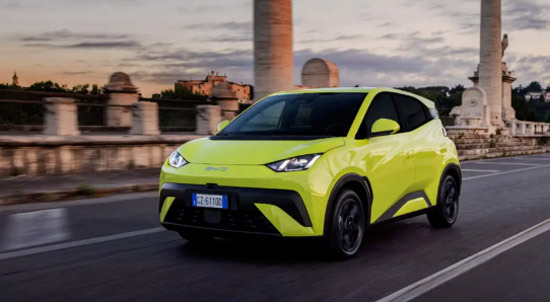
Interestingly, BYD is not sitting idly by. They have filed a lawsuit in the U.S. Court of International Trade (CIT) to invalidate the tariffs. Their argument is, "This is unfair discrimination."
They are spending millions of dollars on legal fees to fight this case.
But honestly, even if they win this lawsuit, they still have a long way to go.
Just because one tariff is invalidated doesn't mean that NHTSA certification, EPA certification, data security regulations, and third-country circumvention barriers will all be lifted.
The key point is that what the U.S. has put in place is not a single policy but a multi-layered defense in depth.
Interestingly, BYD's U.S. branch CEO Stella Li said in an interview, "The U.S. market is too restrictive."
Translated? It means, "We can't operate freely like we usually do."
That is proof that the U.S. is still alive and kicking. Look at Canada. They tried to negotiate a trade agreement with China and got an earful from Trump. The Canadian automotive industry was on the verge of collapse as well.
So what's the conclusion? It can be frustrating that you can't buy Chinese EVs in the U.S.
When someone in Korea says, "Hey, that car looks great," it can be envious. But think of the 100% tariff and the legislation as an expensive insurance policy.
It's disappointing not to be able to buy a $28,000 BYD. But I believe it's better than losing the entire American automotive industry.
 BurgerMan
 AliAluAlo
 SunrayView






 Strawberry Pancake Warrior |
 My Town My Way Blog |
 celion78 |
 Only Dentalbay |
 Snack-like Blog Writing |
 Anjollinya Blog |
 Beauty, Health, Lifestyle Blog |
 California Dreamer |
 Study Abroad Life Know-How Tips |
 Good Karma |
  Wenda |
  Roman Pan |
  Nuchuhan Exploration BLOG |
  Who's watching? |
  What can make money? |
  Egg Steamed Pot |
  New Jersey News Local Stories |
  My Love DS |
  Leapfrog Move |
  US Regional Information Local News |
  Finding Superfoods |
  COLO COLO |
  morixa |
  nero kim |
  USA Hyundai Kia |
  OC Real Estate Business Information |
  Splendid Mission |