

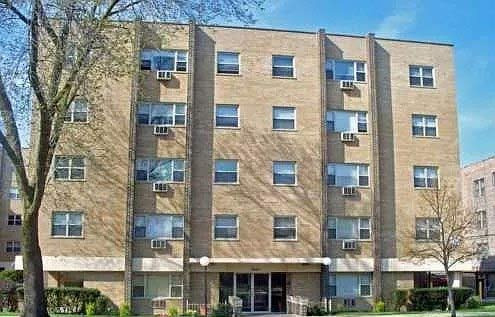
When looking for a 1-bedroom apartment in Chicago, one realizes that even within the same city, there are significant price differences depending on the neighborhood.
Wicker Park and Uptown are both in Chicago, but their rental prices differ, and so do those in Loop and South Chicago.
Here's a summary of the average 1-bedroom rental prices by area in Chicago for 2026.
Based on the overall average for Chicago, the rent for a 1-bedroom apartment is projected to range from $1,800 to $2,000 per month in early 2026, according to data from platforms like Zillow and Rent.com.
This figure represents the citywide average, so when planning your actual living budget, it's essential to examine each neighborhood closely.
Compared to New York or San Francisco, this is relatively reasonable, but it's still high when compared to other Midwestern cities.
Rental prices are highest in downtown Chicago and nearby upscale areas. In premium downtown neighborhoods like Streeterville, Gold Coast, and River North, 1-bedroom apartments can often rent for between $2,500 and over $3,500 per month.
Popular northern residential areas like Lincoln Park, Lakeview, and Wicker Park typically see rents ranging from $1,800 to $2,500 per month. These neighborhoods are rich in amenities such as restaurants, cafes, and shopping, and they have good access to public transportation, ensuring steady demand.
These areas are not just neighborhoods with homes; they have plenty of cafes and restaurants within walking distance, and public transport access is excellent.
Using the CTA Red Line or Blue Line makes commuting to downtown relatively convenient. In Chicago, neighborhoods with high walkability tend to have higher rental prices.
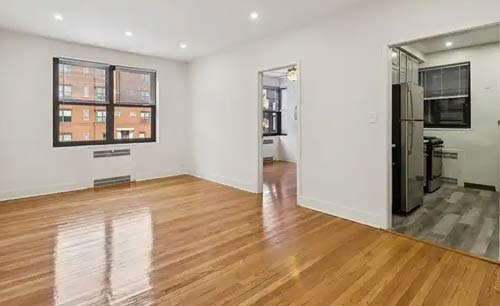
On the other hand, areas like Uptown, Rogers Park, and Albany Park, where many Koreans reside, are relatively more affordable.
In these neighborhoods, 1-bedroom apartments typically rent for around $1,200 to $1,600 per month. Of course, there are variations depending on the age of the building and location, but compared to popular areas, you can save hundreds of dollars each month.
This is particularly advantageous for Koreans preparing to settle in the early stages of immigration.
There are nearby Korean markets, Korean restaurants are easy to find, and it's also easy to connect with churches or communities that speak Korean. This can be a significant advantage for those starting a new life in the U.S.
It's also important to consider suburban areas.
Evanston, Skokie, and Niles have long been representative northern suburbs of Chicago with a significant Korean population. The rent for 1-bedrooms in these areas is generally around $1,200 to $1,800.
Additionally, Naperville and Schaumburg in the western suburbs are popular choices. They are favored by families due to good school quality and stable safety.
However, suburban living has its clear downsides.
The main issue is transportation. While it's possible to get by in downtown Chicago using the CTA trains and buses, having a car is practically essential in the suburbs. Commute times can also be longer. You end up paying for car maintenance and time in exchange for saving on rent.
Moreover, there's one aspect that many people overlook: heating costs.
Chicago winters can feel particularly cold, often dropping below -20 degrees, and strong winds can make it feel even colder.
Therefore, when reviewing a rental agreement, it's crucial to check not just the monthly rent but also whether heating costs are included. Some buildings include heating costs, while others charge separately. In winter, this can lead to differences of tens of dollars, or even over $100, each month.
It's also important to check the deposit conditions. In Chicago, it's common to require the first month's rent and a security deposit equivalent to one month's rent. Conversely, some large apartment complexes may ask for the first and last month's rent instead of a deposit.
Ultimately, the most important factor when looking for a rental in Chicago is not just the price. You need to consider your job location, whether you own a car, how often you use public transportation, access to the Korean community, and whether heating costs are included.
Many people end up signing a lease based solely on the rent amount listed in the advertisement, only to find that their living expenses are much higher than expected. The first principle of finding a good home in Chicago is not to get the cheapest option, but to choose a neighborhood that fits your lifestyle.
 ABCDUSA



 garlic bread |

 urbanmint |
 |
| 
 Premium Gas Camp |
 Rice Shop Uncle BLOG |
 Illinois Mom |
 Khan Film Blog Production |
 Nanana Nanana Nanana |
 Enjoyable American Life Diary |
  novapixel |
  mortrix |
  ollege Mom |
  Esther 1983 |
  Arizona AZ Cowboy |
  fortbliss |
  Moscow Kim |
  My Two Way |
  toastyfox |
  FLORIDA Acus |
  tracker |
  TONTON COFFEE |
  sunrise |
  ultron78 |
  uplifted |
  Folding Instructions |
  same same life |
  USA Hyundai Kia |
  morvex37 |
  BOL SA RAM |