

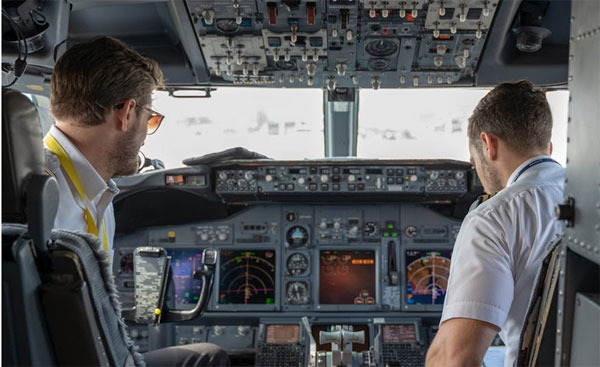
The top 3 American airlines are Delta, United, and Southwest.
At first glance, these companies seem global and full of diversity, but when you look at the racial composition of airplane pilots, the reality is quite different. It is clear that the industry is going against the trend of a majority of white males.
It's not that Asians make up only 7% of the U.S. population, but rather that this industry has a firmly established white-centric structure, leaving little room for Asians to break in.
When you see pilots boarding the plane at the airport, the answer becomes apparent. They are almost all white. The reasons are even more obvious upon closer inspection. Becoming a pilot requires flight training that costs at least $70,000 to $100,000, and the process of accumulating the 1,500 hours required by airlines inflates costs significantly.
However, regional airlines offer low starting salaries and erratic schedules, making it burdensome for families to support aspiring pilots. This is in stark contrast to the preference for stable careers like medicine, pharmacy, and engineering in Asian cultures, leading to a structure where "reality takes precedence over dreams."
The lack of representation is an even greater barrier. For decades, the U.S. aviation industry has been a stronghold of white males, and Asian pilots are much rarer than Asian doctors in hospitals. Dreaming of a path you've never seen is inherently difficult.
Moreover, since most commercial pilots have military backgrounds, this gap has widened. A significant number of U.S. commercial pilots come from the Air Force, where the percentage of Asian pilots is very low. It is natural that if there are few in the military, there will be few in commercial aviation as well.
The culture in the aviation industry is also outdated. While they claim to promote diversity, the internal networks are actually closed and revolve around "who recommended whom" and similar practices that have persisted for a long time. Entering this ecosystem as a minority is akin to threading a needle. The actual statistics speak for themselves: 80-85% of pilots are white, while Asians make up only 2-4%. It's not just that they appear few; they are virtually absent.
In this reality, it is understandable that Korean pilots often prefer China over the U.S. It's not just because of higher salaries; the overall "treatment package" is much more aggressive than in the U.S. Chinese airlines often offer salaries in the hundreds of thousands of dollars, housing support, family visas, and even education costs for children to attract pilots.
In the U.S., airlines accumulate experience, leading to lower starting salaries and slower promotions, while in China, experienced pilots are treated as captains right away or have their years of service recognized, significantly widening the perceived income gap. The schedules in China are also more flexible. They create flight patterns for pilots living abroad and guarantee longer off periods, making it much easier to spend time with family.
Above all, China is a market where the demand for aviation is skyrocketing, but the supply of pilots is woefully inadequate, actively throwing offers at foreign pilots. Ultimately, the proportion of Korean and other Asian pilots in American airlines is expected to remain lower than their population ratio in the U.S.







 My NYC |
 coloradoman |
 Living Economy Information Blog |
 Tomato Health Club blog |
 Banana Style Life |
 Weekend Movie Blog |
 Beauty, Health, Lifestyle Blog |

 Superman Cat Blog |
 novapixel |
  Anytime Journey |
  Mrs. Duluth |
  jaxter |
  Atlanta Mama |
  Baguette Blog |
  US Embassy |
  Korean Mom |
  moo moo |
  Mr Oh |
  forevergee |
  festival |
  manchester |
  constant |
  Leapfrog Move |
  vibranto |
  Tora Tora |
  yellowbutter |
  Dolly |
  NYC saladbar |