

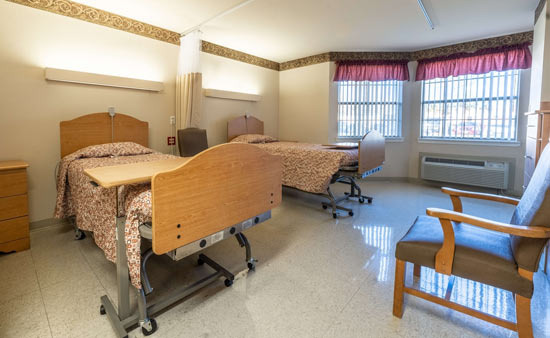
The nursing home systems in South Korea and the U.S. are quite different.
In South Korea, families often take care of their loved ones until it becomes too difficult, at which point they may move them to a nursing hospital or nursing home.
Thanks to long-term care insurance, the out-of-pocket expenses can be significantly reduced, making the financial burden lower compared to the U.S.
Of course, caregiving costs or non-covered expenses may arise separately, but the national system provides a certain level of safety net.
In contrast, in the U.S., the options vary greatly depending on whether one has money or not.
If you enter a nursing home in the U.S. at your own expense, it typically costs around $120,000 to $150,000 per year.
This is an enormous burden. Additionally, there can be significant regional differences; for example, in Texas, where costs are relatively low, it can be around $80,000 per year, while in some areas of New York, California, and Alaska, facilities can exceed $200,000 annually.
Therefore, when discussing asset planning after retirement in the U.S., "nursing home costs" are considered just as important as "home value."
It is not uncommon for retirement savings accumulated over a lifetime to be depleted by nursing home expenses in just a few years.
So, what happens to those who do not have money?
This is where Medicaid comes into play.
Many people confuse Medicare and Medicaid; Medicare primarily supports short-term care for hospital treatment or rehabilitation.
Generally, it provides some support for up to 100 days if certain conditions are met after a hospital stay, but it does not cover the costs of long-term nursing home care.
The largest financial supporter for long-term care is Medicaid.
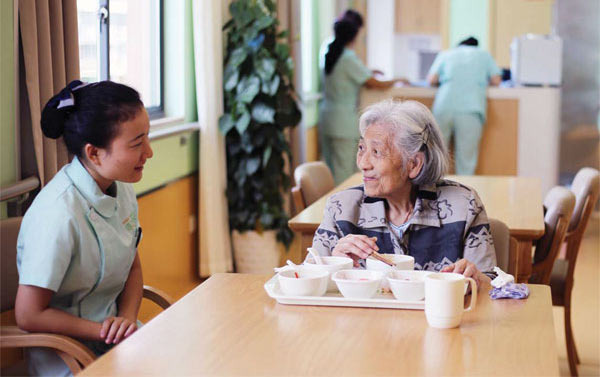
If you have assets above a certain level, you often have to cover costs with your own assets first, which is commonly referred to as 'spend-down.'
Many people ask, "Do you need to be a citizen to enter a free nursing home?"
U.S. citizens are certainly eligible, but lawful residents with certain qualifications, such as green card holders, can also receive long-term care benefits according to each state's Medicaid regulations.
On the other hand, those on simple visitor or tourist visas find it difficult to expect such long-term public welfare benefits. Additionally, the concept of a 'free nursing home' is closer to entering a facility where Medicaid covers the costs.
Interestingly, while there are cases in the U.S. where children rarely visit their parents, there are also many families that come together weekly.
Family relationships and economic conditions have a greater impact than cultural differences. Just as there are dutiful and unfilial children in South Korea, the same is true in the U.S.
Ultimately, the message conveyed by the text in the photo transcends borders.
Old age cannot be resolved solely with money, nor can it be resolved by relying only on children. Maintaining health for a long time, preparing financially, and not losing human relationships as one ages may be the most significant preparations for old age.
When you hear that the most common sounds in nursing homes are from TVs or radios, not because machines replace people, but because the silence is too lonely, it makes you reconsider how meaningful a phone call with your parents can be.
 SpringPlus
 TunaSnackRec





 You Only Live Once |
 Texas Real Estate Blog |
 zentar |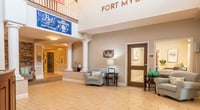
 seouljung |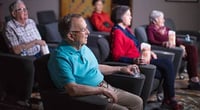
 AliAluAlo Blog |
 Study Abroad Life Know-How Tips |
 Sunny's Travel in America |
 Victory 1988 |
 coloradoman |
  Make My Day |
  Fros Pro |
  lioness |
  La Bean |
  American History This and That |
  Monte Sori |
  U donn |
  Sarah's Blog |
  Holy Cow |
  monster |
  houston mama |
  Reggae Party |
  Thou Thou |
  Tennessee Land |
  custardnew |
  Chimhanbang Korea ACU |
  See South Carolina |
  dorex |
  Taek Jun |
  Choi Cho |