

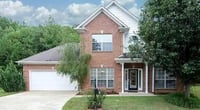
A recent client who reached out for advice was planning to purchase a two-bedroom townhouse near downtown Birmingham for $210,000. They estimated the monthly rent at $1,381, which is the average for a two-bedroom in Birmingham according to RentCafe for 2026, but they were unsure how to evaluate the yield based on this figure. When faced with such questions, it's often clearer to break it down step by step.
The first question that comes to mind is what the total yield is. The annual rental income is $1,381 multiplied by 12, which equals $16,572. Dividing this by the purchase price of $210,000 gives a total yield of 7.9%. Even using the overall average rent in Birmingham of $1,150 results in a yield of 6.6%, which is quite high compared to many major cities across the country. In fact, according to Zillow, the average home value in Birmingham is $137,168, significantly lower than the national median, which helps boost the total yield.
The next question naturally follows: how much is left after expenses? The effective property tax rate in Birmingham is 0.73%, which is lower than the national median of 1.02%. For a property priced at $210,000, the annual property tax would be about $1,533. Adding insurance, maintenance costs (around 1% of property value, or about $2,100 annually), and vacancy losses, applying the 50% rule means operating expenses would be approximately $8,286, which is half of the annual rental income. The net operating income (NOI) is $8,286, resulting in a cap rate of 3.9%. The difference between the total yield of 7.9% and the cap rate of 3.9% reflects the impact of accounting for expenses versus not accounting for them.
The third question is how things change if a loan is involved. The cash-on-cash return considers the actual cash invested, meaning the down payment and closing costs, compared to the pre-tax cash flow. Assuming a 20% down payment, the actual cash invested for a $210,000 property would be around $42,000 plus closing costs. If the pre-tax cash flow, accounting for loan interest, is about $3,500 annually, the cash-on-cash return could rise to around 8%, due to the low purchase price resulting in a smaller down payment burden. However, a high cash-on-cash return does not necessarily indicate strong underlying asset profitability, and as the proportion of debt increases, the risk associated with interest rate fluctuations also rises.
According to RentCafe, rental prices in Birmingham have increased by 2.09% over the past year. The fact that rental prices are steadily rising in a market with low sales prices signals that there is demand for new residents and jobs. However, there can be significant variations within the area, so it's safer to check the recent rental trends for the specific zip code when selecting properties.
Applying the 1% rule, 1% of $210,000 is $2,100, but the actual rent of $1,381 falls short of this. However, the gap is not large, and properties that come close to the 1% rule do occasionally appear depending on location and condition.
Areas frequently sought by Korean families in Birmingham include Homewood and Mountain Brook, which tend to have high ratings on GreatSchools, but this also leads to higher sales prices and rents. School district boundaries change frequently, so it's advisable to verify the assigned school for a given address before purchasing. If coming from an area with high property taxes, Birmingham's lower effective tax rate may be a welcome change, but it's important to note that Alabama's unique class-based assessment methods can vary by county and city.
In the long run, it's important to approach not just rental income but total returns. In addition to the monthly cash flow, one should consider the asset accumulation from loan principal repayment, potential appreciation, and tax benefits from depreciation. Markets like Birmingham, with low purchase prices, may yield relatively high cap rates but slower appreciation, making them more suitable for cash flow-focused investors.
This article is not investment or legal advice, and it is recommended to consult with a real estate professional before making any contracts.
 AutoOkay
 ShareDonkey





 |
| 
 Premium Gas Camp |
 CA Real Estate |
 cheesepup |
 breezem |
 Information on All Regions of the United States |
 Alabama Bang |
 Skyline |

 shadow 007 |
  sun walker |
  Choco Choco Star |
  midnight blue |
  honeypot |
  summer |
  adventure77 |
  flexible |
  Shintongbangtong Shin Naerin James Park |
  truepixel |
  Kathy's Blog |
  Hae Naem |
  quatspace |
  Marisol |
  Glassroom |
  Granola |
  joyfull yang |
  Olivia's Blog |
  Living in America and Writing Essays |
  Piano Teacher Blog |