
Texas is home to a variety of cities as vast as its land area.
Below are the top 10 cities in Texas, selected based on population size and regional characteristics.
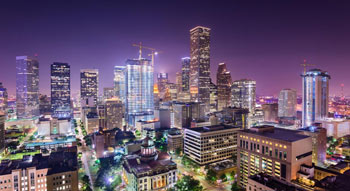
1. Houston
- Total Population: Approximately 2.3 million
- Korean Population: Estimated around 30,000 to 40,000
- Characteristics: The energy (oil and gas), medical and bio, and aerospace (NASA) industries are well-developed, with a diverse immigrant community. A Korean business district has formed in the southwestern area of Houston (e.g., Belair Blvd).
2. San Antonio
- Total Population: Approximately 1.5 million
- Korean Population: Estimated around 5,000 to 10,000
- Characteristics: Deeply influenced by Spanish and Mexican culture, with many military bases and related industries. The Korean population is relatively small compared to Houston and Dallas, but it is steadily increasing.
3. Dallas
- Total Population: Approximately 1.3 million (over 7.5 million in the DFW metropolitan area)
- Korean Population: Tens of thousands in the city, around 100,000 in the DFW area
- Characteristics: The finance, telecommunications, and IT industries are thriving, leading to active immigration. Korean markets and restaurants are flourishing in suburban areas like Carrollton, Plano, and Irving.
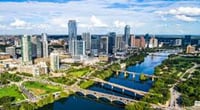
4. Austin
- Total Population: Approximately 1 million
- Korean Population: Estimated around 10,000 to 15,000
- Characteristics: The state capital of Texas, rapidly growing as a center for IT and startups. Korean churches, schools, and restaurants are mainly located in the northern and northwestern areas.
5. Fort Worth
- Total Population: Approximately 950,000
- Korean Population: Estimated in the thousands
- Characteristics: Part of the 'DFW Metroplex' near Dallas, known for its cowboy culture and historical sites of westward expansion. The Korean population is smaller compared to Dallas's main Korean town, but interactions are active due to proximity.
6. El Paso
- Total Population: Approximately 680,000
- Korean Population: Estimated around 2,000 to 3,000
- Characteristics: Located near the Mexican border, with a very high proportion of Hispanic culture. There are military facilities (Fort Bliss), so some Korean soldiers and families reside here.
7. Arlington
- Total Population: Approximately 400,000
- Korean Population: Estimated in the thousands
- Characteristics: Located between Dallas and Fort Worth, known for sports and theme parks (AT&T Stadium, Six Flags, etc.). There is a large commuting population to nearby major cities.
8. Corpus Christi
- Total Population: Approximately 320,000
- Korean Population: Estimated around 1,000 to 2,000
- Characteristics: A coastal city on the Gulf of Mexico, known for marine recreation and tourism. There are not as many Korean restaurants and markets as in larger cities, but a community has formed due to the naval base (NAS Corpus Christi).
9. Plano
- Total Population: Approximately 290,000
- Korean Population: Estimated around 10,000
- Characteristics: A representative new city in the Dallas suburbs, with a good school district leading to active family immigration. Many regional headquarters and offices of large companies (IT, finance) are located here, increasing the number of Korean professionals.
10. Laredo
- Total Population: Approximately 260,000
- Korean Population: Estimated to be under 1,000
- Characteristics: A city bordering Mexico, known for its developed trade and logistics. The Korean population is relatively small, but there are residents involved in import-export businesses.





 xylora |
 wendra |
 Texas Migration Story |
 ultron78 |
 Aura-Infused WACAM |
  Tonky |
  viroma |
  cookie |
  Live and that's it |
  Alright Twain |
  eatontown blog |
  HAWAII Korean Church News |
  Amore |
  linex |
  Balancework |
  laro90 |
  MEDBIO American Doctor Blog |
  SWAT TEAM BLK |
  DREAM BIG |
  frostbite |
  330 Forever My Love |
  El Dorado |
  dralix58 |
  Gorama Round |
  Skydiving |