

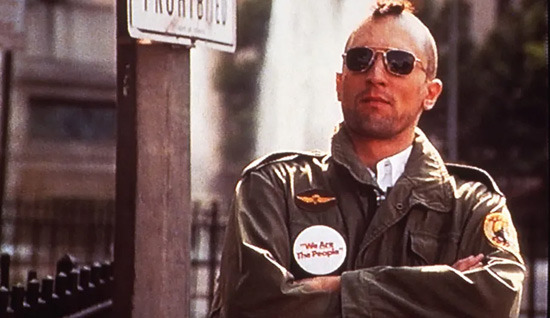
Taxi Driver, directed by Martin Scorsese and starring Robert De Niro, is a film that is often regarded as a masterpiece.
Through the eyes of Travis Bickle (played by Robert De Niro), a young man suffering from severe war trauma (PTSD) after serving in the Vietnam War, the film starkly dissects the dark streets of New York, which were plagued by crime, poverty, and moral decay at the time.
Behind the glamorous title of winning the Palme d'Or at the Cannes Film Festival, the reason this film continues to receive great acclaim today is that it perfectly captured the immense social signs of a specific era, the 1970s, in a raw and realistic manner.
The mid-1970s America, particularly New York, was close to what could be described as a 'cauldron of chaos, almost a hellish environment.'
The once-glamorous and sophisticated Times Square and the area around 44th Street and 8th Avenue, which today attracts tourists from around the world, were then desolate slums filled with adult entertainment venues, drug dealers, and prostitutes.
In fact, the film was shot on the actual streets of New York, which were incredibly dangerous at the time, capturing the essence of the era like a time capsule.
During this period, America was experiencing an unprecedented sense of humiliation and loss due to its defeat in the Vietnam War, while domestically, trust in government power had plummeted due to the Watergate scandal. The city's finances were on the brink of bankruptcy, and law and order had completely collapsed.
The protagonist, Travis, is a fragment of an American society that has lost its direction and is adrift. Having fought for his country, he returns to a society where he is thoroughly alienated, and his perspective, witnessing the city's filth while driving a taxi every night, transforms into an extreme cynicism and dangerous heroism.
The iconic line he delivers while aiming a gun at his reflection in the mirror, "Are you talkin' to me?" is not just a soliloquy but also a sharp expression of anger towards a cold world that has turned its back on him.
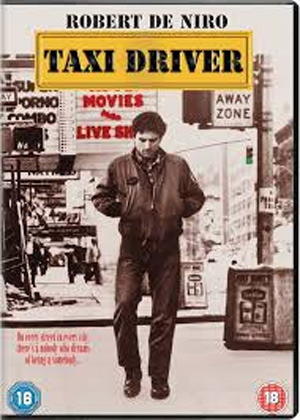
So, what was the situation in Korea in 1976 when Taxi Driver was released?
In the mid to late 1970s, Korea was in stark contrast to America's 'urban decline,' caught in the storm of 'compressed growth and tumultuous modernization.' It was a time when strong economic development was being pursued under the authoritarian regime of Park Chung-hee, and many young people left rural areas to flock to Seoul, becoming part of the workforce in factories, construction sites, and as lower-class laborers in the city.
Interestingly, while the external situations of the two countries (America's decline and Korea's rapid growth) were different, the 'inner struggles' of individuals suffering within were remarkably similar.
Korean society at the time was also deeply connected to the Vietnam War. Many Korean soldiers were deployed to Vietnam, and returning veterans, like their American counterparts, had to live with the scars of Agent Orange and mental trauma, facing societal indifference. Additionally, under the shadow of rapid urbanization, areas like Cheonggyecheon and Garibong-dong in Seoul were marred by poverty, crime, and alienation, much like the back alleys of New York depicted in the film.
Just as Travis in America transformed into a violent 'monster' amid social isolation, the youth of 1970s Korea also felt deep disillusionment under the suffocating oppression of curfews, hair regulations, and ideological censorship.
Taxi Driver is a work where direction, acting, and music come together perfectly.
At just 13 years old at the time, Jodie Foster delivered a chillingly brilliant performance as the young girl 'Iris,' and the masterful jazz-influenced soundtrack by Bernard Herrmann amplified the atmosphere of New York's smoky night streets.
The New York of the 1970s, a symbol of lawlessness and financial crisis, has since transformed into one of the safest and most glamorous tourist cities in the world through decades of urban renewal efforts.
For Korean residents or travelers in New York today, watching this film may evoke a haunting sense of dissonance between the dark and solemn past hidden behind the current splendor of Times Square.
Taxi Driver, the sharpest and most provocative work in Martin Scorsese's New York trilogy (which includes Goodfellas and Mean Streets).
Comparing the heated undercurrents of 1970s America and Korea while appreciating this classic masterpiece will deepen the resonance it offers.
It is currently available for viewing on platforms like Netflix and Amazon Prime, so immerse yourself in the profound aftertaste the film provides.
 RamenEVlab
 SojuBoy
 GalaxyLink
 LunaStarMan






 Beauty, Health, Lifestyle Blog |
 Always Atlanta |
 RV Samuel's Dad |
 Ham and Cheese |
 oflare |
 newyorker 101 |
 Things to Do to Buy a House |
 International Court |
 Eating Gukbap and Working Hard Deer |
  digital |
  timemachine |
  Starry Eyes |
  Desert King |
  Texas Real Estate Blog |
  U.S. Retirement Pension Information |
  Seattle - Emerald City |
  Texas Migration Story |
  Unknown Dog Walk blog |
  California Dreamer |
  Bearded Strawberry Smoothie |
  JESIKYEOALBA BLOG |
  Heart Ticker |
  Jellia Angel |
  Moo Tang Clan |
  Khan Film Blog Production |
  yenne |
  neroyo |
  Peter Pan Pet |
  solvix18 |