

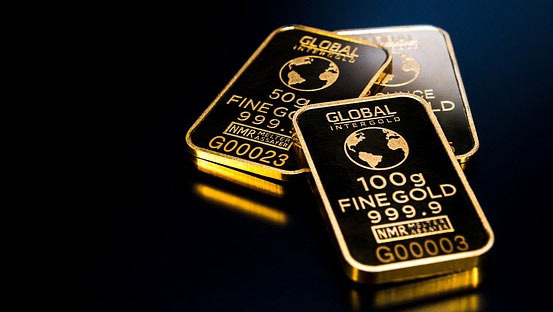
On my way home from work, I heard a story about gold prices on the radio. "Today's gold price has surpassed $3,400 per ounce again..."
Hearing about the continuous rise in gold prices these days reminds me of a friend.
35 years ago, when I was in high school in Queens, New York, I had a Vietnamese friend.
He was small in stature and quiet, but one day while talking about a wealthy white friend, he said this.
"My parents buy gold whenever they have money."
His family was neither rich nor poor, just doing okay.
"Why?" I asked, and he replied, "My parents don't trust banks. If something happens, we can run away with gold..."
At that time, I just accepted it. My family, running a laundromat, didn't have that kind of luxury, and it was more urgent to stop payments than to save.
Now, we've lost contact, but whenever I hear about gold prices these days, I sometimes think of that friend.
So I became curious. If his parents bought gold in 1990, how much would that gold have appreciated by now?
In the early 1990s, the price of gold was around $340 per ounce.
Now in 2025, the price of gold is about $3,400 per ounce.
It has risen a staggering tenfold.
Gold that was $340 per ounce (31.1g) is now $3,400.
In percentage terms, that's about a 1,000% return.
On the other hand, let's say you deposited $1,000 in a bank during the same period.
Back then, interest rates were over 5%, but by the 2000s, rates dropped below 1%.
So if we calculate it as a compound interest, it would be about $3,900.
After 34 years, gold has increased tenfold, while the bank has increased fourfold.
Although savings have grown somewhat due to the power of compound interest, it pales in comparison to the rise in gold.
My friend's parents lived through a war generation. They were the ones who saw banks close and money turn into worthless paper.
So it seems they chose gold as an asset they could see with their own eyes.
Looking back now, that choice was not wrong. There's no interest, and it's inconvenient to store, but time has been an ally to gold.
I have been automatically transferring to accounts like 401(k) or IRA, believing that bank deposits are safe.
I haven't lost much, but I haven't gained much either.
I wonder how that friend is living now. Perhaps he bought a house and a car with a few gold bars left by his parents and is living comfortably?
Of course, gold is not the only answer. Gold cannot be liquidated immediately, and selling a lot of gold can complicate tax issues.
But one thing is certain. Those who move with a long-term view ultimately win.
These days, I'm also considering buying a little gold.Even if it's not all, it might be good to keep some as tangible assets.
And someday, I hope to tell my child.
"Dad bought a little gold back in the day. As time goes by, you'll understand how precious this is."
And I want to send a message to that friend from high school.
"Your parents were smart."






 Gold Bar |
 Day by day |
 Dolly |

 laro90 |
  MEDBIO American Doctor Blog |
  SWAT TEAM BLK |
  DREAM BIG |
  frostbite |
  330 Forever My Love |
  El Dorado |
  dralix58 |
  Gorama Round |
  Skydiving |
  dreamport |
  Yellow Snowman |
  Toaster Pizza Magic Show |
  velvetnom |
  Anytime Journey |
  Mrs. Duluth |
  jaxter |
  Atlanta Mama |
  Baguette Blog |
  Tan Sol |