

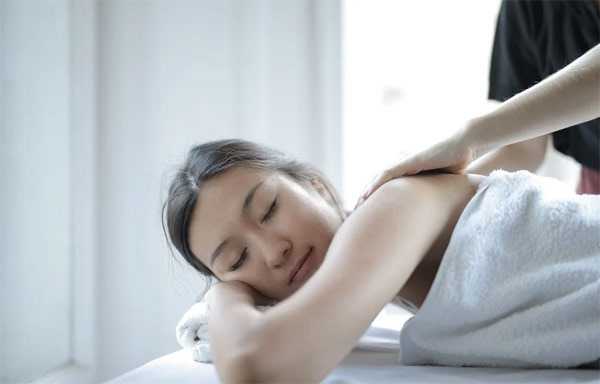
What appears to be a simple touch hides a complex process in which both the body and mind respond.
Receiving a massage not only relaxes tense muscles but also signals our nervous system to say, "It's okay now, you can take a break." The body, upon receiving this signal, releases tension, calms the heartbeat, and naturally moves towards a state of mental stability.
This is why it is particularly effective for those who experience a lot of stress or have been suffering from pain for a long time.
In the United States, many people choose massage for their health, and hospitals are increasingly incorporating massage programs into treatment processes. There are consistent reports of patients experiencing reduced pain, better sleep, and alleviated anxiety after receiving massages.
Especially for those who have been ill for a long time or have significantly reduced stamina, massage helps restore the sensation of being connected to their body.
People who do not often experience warm physical contact in their daily lives, such as those with chronic fatigue or those who have reduced social interactions since COVID, often feel the calming effects of massage more strongly. The gentle pressure of massage sends a message to the brain that "you are safe now," triggering the release of necessary hormones, which plays a significant role in improving mood and comfort.
Research also shows many positive results. A study providing massages twice a week for 12 weeks to veterans showed a noticeable reduction in pain, with effects lasting for several months. People with lower back pain also showed significant improvement after about 10 sessions, especially among older individuals where changes were more pronounced.
Research findings indicating that massage reduces muscle soreness and improves blood flow after exercise are also impressive. Interestingly, there are results showing that even when only the legs were massaged, the vascular function in the arms improved. This suggests that stimulating one area can lead to a chain reaction throughout the body, allowing us to understand massage not merely as "rubbing a painful spot" but as a way to readjust the flow and balance of the entire body.
From this perspective, massage is not just a service for feeling refreshed; it is an important recovery time that helps reorganize the rhythm of both body and mind. Some choose massage to relieve stress, others to manage pain, and some to slow down and take care of their mental well-being.
However, to be honest, while it is true that massage feels refreshing and pleasant, sometimes it feels like its effects are discussed as if it were a cure-all. I understand that receiving a massage can relieve stress and reduce pain, but the cost is not insignificant, making it burdensome to receive frequently, and the effects do not last for days after just one session, which can be disappointing in terms of 'cost-effectiveness'.






 neroyo |
 nivex85 |
 Old English |
 nixxon |
 LIZ Legal Information Blog |
 newyorker 101 |
 Things to Do to Buy a House |
 International Court |
 Lunch and Dinner Mexican Taco |
 U.S. Weather Bureau News |
  Korean Mom |
  My NYC |
  moo moo |
  Mr Oh |
  forevergee |
  festival |
  manchester |
  constant |
  Leapfrog Move |
  vibranto |
  Tora Tora |
  yellowbutter |
  Dolly |
  US Embassy |
  NYC saladbar |
  Finding Superfoods |
  lightyear |
  song bang |
  vexomo |
  Indiana Jones |