
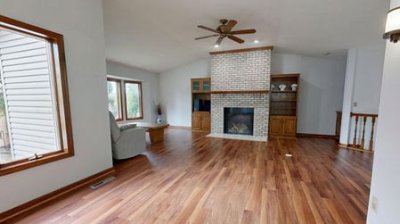
A couple I recently consulted brought a table comparing HOA costs and maintenance expenses for two condos and a single-family home in Concord. The numerical comparison revealed a larger difference than expected. As they approach retirement, there are three main factors to consider: heating costs, the difference between purchase price and maintenance fees, and property taxes. Examining these factors helps explain why they have delayed their decision for nearly six months.
New Hampshire, where Concord is located, has a high dependence on heating oil. According to the New Hampshire Department of Energy, the average price of heating oil in the state is around $4.85 per gallon, with recent prices reaching $5.02 per gallon. In Concord households, natural gas accounts for 45% of heating fuel, while electric heating makes up 22%. For households using heating oil, significant expenses can arise during the winter months. Additionally, discussions about rising winter electricity rates in New England could lead to budget disparities after retirement, depending on the type of heating fuel used.
If they choose to maintain a single-family home, they will need to manage not only heating fuel costs but also the upkeep of the roof, boiler, and drainage systems. In areas like Concord, where winters are long and snowy, snow removal costs are also a recurring expense. Moving to a condo or townhome means that these management tasks are handled by the HOA, or homeowners association. However, this comes with a fixed monthly management fee, which often increases over time.
The average home value in Concord is approximately $449,637 as of June 2026, reflecting a 3.9% increase from the previous year, with the median listing price around $440,000. The number of condos available is lower than single-family homes, with only 46 listings last month, and this investigation did not confirm the specific average HOA fees for Concord condos or townhomes. It is advisable to check the recent history of management fee increases and reserve fund status before making a contract. For reference, Active Adult Communities, which are for residents aged 55 and older, often include snow removal and landscaping in their management fees, making them a viable option in winter-heavy New Hampshire, though there are currently few listings in downtown Concord.
The property tax rate in Concord for 2025 is $29.11 per $1,000 of assessed value, which is relatively high within New Hampshire. This means that a home assessed at $350,000 could have annual property taxes exceeding $10,000. However, individuals aged 65 and older with an income below approximately $44,000 for singles or $63,000 for couples, and other assets below $150,000, may qualify for the Elderly Exemption. Depending on age, deductions can range from $80,000 to $223,000 from the assessed value, and the Concord City Council has recently increased these exemption amounts in response to rising home values. Specific criteria may vary by city and town, so it is necessary to check directly with the Concord Assessor's Office. Among the three factors the couple examined, property taxes were significantly affected by exemption applications, while management fees varied widely by listing, requiring personal investigation.
- Single-family home - Directly responsible for heating oil, electricity costs, snow removal, and equipment maintenance
- Townhome - Shared responsibility for external maintenance, but fixed HOA fees may increase
- Condo - Least management burden, but limited selection of available properties
- Active Adult Community - Offers amenities but initial costs and monthly management fees are relatively high
In numerical terms, Concord's property tax burden is among the highest in New Hampshire, but with the recent expansion of the exemption program for those aged 65 and older, the actual burden can vary significantly based on application status. Whether to maintain a single-family home or move to a condo requires careful calculation of heating costs, management fees, and exemption benefits. This article does not constitute investment or legal advice, and it is recommended to consult with real estate or tax professionals before making any decisions.
 TRexDino
 vibecity93







 Sugar Cream Door Bulletproof Noodles |
 urbanmint |
 |
| 
 Premium Gas Camp |
 CA Real Estate |
  ovelion |

 New Kids Young |

 horse |
  moodansa 77 |
  zymit |
  maplefox |
  Fun Flex Life |
  hopeful |
  Reeno |
  Coastal city |
  meonetoo |
  Winter bear |
  Peach Jam Eating Laughter |
  Nando Raldo |
  American Man in a Mask |
  wendra |
  silver |
  bada2002 |
  horizon |
  Nanana Nanana Nanana |
  victoria jung |
  Kkikki Ppappa Shout Out Loud |