

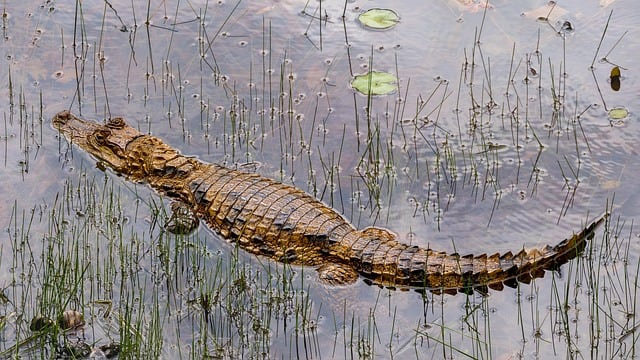
However, whenever I have some free time, I find myself intrigued by alligator stories. When you think of Florida, you might first think of Disney World, beaches, oranges, and palm trees, but you cannot forget about alligators.
It's quite fascinating and a bit scary to realize that an animal I only saw on TV documentaries exists within my living radius. It is said that there are over 1.3 million American alligators residing in Florida.
In Tampa, if you look closely at the lakes or ponds near my home, you often find one or two large ones. I still vividly remember the chills I felt when I first moved here and saw two eyes submerged in a lake staring directly at me while I was walking.
Alligators generally tend to avoid people. However, the problem arises when people feed them or unknowingly approach their habitats. According to the Florida Fish and Wildlife Conservation Commission, there have been over 400 alligator attack incidents since 1948, with more than 30 fatalities. On average, 8 to 10 injury incidents are reported each year, most occurring while fishing or swimming near lakes or swamps.
There was a significant incident in Tampa a few years ago that made the news. A woman walking her dog by the lake was tragically killed when both she and her dog were attacked by an alligator. Because such incidents occur from time to time, the saying "never let your guard down near the lakes" has become a common guideline in Florida.
Although it seems that alligators are widespread throughout Florida, they are not found everywhere.
For example, in some areas of Key West or places with high salinity, the typical American alligator cannot survive. Alligators are primarily freshwater animals, so they inhabit rivers, lakes, and swamps. Conversely, in places like Everglades National Park, alligators are very common. You can easily see several lying in a ditch while driving by.
In other words, they can live in artificial lakes or ponds within large cities, but they are hard to find on open ocean beaches. This is why Floridians feel safe swimming at the beach but tend to avoid swimming in lakes.
Many people are mistaken; what we commonly see in Florida is the American alligator. They primarily live in freshwater. However, in southern Florida and the Caribbean, there is also a species called the American crocodile. This is a creature that is close to being a 'sea alligator.'
The American crocodile is found in brackish areas where saltwater and freshwater mix, such as river mouths or coastal mangrove forests. Within Florida, they are particularly sighted in the southern regions, like Key Largo or the southern part of Everglades National Park. However, they are not commonly seen due to their low population.
Crocodiles are longer and slimmer than alligators, with a pointed snout for distinction. They are generally more aggressive than alligators, but they are so rare in Florida that actual incidents are hardly reported.
Having lived in Tampa, I initially found alligators frightening, but now they strangely feel familiar. It's as if I think, "This is a unique experience that can only be enjoyed in Florida." Of course, there are clear precautions to take. You must never let your guard down by the lakes, and pets should always be kept on a short leash. However, there's no need to be overly fearful. Alligators are simply animals living in their territory.
You can intentionally seek out places without alligators, or if you want to see them, you can safely observe them in places like the Everglades. As a pharmacist, I take care of people's health every day, but sometimes observing Florida's unique wildlife in nature provides a different kind of healing.
The story of alligators in Florida cannot be summed up with just the feeling of "fear." While accidents do happen, they also serve as evidence of how closely we live with nature here. Even in urban areas like Tampa, alligators still exist, and just a little further south, you can encounter crocodiles. Isn't this the true charm of Florida?




 Rainbow Bridge to the Sky |
  oh my salami |
 Taco Bell Candy Note Blog |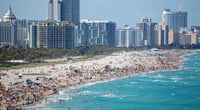
 Splendid Mission |
 forevergee |
  festival |
  manchester |
  constant |
  Leapfrog Move |
  vibranto |
  Tora Tora |
  yellowbutter |
  Dolly |
  US Embassy |
  NYC saladbar |
  Finding Superfoods |
  lightyear |
  song bang |
  vexomo |
  Indiana Jones |
  meloncat |
  novapixel |
  mortrix |
  Esther 1983 |