

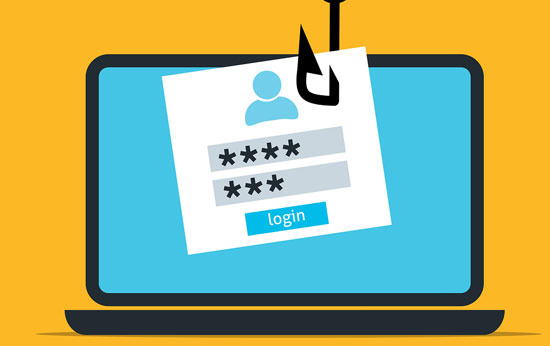
This morning, I received a call from an unknown number.
When I answered, it was a recorded message saying, "There is a problem with your Social Security number, and your service has been suspended."
In the afternoon, I got a text message. It said, "Your Amazon delivery failed, so click the link to verify your address."
In the evening, I received an email. It was a phishing email stating, "Your Chase bank account has been locked due to too many incorrect password attempts."
Three scam attempts in one day... this is truly my day today.
Living in Phoenix, this is the hardest thing for me to adapt to.
They say America is a technological powerhouse, so why can't they stop these annoying calls and texts?
At first, I thought, "Is it a lack of technology?"
First, the system in America is inherently open.America is a country that strongly protects freedom of expression and communication.
It fundamentally does not prevent anyone from making calls or sending emails.
You can even spoof phone numbers. This is called "spoofing," which means manipulating the caller ID.
So when I received a call from my area code (602), I thought, "Is it a neighbor?" only to find out it was a scammer with an Indian accent.
In Korean dramas, the voice phishing criminals are easily caught. Here, that is really difficult.
Second, the laws are too slow.
Scam tactics change every day. Yesterday it was impersonating the IRS, today it's Medicare, and tomorrow it will be the electric company. But the law can't keep up. When one method is blocked, another pops up, and it takes years to legislate against it.
The bigger problem is the calls coming from overseas. Many voice phishing scams originate from call centers in India, Nigeria, and Southeast Asia.
Even if American police want to catch them, they have to cross borders. International cooperation is needed, but the procedures are too complicated and slow.
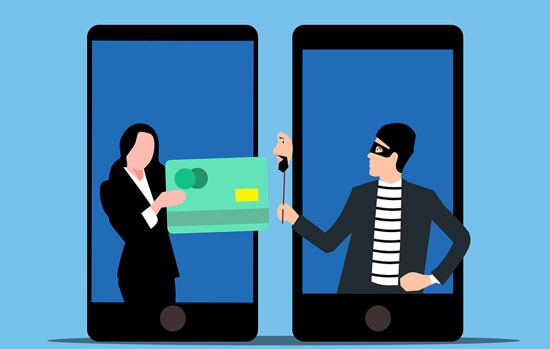
Third, it's a matter of money.
To completely block all scams, they say the American communication system would need to be rebuilt from scratch. Just think about how much that would cost. Telecom companies, email providers, and the government would all need to spend trillions of dollars, which is not realistically easy.
So right now, the approach is not to "completely block" but to "reduce the damage." The alerts for "suspected callers" on iPhones and the automatic filtering of spam into Gmail are all part of those efforts. It's not that they aren't doing anything; it's just that they can't do it perfectly.
Fourth, in the end, it's about deceiving people.
This is the part I find most frightening. Scams don't penetrate the system; they penetrate people's minds.
These days, they say scammers can even mimic voices using AI. Scammers understand human psychology very well. They use phrases like "It's urgent!" "This is the police!" "You've won!" to cloud judgment. Especially older individuals and immigrants with limited English proficiency are easy targets.
I've heard many stories in our Korean community about people getting scammed. Some have lost their life savings overnight.
Fifth, the market is fragmented.
In America, there are not just a few telecom companies like in Korea. Verizon, AT&T, T-Mobile, and many smaller companies are all competing. Email services are also separate, like Gmail, Outlook, Yahoo, and corporate emails.
Each has its own spam filters, but the criteria differ. What gets filtered out on Gmail might come through on Yahoo. Since it's not a country that centrally controls everything, gaps inevitably arise.
Telecom companies are trying to reduce fake numbers by implementing a certification system called STIR/SHAKEN. The name is complicated, but simply put, it's a technology that verifies whether a call is genuinely coming from that number. That's why you see "Scam Likely" on iPhones these days. That's all a result of these efforts.
Email filters have also become much smarter than before. AI is continuously updated. In fact, a lot more spam that we can't see is being blocked. The problem is that what we experience is the "leftover" spam. Even if 95 out of 100 are blocked, if 5 get through, we still feel like we're constantly dealing with spam.
So my conclusion is that it's not that America can't stop scams; it's that the structure makes it impossible to stop them completely. That's why I never answer calls from unknown numbers. If it's important, they'll leave a voicemail. If someone asks for my Social Security number, password, or credit card number over the phone, it's definitely a scam. Legitimate organizations don't ask for that information over the phone.
Since America has an open system, individuals need to be smarter. We shouldn't wait for technology to solve everything; we need to have the mindset that we protect our families.
I'm also trying to instill these values in my children's education.
 ShinRamen







 Korean Mom |
 novapixel |
 Peter Pan Pet |
 horse |
 Sunset Oregon |
 Kitchen Ideas |
 Toaster Pizza Magic Show |
 The Long Shot |
 Arizona AZ Cowboy |
 Tonky |
  viroma |
  cookie |
  Live and that's it |
  Alright Twain |
  eatontown blog |
  HAWAII Korean Church News |
  Amore |
  linex |
  Balancework |
  laro90 |
  MEDBIO American Doctor Blog |
  SWAT TEAM BLK |
  DREAM BIG |
  frostbite |
  330 Forever My Love |
  El Dorado |
  dralix58 |
  Gorama Round |
  Skydiving |