

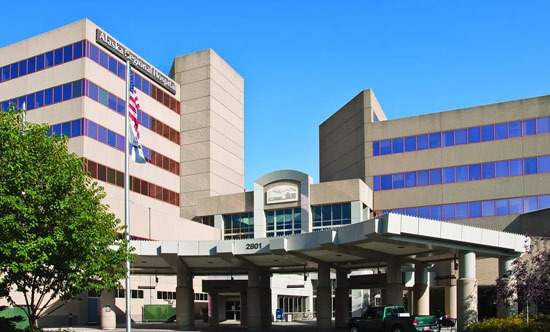
Located east of Anchorage at 2801 DeBarr Road, Alaska Regional Hospital is one of the key medical institutions responsible for the health of Anchorage residents. Together with Providence Alaska Medical Center, it forms the backbone of the local healthcare system and is the most trusted general hospital after Providence.
As part of HCA Healthcare, one of the largest healthcare networks in the U.S., it has a clear advantage in providing advanced medical services based on a systematic system and ample capital.
Core Specialties and Strengths of the Hospital
Although Alaska Regional Hospital is a general hospital, it is particularly highly regarded in specific severe diseases and specialties.
Cardiology: It has a one-stop system for everything from cardiovascular disease prevention to complex arrhythmia treatment, intensive care for cardiovascular surgery (ICU), and rehabilitation. It is one of the most trusted places for emergency heart patients in Anchorage.
Neurological Care & Stroke: The stroke response system is set up very quickly, showing strengths in treating neurological emergency patients where time is critical.
Surgical Robotics: Proactively introducing robotic-assisted surgical equipment, it is utilized in various surgical fields such as orthopedics, gynecology, and general surgery. Minimally invasive surgery reduces incision areas, alleviating patient pain and scarring while significantly shortening recovery times.
NICU: It operates a concentrated care system for high-risk mothers and premature infants, serving as an important safety net for local birthing families.
The Reality of the U.S. Healthcare System Through ER Experience
When first settling in Anchorage and visiting the ER while accustomed to Korean-style healthcare, one can easily experience cultural shock. In Korea, the ER is a dynamic structure where nurses and doctors quickly approach to check the patient's condition as soon as you walk in. In contrast, ERs in the U.S., including Alaska Regional Hospital, operate strictly based on a 'Triage' system.
The reception process in U.S. ERs is similar to taking a number and waiting at a local government office in Korea. However, the perceived waiting time and scale are entirely different.
No matter how severe my pain is and how early I arrive, if a patient with a heart attack, gunshot wound, or severe trauma comes in after me, my waiting order will continue to be pushed back. It is very common in U.S. ERs for it to take several hours for a doctor to come to me.
Fortunately, Alaska Regional Hospital actively promotes a Fast Track system to reduce ER waiting times with the slogan "Get treated, not seated!" While it is sometimes evaluated to have shorter waiting times compared to the larger Providence hospital when fewer patients are present, the inherent limitations of the U.S. healthcare system (waiting based on severity) still exist.
Is it Good for Koreans (Korean Residents and Travelers)?
In conclusion, it can be summarized as "While the language and administrative support systems are well established, it is difficult to expect Korean-style emotional support or dedicated Korean service desks."
1. Free Interpretation Service (Language Access)
According to U.S. federal law and the Patient Rights Charter, Alaska Regional Hospital is required to provide free interpretation and translation services for patients who are not familiar with English.
If you request Korean interpretation at the hospital reception or ER check-in, they will connect you to real-time phone interpretation services or video remote interpreting equipment (VRI).
Due to the nature of medical consultations involving specialized terminology, it is much safer to go through certified medical interpreters provided by the hospital rather than relying on untrained personal interpreters, and this service is completely free.
2. Accessibility for the Korean Community
Anchorage has a long-established Korean community, and there are occasionally Korean-speaking doctors or nurses working within the hospital or affiliated clinics. However, unlike large cities (like LA or New York), there are no permanent 'Korean departments' or 'Korean signage,' so it is necessary to confidently request interpretation upon entry.
The Most Important Compass: Medical Insurance
When utilizing medical services in Alaska, the first priority should be checking your insurance network rather than choosing a skilled hospital. To avoid the notorious medical bill shock in the U.S., it is essential to confirm whether your insurance is in-network with the hospital.
| Comparison Item | Alaska Regional Hospital | Providence Medical Center |
| Network Affiliation | HCA Healthcare (National Large Chain) | Providence Health (Religious-based Nonprofit Chain) |
| Size and Patient Volume | Relatively small, somewhat flexible waiting times | Largest in Alaska, many waiting patients |
| Insurance Coverage | Must confirm contracts with major insurers like Blue Cross, Aetna, Cigna | Varies by insurer tier and out-of-pocket percentage |
Depending on whether you have Aetna, Cigna, UnitedHealthcare, Blue Cross Blue Shield, Alaska Regional may be more advantageous, or Providence may be more favorable. If you receive treatment at an Out-of-network hospital, your out-of-pocket expenses can skyrocket from hundreds to thousands of dollars.
Therefore, unless it is an emergency, it is wise to check your insurance company's website or customer service to see if "Is Alaska Regional Hospital in my network?" before visiting. Both hospitals have excellent medical staff and the latest equipment, but the systemic limitations and cost structures differ, so ultimately the final choice and prior confirmation are up to the patient.
 TONCOFFEE
 HoldSongHae
 Rock Star



 LIZ Legal Information Blog |
 Karina's Blog |
 Jimbeam 88 |
 Taco Bell Candy Note Blog |
 Splendid Mission |
  AL ALASKA |
 Sunny's Travel in America |

 Alaska Salmon Buyer |
 Information on Area Codes in the Americas |
  Cap Com |
  nixxon |
  kevin Kim |
  beerdreamer |
  Kims Spring |
  White bunny |
  Kansas City Representative Singer |
  shadow 007 |
  sun walker |
  Choco Choco Star |
  midnight blue |
  honeypot |
  summer |
  adventure77 |
  flexible |
  Shintongbangtong Shin Naerin James Park |
  truepixel |
  Kathy's Blog |
  Hae Naem |
  quatspace |