

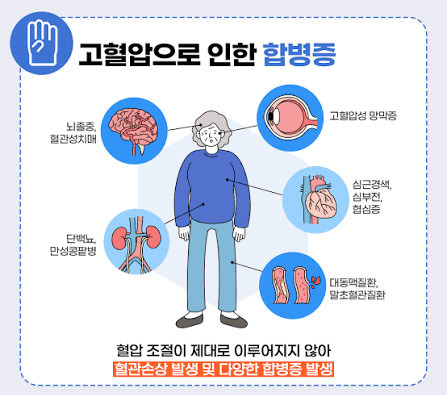
As we age, more friends around us start taking blood pressure medication. In the past, we would talk about our children or husbands when we met, but these days, conversations often include discussions about cholesterol and blood pressure.
However, many people think that having high blood pressure is not a big deal since they don't have any noticeable symptoms. They feel fine, eat well, and have no issues in their daily lives, so they wonder if they really need to take medication.
The scary thing about high blood pressure is precisely this. It can silently damage blood vessels and organs without any special symptoms.
Especially for women, after menopause, the decrease in the female hormone estrogen can lead to reduced elasticity in blood vessels and an increased risk of high blood pressure. Around the age of 60, it's important to be cautious not only about blood pressure itself but also about the following complications.
1. Stroke
This is one of the diseases that high blood pressure patients should be most wary of. High blood pressure can damage blood vessels, leading to blockages or ruptures in the brain's blood vessels. Even if one survives, there may be lasting effects such as paralysis or speech difficulties.
If you suddenly experience weakness in one arm or leg, or if your mouth droops or your speech becomes slurred, you should call 911 immediately. Waiting to see if it gets better on its own is not an option.
2. Myocardial Infarction and Angina
When blood pressure is high, the heart has to work harder. If the blood vessels supplying blood to the heart narrow, the risk of myocardial infarction or angina increases.
Women may experience symptoms not only as chest pain but also as sudden fatigue, cold sweats, indigestion, or pain in the jaw or back. If these symptoms occur suddenly, do not dismiss them as simple discomfort; seek emergency care.
3. Chronic Kidney Disease
The kidneys contain many tiny blood vessels. Continuous exposure to high blood pressure can damage these vessels, impairing their ability to filter waste.
Initially, there may be no noticeable symptoms, but as it worsens, dialysis may be required. It's advisable to have regular blood tests and urine protein tests.
4. Heart Failure
If the heart works excessively to cope with high blood pressure for a long time, the heart muscle can thicken and its function may decline.
If you find yourself getting short of breath when climbing stairs that used to be easy, or if your ankles swell or you have difficulty breathing while lying down, it's important to check your heart function.
5. Vision Impairment
High blood pressure can damage the tiny blood vessels in the retina of the eye. In severe cases, this can lead to retinal hemorrhage and vision loss. Don't assume that your vision is just getting worse with age; it's important to have regular eye exams.
6. Vascular Dementia
High blood pressure can also damage the small blood vessels in the brain. If this damage accumulates over time, it can lead to decreased memory and judgment, increasing the risk of vascular dementia.
Ultimately, managing blood pressure is also about protecting brain health.
Starting at age 60, it's a good habit to measure and record your blood pressure every morning and evening. Try to leave some broth behind and reduce salty side dishes, and walking for about 30 minutes a day within a manageable range can also help.
Do not stop taking blood pressure medication on your own just because your numbers have returned to normal. It may not be that you no longer need the medication; it could be that the medication is doing its job.
If your blood pressure is above 180/120 mmHg and you experience chest pain, difficulty breathing, paralysis, or vision changes, call 911 immediately.
At 60, you still have plenty of time to travel and enjoy delicious food.
Remember that taking a few minutes each day to measure your blood pressure can help ensure a healthy future.
 Kdaddy2
 Bridge79
 CocoPastaHelp





 crystalx |

 compass |

 forward |

 harvest |











 venture |
 Cool Beach Freeway |
 Sammy Beach |
 molten |
 DOCTOR MED |
 Mia Flori |
 zorvik79 |
 There Are Such Things in the World |
 liquid asset |
 Banana |
 nova nova |
 Cahty Chung |
 NFL Forever |
 denvik37 |
 Choco Choco Star |
 Entering Art Directly |
 Mini Mee |
 Exciting chichichi |
 My Circle |
 Fun Flex Life |
 dermoon |
 Starbucks Reserve Roastery Closure |
 Noodle Noodle |