

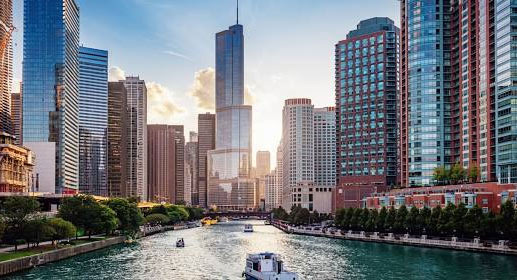
Personally, I first think of the nickname "The Windy City." However, this nickname is not just about the wind; it has a rather interesting background.
First, looking at Chicago's weather, it has a typical continental climate. The four seasons are distinct and changes are noticeable. Summers can reach an average of about 85 degrees, and the humidity is relatively high. However, thanks to the winds coming off Lake Michigan, the perceived temperature can sometimes feel a bit less stifling. Winters are a completely different world. The average temperature hovers around 20 degrees, but with the wind, the wind chill makes it feel much colder. People experiencing Chicago for the first time during this season are often taken aback by the wind.
Spring and fall are relatively mild but can be quite unpredictable. Temperatures can change significantly within a single day, making it almost essential to dress in layers. The average annual precipitation is about 36 inches, with snowfall averaging around 38 inches, and particularly in winter, a unique phenomenon known as lake-effect snow occurs. Moisture from Lake Michigan often transforms into snow, leading to heavier snowfall than expected.
So why is Chicago called the "Windy City"? Many people think it's simply because of the wind, but there are more complex reasons behind it. Of course, geographical conditions play a significant role. Chicago is situated between vast plains and Lake Michigan, making it easy for winds to sweep through the city. The average wind speed is not extreme, but the wind feels much stronger as it passes between buildings.
However, the true origin of this nickname is often attributed to a political background. In the late 19th century, when Chicago was trying to host a large-scale fair, politicians made many exaggerated claims and statements. The New York press, observing this, used the term "Windy City" to imply that it was a city where talk was as fleeting as the wind, and this interpretation has persisted to this day.
The winds of Chicago go beyond just a weather element; they shape the very character of the city. In summer, the cool breezes make the downtown area feel relatively pleasant. Walking along places like Navy Pier or the Riverwalk while feeling the breeze, you can truly appreciate the charm of this city. Conversely, winter presents a completely different scene. The cold northwesterly winds significantly lower the perceived temperature, making it feel much colder than the actual temperature.
This wind also influences urban design. Chicago's skyscrapers are designed to withstand strong winds. Notable buildings incorporate structures that disperse the wind to ensure stability.
Ultimately, Chicago is not just a city where the wind blows a lot; it is a city where the wind has profoundly influenced its history, culture, and daily life. Therefore, the nickname "Windy City" can be seen as a symbol that goes beyond a mere weather description, encapsulating the essence of Chicago.




 candytip |
 Gold Bar |
 Pirate Ship Popcorn Maker |
 Montgomery Mom |
 Anjollinya Blog |
 Khan Film Blog Production |
 Illinois Mom |
 Rice Shop Uncle BLOG |
 allstar realty |
 Enjoyable American Life Diary |
  Tonky |
  viroma |
  cookie |
  Live and that's it |
  Alright Twain |
  eatontown blog |
  HAWAII Korean Church News |
  Amore |
  linex |
  Balancework |
  laro90 |
  MEDBIO American Doctor Blog |
  SWAT TEAM BLK |
  DREAM BIG |
  frostbite |
  330 Forever My Love |
  El Dorado |
  dralix58 |
  Gorama Round |
  Skydiving |