

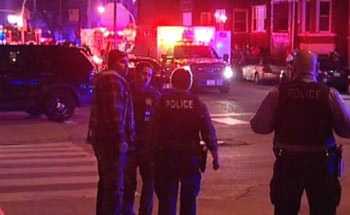
Due to the long-standing stories of Chicago gangs and the repeated images of danger, it's common for people to simply label Chicago as a dangerous city.
However, rather than the entire city being dangerous, there are significant differences in atmosphere and reality depending on the area.
This is actually similar to other large cities in the U.S. with many Korean residents, like LA and NY, as there are always dangerous areas in big cities.
Now, when discussing crime in Chicago, the two most frequently mentioned types are violent crime and property crime.
Both of these vary greatly depending on the area. Starting with violent crime, it is true that Chicago is classified as a city with a high number of murders and robberies in the U.S. Particularly in some areas of the South and West sides, there is a tendency for assaults and gun-related incidents to occur more frequently. In certain neighborhoods, the tension can be quite palpable.
On the other hand, property crime presents a slightly different picture. Incidents such as vehicle theft and residential burglary are common, and these crimes tend to occur in areas with high foot traffic or near public transportation. While they may feel less threatening than violent crimes, they are certainly not trivial for the victims. However, this also tends to happen in specific environments rather than across the entire city.
Importantly, there are definitely safe areas in Chicago. Neighborhoods like The Loop, Lincoln Park, and River North, which are part of downtown Chicago, generally have lower crime rates. Areas like Navy Pier and Millennium Park, which attract many tourists, are well-patrolled and managed by the police. In fact, many people who live or travel in these areas do not perceive Chicago as a dangerous city.
So why does Chicago have such a strong image as a crime-ridden city?
First, there is significant economic inequality. The income gap and unemployment rates between neighborhoods are substantial, leading to entrenched poverty in some areas of the South and West sides, which often contributes to crime. This is more of a structural issue than simply an individual problem.
The gang problem cannot be overlooked either. Chicago has a deep historical connection with gangs. The shadows of the past have not completely disappeared, and conflicts between various gangs can still lead to violent incidents today. Coupled with the broader issue of gun violence in the U.S., this has solidified the perception of Chicago as a city with a high rate of gun crime.
That said, Chicago is not a city that is doing nothing about these issues. The police are strengthening their forces and implementing data-driven safety strategies to focus on vulnerable areas, and they are consistently cracking down on illegal firearms. At the same time, community activities such as job programs and youth education and mentoring are being expanded, particularly in low-income areas. Thanks to these efforts, there are increasingly more areas where crime rates have noticeably decreased.
When living in or traveling to Chicago, there are just a few things to keep in mind. It's advisable to choose accommodations in relatively stable areas like Lincoln Park or River North. Avoid secluded alleys or places with few people late at night, and when using public transportation, opt for busier times for safety. At tourist sites, simply managing your belongings well can significantly reduce unnecessary risks.
Chicago is undoubtedly a city grappling with crime issues. However, it is also a city rich in culture, architecture, music, and food. It is too complex to be defined solely by the image of danger. As long as basic precautions are taken, Chicago is a city worth enjoying, and it still possesses a strong allure for many people.







 candytip |
 Gold Bar |
 Pirate Ship Popcorn Maker |
 Montgomery Mom |
 Anjollinya Blog |
 Khan Film Blog Production |
 Illinois Mom |
 Rice Shop Uncle BLOG |
 allstar realty |
 Enjoyable American Life Diary |
  Tonky |
  viroma |
  cookie |
  Live and that's it |
  Alright Twain |
  eatontown blog |
  HAWAII Korean Church News |
  Amore |
  linex |
  Balancework |
  laro90 |
  MEDBIO American Doctor Blog |
  SWAT TEAM BLK |
  DREAM BIG |
  frostbite |
  330 Forever My Love |
  El Dorado |
  dralix58 |
  Gorama Round |
  Skydiving |