
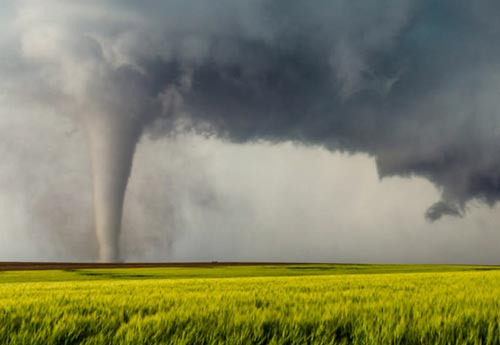
Kansas City is located near the eastern boundary of the Tornado Alley in the central United States and is exposed to various natural disaster risks.
If you are planning to move or stay long-term, it is important to understand the characteristics of natural disasters in the area and how to prepare for them in advance.
This article details the major types of natural disasters that occur in Kansas City.
Tornadoes are the most notable risk factor among natural disasters in the Kansas City area. Located on the border of Missouri and Kansas, Kansas City has a high risk of tornadoes occurring every spring and early summer (April to June).
According to the National Weather Service, the Kansas City metro area experiences several tornado warnings each year, and there have been numerous instances of actual tornadoes making landfall in the metro area over the decades.
Historically, there have been more cases of damage occurring in surrounding counties (such as Clay, Platte, and outer Jackson County) than directly in Kansas City, but it is crucial to remain vigilant during May and June each year. It is important to check if your residence has a basement, and if not, identify an interior location such as a bathroom or closet as a safe place to take shelter.
Flooding is another natural disaster that occurs frequently in Kansas City, comparable to tornadoes. The Missouri River and Kansas River run through or adjacent to Kansas City, posing a risk of river flooding during heavy rainfall. Notably, in 1993 and 2019, major floods on the Missouri River caused significant damage to low-lying areas of Kansas City and nearby regions.
Some areas of Kansas City are classified as a 100-Year Flood Plain on the Flood Insurance Rate Map published by FEMA. If you rent or purchase a home in this area, it is mandatory or strongly recommended to obtain flood insurance through the National Flood Insurance Program. It is highly advised to check if your prospective address falls within a flood risk area on the FEMA website.
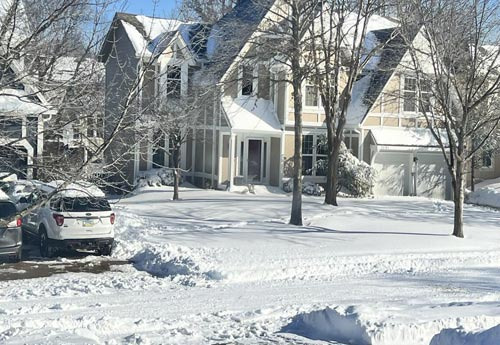
Heavy snowfall and winter storms are another major natural disaster in Kansas City.
Due to the influence of a continental climate, Kansas City often experiences sub-zero temperatures during winter (December to February), and when heavy snow occurs along with ice storms, it can cause significant damage to roads and power lines. Ice storms occur when freezing rain coats everything in a thick layer of ice, frequently leading to power outages due to fallen trees and power lines. Historically, large ice storms in 2002, 2009, and 2021 caused prolonged power outages in the Kansas City metropolitan area. It is practical to prepare battery-operated radios, emergency food, heat packs, and generators for winter.
Extreme heat is also a significant natural disaster factor during the summer in Kansas City. In July and August, temperatures often rise above 100°F (38°C), and with high humidity, the heat index can feel even higher. The National Weather Service issues heat advisories or excessive heat warnings when the heat index exceeds 105-110°F. Elderly individuals, children, and outdoor workers are particularly vulnerable in environments without adequate cooling. The city of Kansas City operates cooling centers during heat waves and encourages residents to utilize them.
Lightning and hail frequently accompany thunderstorms in Kansas City during the spring and summer. Kansas City experiences 50 to 60 thunderstorms annually, and supercell thunderstorms with large hail can cause serious damage to vehicles and roofs. There have been multiple reports of hail larger than golf balls. Adding comprehensive coverage to your vehicle insurance can be practically helpful in protecting against hail damage.
Practical preparations for natural disaster preparedness include, first, installing a NOAA Weather Radio All Hazards or a smartphone weather alert app (such as Weather.gov or Weather Channel) to receive real-time weather alerts.
Second, you should have an emergency evacuation kit (including three days' worth of emergency food and water, a flashlight, batteries, medications, and copies of important documents) ready at home.
Third, agreeing on an emergency contact plan and evacuation locations with family members in advance can effectively reduce confusion during tornadoes or storms.
Kansas City is not without natural disaster risks, but with adequate preparation and the use of alert systems, damage can be minimized.
 moonlight61
 BasementKing







 cheesepup |
 breezem |
 yentra |
 virex |
 vexon87 |
 calvix |
 Rynex |
 selviro |
 Ansaso |
 Savion |
  pintos |
  coloradoman |
  Good Good |
  oh my salami |
  Lemonade Cider Planning Director |
  Way to easy |
  American Hardcore Band |
  Dala Dala |
  Pointy |
  Springs Korea |
  nixon |
  mini hometown |
  Gleeee |
  MacMorningBlog |
  ASURA |
  Elastico |
  shaket |
  vionoo |