
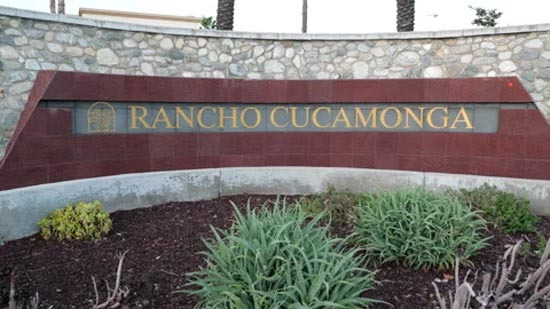
Located about 40 miles east of Los Angeles, at the western edge of San Bernardino County, Rancho Cucamonga is one of the fastest-growing planned cities in the Inland Empire region.
According to the 2020 U.S. Census, the population is 174,491, making it the third-largest city in San Bernardino County. The city covers an area of 40.1 square miles and is situated at an elevation of 1,062 feet (approximately 324 meters), boasting a backdrop of the San Gabriel Mountains to the north.
The name 'Cucamonga' is derived from a word in the Serrano Native American language meaning 'sandy place,' with 'Rancho' added during the Spanish colonial period, resulting in the name we know today. It was officially incorporated as a city on November 30, 1977, having previously been divided into three communities: Alta Loma, Cucamonga, and Etiwanda.
Rancho Cucamonga's history begins with vineyards and wine. Since the 19th century, this area has been a center of the Southern California wine industry, with some remnants of vineyards still visible throughout the city. In the 1930s and 40s, Historic Route 66 ran through the city center, serving as a major artery for westward movement in the United States, and today, Route 66 signs and retro buildings along Foothill Blvd testify to this history.
Currently, the city is centered around a large outdoor shopping mall called Victoria Gardens, where commerce and culture converge, hosting various local events each year. The Metrolink train station in the city connects to LA Union Station, and Ontario International Airport (ONT) is just a 10-15 minute drive away, providing excellent transportation access.
The northern boundary of the city borders the San Gabriel Mountains, making it a great location for outdoor activities like hiking, camping, and skiing. To the south lies Ontario, to the west is Upland, and to the east is Fontana. The climate is typical of Southern California's inland areas, with hot, dry summers and mild winters.
However, temperatures can vary significantly compared to coastal cities, with summer highs sometimes exceeding 100°F (37.8°C). The ZIP codes used are 91701 (Alta Loma), 91730 (city center), 91737 (northern Alta Loma), and 91739 (Etiwanda). The racial composition is predominantly Hispanic/Latino, with significant Asian and White populations.
As the Asian population, including Koreans, continues to grow, Korean businesses and community infrastructure are developing alongside those in nearby Ontario and Upland. With a strong educational infrastructure and relatively low crime rates, it has become a preferred residence for families with children.
 TaTaChaCha
 foxroadtraveler1972







 TEXAS Fishing Boat |
 Study Abroad Life Know-How Tips |
 pravix22 |
 American Hardcore Band |
 Rice Shop Uncle BLOG |
 Experiences Living in America |

 CA Real Estate |
 Lifestyle Information Search USA |
  Healthy Local Fresh Information |
  molten |
  Way to easy |
  intact |
  Always Dreaming of Big Success |
  happy 9 |
  Park M.Y. |
  tredon |
  Poppin News |
  metsoo |
  dewyo |
  Casa Mia |
  Asparagus Blog |
  dorange |
  hiddenkong |
  some fame |
  Godory Life |
  Lime Juice |
  French fries |
  Rynex |