
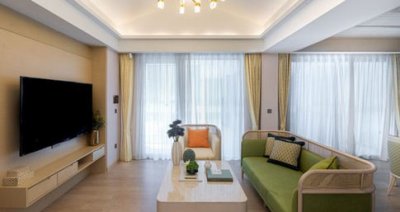
I recently met a couple who want to live closer to their grandchildren. They currently live in the eastern corner of Thousand Oaks, while their daughter's family has settled near a condo complex in the west. It's important to note that even within Thousand Oaks, the situation can vary significantly depending on whether you're in the east or west, or the grade of the corner.
In recent years, the western part of Thousand Oaks has seen an increase in condos and townhome developments, while the eastern side still mostly features single-family homes with large yards. Even within the same city, these differences mean that when comparing listings, it's essential to specify the neighborhood.
This city is located inland, away from the coast, even within Ventura County. As a result, summers are much hotter than in coastal cities like Oxnard or Ventura, leading to higher cooling costs. It's common for summer temperatures to exceed 100 degrees, and from June to September, air conditioning runs almost continuously. The average monthly utility cost, based on 1,000 kWh of electricity and 5,000 gallons of water, is approximately $529.78. The standard rate from SCE is between 34 and 35 cents per kWh, which is relatively high for the area.
Looking at home prices, the median sale price as of June 2026 is $1,075,000. The average price for single-family homes is $1,118,500, while condos are at $497,000, showing a significant gap. Data from the first quarter of 2026 indicates that the median price for condos is $514,000, which is down 24.4 percent from a year ago, suggesting an increase in condo listings and a downward trend in prices. If they move to a managed home like the condo complex where their daughter lives, they could secure a substantial amount of funds just from the price difference.
Property taxes are based on the purchase price under Prop 13, so long-term residents in single-family homes benefit. If you're over 55, Prop 19 allows you to transfer the property tax base from your current home to a new one within California, which can be done up to three times and has been in effect since April 2021. This transfer applies even if you sell an eastern single-family home and move to a western condo.
In addition to cooling costs, there are other factors to consider. Due to the inland area's characteristics, there is a risk of wildfires in the summer, so it's wise to check the renewal conditions for fire insurance on single-family homes. Condo complexes often have the entire building insured by the management office, so individuals have relatively fewer concerns.
To summarize the items to check, first, review the actual summer electricity bill for your current home, then compare the HOA fees for condos or townhomes in your target neighborhood, and finally, familiarize yourself with the application process for transferring the Prop 19 base. Since temperatures and property prices can vary depending on whether you're in the east or west, narrowing down your target neighborhood for comparison can be practically helpful.
One more step to consider is to look at the reserve fund status and recent special assessments of the condo or townhome complex when moving. Even if the management fees seem low, a complex with insufficient reserves could lead to unexpected additional costs later.
Ultimately, this couple decided to coordinate their moving timeline after reviewing the management fee details and Prop 19 application process for several western condo complexes.
While the east and west sides of Thousand Oaks are often mentioned in terms of school district ratings, for a retired couple whose children are already independent, it seems more practical to base their decision on cooling costs, management burdens, and proximity to their grandchildren's family rather than school districts.
Tax and HOA conditions can vary by complex and situation, so be sure to consult a professional before making any agreements. This is not investment or legal advice.
 SodaJoy
 Candy Shop





 Sugar Cream Door Bulletproof Noodles |
 urbanmint |
 |
| 
 Premium Gas Camp |
 CA Real Estate |
 Thou Thou |
 US Embassy |

 K-POP TV News |
 Archaic Kim |
  horse |
  moodansa 77 |
  zymit |
  maplefox |
  Fun Flex Life |
  hopeful |
  Reeno |
  Coastal city |
  meonetoo |
  Winter bear |
  Peach Jam Eating Laughter |
  Nando Raldo |
  American Man in a Mask |
  wendra |
  silver |
  bada2002 |
  horizon |
  Nanana Nanana Nanana |
  victoria jung |
  Kkikki Ppappa Shout Out Loud |