

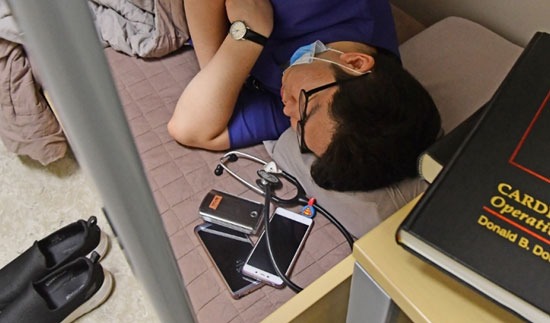
While working in finance in San Francisco, I often meet successful doctor friends. On the surface, they seem to earn well, have high social status, and possess more health knowledge than anyone else, so they should naturally live long lives.
However, when doctors gather, this strange question often arises: "Why don't doctors have longer average lifespans?" In fact, various statistics and studies show that doctors experience more burnout, overwork, and stress-related illnesses than the general population, and they are at a higher risk for cancer and cardiovascular diseases.
I have summarized this irony, where those who know the human body best are actually the ones who are overworking themselves, with realistic reasons.
First, the biggest issue is sleep. A doctor's life is one where their sleep rhythm is almost professionally disrupted. After repeating an irregular lifestyle of night shifts, early morning calls, emergency calls, waiting for surgeries that could happen at any moment, and weekend work for 20 or 30 years, their hormonal balance, immune system, and cardiovascular health gradually deteriorate. Medically, lack of sleep increases the risks of hypertension, diabetes, dementia, cancer, depression, and myocardial infarction. Living a life without proper sleep itself shortens lifespan.
The second issue is chronic stress from responsibility. The stress that doctors face is on a different level than typical workplace stress. They must make life-and-death decisions at every moment and carry the pressure of thinking, "My judgment could end someone's life" throughout their lives. After enduring this state for decades, the stress hormone cortisol remains elevated, ultimately overworking the heart, blood vessels, and brain. This is why there are many cases of heart disease, strokes, and gastrointestinal diseases among doctors.
The third point is ironically that they neglect their own health the most. While doctors obsessively care for their patients' health, they often put their own bodies last. They postpone going to the hospital because they don't have time, fail to take medications on time, continually delay regular check-ups, and always talk about exercising next month. When busy, they often skip meals and settle for convenience store rice balls. The phrase "I'll do it when I have time" is the most common self-deception among doctors.
The fourth issue is emotional labor. Doctors absorb emotional burdens such as death, pain, anger, resentment, legal pressures, and complaints from guardians every day. When this accumulates, it can lead to depression, anxiety disorders, and alcohol dependence, and statistically, the suicide rate among doctors is definitely higher than that of the general population. This is especially serious in fields like surgery, emergency medicine, and anesthesiology, which are directly connected to life. It's as if their psychological lifespan wears out before their physical lifespan.
Additionally, personality issues come into play. The tendencies of those who become doctors generally include perfectionism, strong sense of responsibility, desire for control, competitiveness, and self-sacrifice. This combination creates successful doctors but does not foster ordinary humans who live long lives. They do not know how to rest and continuously push themselves.
Finally, this profession has a structure where the more money one makes, the more exhausting life becomes. In their youth, they struggle to pay tuition and loans, in middle age, they pour their bodies into growing their hospitals, and even as they age, they delay retirement due to responsibility, saying "just a little more," until their bodies break down first.
Ultimately, the reason doctors do not live long is not due to a lack of health knowledge. It is because the very structure of their lives eats away at their lifespan. If doctors truly want to live long, what they need is not knowledge but courage. Courage to protect their sleep, the determination to reduce work, practice letting go of perfectionism, the attitude of taking care of their own bodies before patients, and the judgment to choose time and a healthy rhythm over money.
Doctors have learned how to save others, but they have not learned how to save themselves. Therefore, it is bittersweet that a profession that knows the human body best has become the one that most overworks its own life.
 Eagle5thYr





 neroyo |
 nivex85 |
 Old English |
 nixxon |
 LIZ Legal Information Blog |
 Peter Pan Pet |
 Nuchuhan Exploration BLOG |
 Sugar Cream Door Bulletproof Noodles |
 Moscow Kim |
 Korean Mom |
  My NYC |
  moo moo |
  Mr Oh |
  forevergee |
  festival |
  manchester |
  constant |
  Leapfrog Move |
  vibranto |
  Tora Tora |
  yellowbutter |
  Dolly |
  US Embassy |
  NYC saladbar |
  Finding Superfoods |
  lightyear |
  song bang |
  vexomo |
  Indiana Jones |