

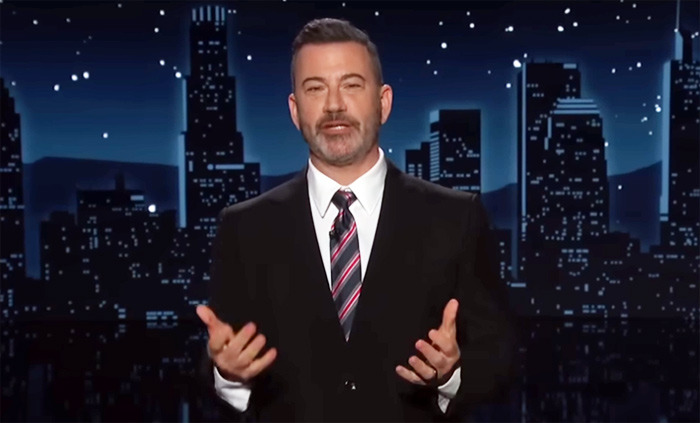
The background of the Jimmy Kimmel Show being canceled and then resumed after just one week is complex, rather than simply being a case of "unexpected remarks > controversy > apology > return."
I see this incident as a multi-layered drama intertwined with the power struggle between the Trump administration, Disney (the parent company of Capital Cities/ABC), ABC executives, and public opinion.
The direct reason for the cancellation was Kimmel's remarks.
Conservative figure Charlie Kirk mentioned a murder case, saying, "The MAGA camp is trying to spin this incident to their advantage," which led some viewers and conservative media to accuse him of "making light of a murder case."
Broadcast groups with conservative leanings, such as Nexstar and Sinclair, immediately announced they would pull the Kimmel Show from their affiliated stations, and shortly thereafter, FCC Commissioner Brendan Carr pressured them by mentioning the possibility of revoking their licenses. From this point, it escalated from a simple broadcasting controversy to a political war.
The involvement of the Trump administration is also a significant factor. Kimmel directly stated on his return that "President Trump wanted to get rid of our show." He even mentioned that other hosts like Colbert, Fallon, and Meyers became targets of attacks as well.
If the administration indeed shook the broadcasting license issue through the FCC, it could lead to controversies over freedom of expression and abuse of power. There would likely be reactions within the Republican Party saying, "This crosses the line."
In fact, even Republican senators like Rand Paul and Ted Cruz pointed out that the FCC's involvement was excessive. Ironically, such reactions from conservative politicians ultimately helped Kimmel's return.
So why did ABC capitulate and then revive the show? I believe two pressures were at play simultaneously: one political and the other economic. From the perspective of ABC executives, when the FCC raises the license issue, lowering their heads is a way to protect the company.
Nexstar was awaiting merger approval, and Sinclair was also pursuing M&A. It was natural for them to preemptively pull Kimmel due to concerns about the FCC. However, this action soon backfired.
Over 400 actors, directors, and musicians, including the ACLU, signed a statement opposing censorship, and there was widespread criticism in the industry that "Disney sold out freedom of expression." A movement to cancel Disney+ subscriptions even spread on social media. As the economic losses became apparent, ABC had no choice but to change course.
Public opinion also had a significant impact. American viewers dislike the image of "the government directly censoring broadcasts," regardless of political leanings.
Especially with the midterm elections approaching, the perception that "the Republican Party is silencing broadcasts" could negatively affect voter sentiment.
Pragmatists within the Republican Party likely voiced their concerns, which may have influenced the show's resumption. Ultimately, it drew a line in politics saying, "Let's not cross this line."
Kimmel's attitude after the resumption was also interesting.
He momentarily teared up and expressed condolences for the victims, but at the same time, he made it clear that he would "not stop political satire." In other words, he apologized but stated he would not back down.
I believe the key word in this incident, where a long-standing political satire show in America almost faced suspension due to external pressure, is 'balance point.'
The Trump administration applied strong pressure, but as the image of suppressing freedom of expression grew, they may have ultimately taken a step back. ABC, pressured by political forces, pulled the show but could not withstand economic losses and public backlash, leading to its return. The Republican Party, in an effort to avoid criticism of media suppression, ultimately contributed to Kimmel's revival.
I believe that in this incident, "the unexpected charm of the tolerant Trump administration" played a lesser role than "political calculations between pressure and backlash." However, at the same time, this incident signals that American democracy still has self-correcting capabilities. It showed that when there is pressure, there is a reaction, and when the public and industry unite, balance can ultimately be restored.
The one-week suspension of the Jimmy Kimmel Show was an interesting event that revealed the clash of interests between American politics, media, and corporations. I believe that how freedom of expression, political power, and the power of viewers collide and are recalibrated will continue to repeat in the future.


 Peter Pan Pet |
 Nuchuhan Exploration BLOG |
 Sugar Cream Door Bulletproof Noodles |
 Moscow Kim |
 US Embassy |
  Korean Mom |
  My NYC |
  moo moo |
  Mr Oh |
  forevergee |
  festival |
  manchester |
  constant |
  Leapfrog Move |
  vibranto |
  Tora Tora |
  yellowbutter |
  Dolly |
  NYC saladbar |
  Finding Superfoods |
  lightyear |
  song bang |
  vexomo |
  Indiana Jones |