

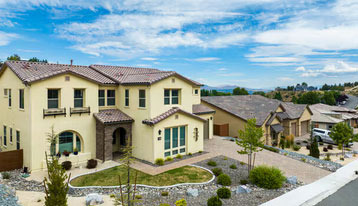
According to the figures, the median home price in Reno has risen to around $545,000.
With the influx of population due to the attraction of industries like the Tesla Gigafactory, Reno's home prices have gone through several cycles over the past decade.
Let's go through the data to see how much is needed to afford this price range.
For a $545,000 home with a 20% down payment of $109,000, the loan principal would be $436,000. Based on a 30-year fixed rate of 6.75%, the principal and interest would be about $2,828 per month. The property tax rate in Nevada is relatively low at about 0.6% annually, adding $272 per month, and insurance is estimated to be around $117 per month. In total, the monthly housing cost would be $3,217.
Using the DTI 28% rule, the required pre-tax annual income would be about $137,874, or $11,489 per month. Considering that the median household income in Reno is estimated to be around $76,000, the gap exceeds $61,000. This significant gap suggests that Reno's prices are largely driven by high-income migrants from California rather than local demand.
In fact, Reno is geographically close to Sacramento and the Bay Area, leading to a steady influx of remote workers and retirees. This trend appears to be a major factor in driving up housing prices relative to the local median income.
For Korean households, it's essential to realistically assess income levels when considering moving to Reno. Even for dual-income households, each person would need to earn over $68,000, which is above the local average income. Unless coming from California, it may be more practical to consider relatively cheaper nearby areas like Sparks or Fuji Mountain View.
Compared to nearby cities, Sparks tends to have a slightly lower median price than Reno, leading to an increasing number of cases where both areas are evaluated together, considering commuting distances.
In summary, to afford a median-priced home in Reno, a pre-tax annual income of around $137,000 is necessary. Given the significant gap between income and housing prices, it seems reasonable to prepare a larger down payment or consider nearby lower-cost areas based on the data.
 TigerMilkFoam
 UrbanZakapi




 neapolis |
 moo moo |
 ultron78 |
 garlic bread |
 Sugar Cream Door Bulletproof Noodles |
 Nevada Teppanyaki |
 zoryan |
 Two LaLa World |
 elion |
 enaro |
  Buckwheat Muktudari Notebook |
  Jellia Angel |
  Victory 1988 |
  Rice Shop Uncle BLOG |
  ASURA |
  rapids |
  Softember |
  mykiwi blog |
  Maria Mom |
  Watch for possible danger |
  northpeak |
  Far East Movement |
  Light of the World |
  mariashin |
  lavender |
  Bridgo |
  Tamfa Fan |
  Sunny Sunday |
  mini hometown |
  torvia |