
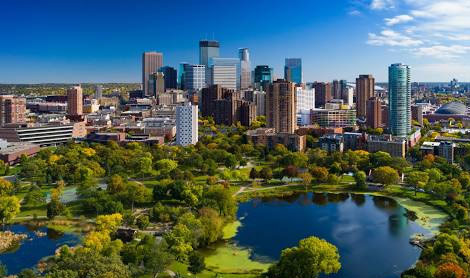
Minneapolis is one of the major cities in the state of Minnesota, forming the Twin Cities with nearby St. Paul. Minneapolis boasts a rich history, a diverse population, and a stable middle income, playing a significant role in various fields such as culture, arts, and education. Below, I will explain in detail the history, population, and median income of Minneapolis.
History
The history of Minneapolis dates back to the mid-19th century. The area was first settled in 1849 and is located at a key point on the Mississippi River, naturally developing into a center of commerce and transportation. In particular, the prosperity of the milling industry earned it the nickname "Mill City," leading to rapid economic growth.
In the 1870s, the textile industry grew rapidly, and Minneapolis emerged as a major textile production center in the United States. During this time, many factories and jobs were created, leading to a sharp increase in population and significant development of the city's infrastructure. In the 20th century, various industries such as manufacturing, finance, and healthcare developed, resulting in a diversified economic structure for Minneapolis.
Today, Minneapolis has established itself as a hub of innovation and technology, hosting various multinational corporations. It is also famous for its rich cultural and artistic activities, with numerous cultural landmarks such as art galleries, theaters, and music performances spread throughout the city.
Population
As of 2023, the population of Minneapolis is estimated to be around 430,000. Minneapolis is a multicultural city where various races and cultures coexist, with people from diverse backgrounds living together. The main population composition is as follows:
- White: about 60%
- Black or African American: about 25%
- Asian: about 6%
- Hispanic or Latino: about 5%
- Other races: about 4%
Minneapolis has a young population with a balanced distribution of various age groups, allowing for a vibrant city life. Additionally, there are many educational institutions and research centers, contributing to the city's intellectual capital.
Median Income
The median household income in Minneapolis is reported to be around $75,000 (USD). This is relatively high compared to the national average, indicating that Minneapolis is an economically stable area. The main factors supporting the median income level are as follows:
- Diverse industrial structure: Various industries such as manufacturing, finance, healthcare, and technology have developed, leading to many high-income jobs.
- Education level: A high proportion of the population has a high level of education, resulting in many professionals.
- Stable job market: The development of various industries has led to high employment stability and relatively low unemployment rates.
- Business environment: Many innovative startups and multinational companies are established, adding economic vitality.
Minneapolis also has a relatively stable housing market, offering various housing options that allow households with above-median income to reside conveniently. The high median income reflects the city's quality of life and excellent living environment, with a well-equipped array of amenities and educational institutions.
Minneapolis plays an important role in Minnesota based on its rich history, diverse population, and stable median income. With the development of various industries, it also stands out in culture, arts, and education, providing a high quality of life for its residents. In the future, Minneapolis is expected to further strengthen its status through continuous economic growth and innovation. Minneapolis, where families, professionals, and people from diverse backgrounds live together, is establishing itself as an ideal residence that combines economic stability and cultural diversity.








 moo moo |
 ultron78 |
 garlic bread |
 Sugar Cream Door Bulletproof Noodles |
 urbanmint |
 Minnesota Lakes and Clouds |
 quatspace |
 U.S. Weather Bureau News |
 chiobase |
 laro90 |
  MEDBIO American Doctor Blog |
  SWAT TEAM BLK |
  DREAM BIG |
  frostbite |
  330 Forever My Love |
  El Dorado |
  dralix58 |
  Gorama Round |
  Skydiving |
  dreamport |
  Yellow Snowman |
  Toaster Pizza Magic Show |
  velvetnom |
  Anytime Journey |
  Mrs. Duluth |
  jaxter |
  Atlanta Mama |
  Baguette Blog |
  Tan Sol |