

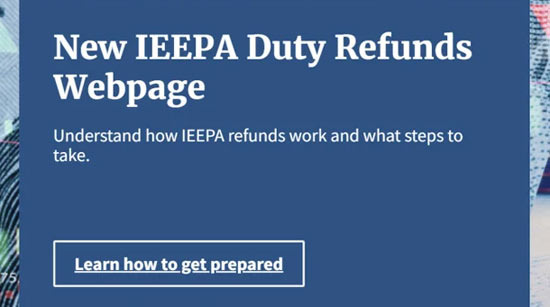
I was watching the news and couldn't help but laugh in disbelief. This is about customs refunds.
The tariffs imposed since the Trump administration have been deemed illegal by the Supreme Court, meaning they need to be refunded, but the question is, "Who gets the refund?"
To cut to the chase, it's not the general public; it's corporations. This is where people are getting frustrated.
This issue became prominent when the U.S. Customs and Border Protection started the refund process.
During the Trump administration, tariffs imposed under the International Emergency Economic Powers Act were ruled illegal, leading the trade court to order refunds.
The scale is enormous. We're talking about up to $166 billion, and with interest, it could reach $175 billion.
However, the sticking point is, "Who paid the tariffs?" On paper, it's the importing companies. Therefore, the refunds go to the importing companies.
The problem is where those tariff costs ultimately ended up. In the end, it means that people like us paid when we bought goods.
That's what makes it even more infuriating. The money was borne by the public through the market, but the refunds go to corporations.
Understanding this structure is just disheartening. Frankly, legally it makes sense, but emotionally it doesn't sit right.
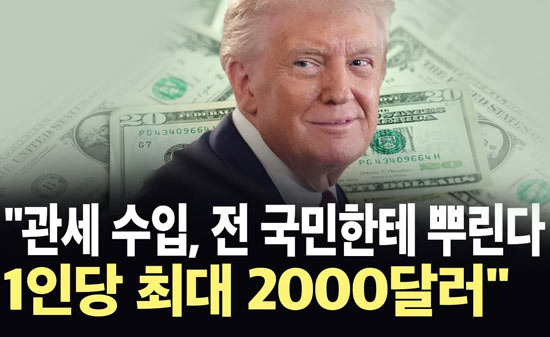
What's even more absurd is that many of you might remember the messages during the tariff policy that said, "We will refund $2000 to the public."
But the reality now is that instead of $2000, corporations are applying en masse through the CAPE system and receiving refunds in the tens or hundreds of millions through electronic payments. Regular households are left with nothing.
Currently, there are over 300,000 companies eligible for refunds, with more than 53 million cases.
It is reported that over 50,000 companies have already completed pre-registration. At this scale, it essentially becomes a massive settlement operation among corporations. There were even reports of the system slowing down from day one. That indicates just how much money is involved.
South Korean companies are not exempt either. Only those registered as importers in the U.S. or those who filed through customs brokers are eligible for refunds. Notably, it has been reported that Hankook Tire's U.S. subsidiary has been preparing for this, and some beauty companies are also expected to have significant refund amounts.
In the end, this is a "corporate refund event" that includes global companies.
What complicates matters further is politics. Former President Donald Trump has stated that he will not acknowledge this refund and has even mentioned lawsuits. He has said, "We could be in court for five years."
While the refund process has started, it is uncertain whether it will continue as is. There is also a possibility that it could be overturned.
Watching this unfold, I think the system ultimately operates according to its structure. If the legal entity that paid the money is a corporation, then the refund goes to the corporation.
In that process, the actual burden on consumers is not taken into account.
Ideally, it would be great if there was a picture of "refunds to the public," but in the current structure, that seems almost impossible.
That's why it's even more frustrating. Expectations are set high, but what actually comes back is nothing.
The policy started grandly, but it feels like it ends with corporate settlements, leading to a buildup of fatigue.
Ultimately, customs duties may seem like a simple issue between countries, but they actually affect individuals through prices. However, the responsibility and refunds are only circulating at the top. Those at the bottom are just passing through the structure.
Costs are spread through the market, and refunds go back to the legal entities. Consumers only participate in the invoice but are excluded from the settlement. With the added variable of Donald Trump's lawsuits, it remains unclear whether this refund will reach completion. In the end, it feels like a familiar pattern where public expectations are created, but the results are funneled to specific entities.






 washington mom |
 Victory 1988 |
 El Dorado |
 lightyear |
 Moscow Kim |
 Beauty, Health, Lifestyle Blog |
 Weekend Movie Blog |
 coloradoman |
 Superman Cat Blog |
  Swift Falcon |
  venture |
  SPAM 101 |
  choi family |
  zoryan |
  cloud0 |
  SKy Face |
  wonder |
  Dragon Lee |
  productionblog |
  What can make money? |
  Oklahoma Hoya OK |
  prixon74 |
  Roman Pan |
  USALATU BLOG |
  Sunshine Blog |
  Minnesota Small Business |
  Strawberry Pancake Warrior |
  amolayo |
  korvon |