
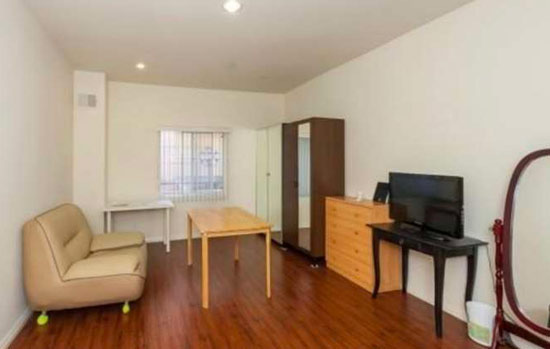
When discussing rental prices in Los Angeles, the numbers alone can seem high, but when compared to New York, a different picture emerges.
On the surface, both cities are grouped as "the most expensive cities in America," but the actual structure and experience are quite different.
First, looking at the passage of time, Los Angeles has changed its rental structure over the past 30 years. In 1996, the average rent in LA was around $600, and a decent one-bedroom could be found for about $800.
At that time, it was already a more expensive city than the national average, but the burden relative to income was not as extreme as it is now. In contrast, the current median rent has surpassed $2,600, marking an increase of more than four times. It's now difficult to find a studio for less than $1,800.
New York is different. New York has always been expensive, and it remains so today. While the increase has been significant, it has not experienced a "sudden collapse in affordability" like LA; rather, it has maintained a high level from the beginning. Particularly, Manhattan was already a high-end market in the 1990s, and now studios often exceed $3,000. Some areas in Brooklyn and Queens also frequently have higher price points than the LA average.
The key difference appears in the living structure. LA is a car-centric city. When housing prices are high, people move to the outskirts, balancing this by increasing their commuting times.
So, while it is possible to find relatively affordable areas, additional travel time and vehicle maintenance costs come into play. In contrast, New York is a public transportation-centric city. The closer a home is to work, the more the price skyrockets, and the farther away, the longer the commute.
The perceived burden in LA has increased significantly compared to the past, leading to a strong sense of fatigue over how much prices have risen. Those with past experiences feel this gap more acutely. Conversely, in New York, the perception that it has always been an expensive city is firmly established, so many start their lives there with the assumption of high costs from the moment they arrive.
From the perspective of the Korean community, the differences become even clearer. Koreatown in Los Angeles still functions as a compromise between urban accessibility and price. There are many older apartment stocks that maintain relatively lower price points, and rent control is often applied, providing stability for long-term residents.
In contrast, Koreatown in New York is more of a commercial center than a residential area. Actual residents often disperse to Queens or New Jersey, where commuting routes become an important variable.
In conclusion, both cities are expensive, but their characteristics differ. LA is a "city where the burden has rapidly increased over time," while New York is a "city that has always demanded high costs." Therefore, in LA, one must adapt by comparing to the past, while in New York, one must accept the structure from the outset.
The important thing is not the price itself, but the way to bear that cost and the living patterns. If this difference is not understood, unnecessary stress will be experienced in both cities.








 moo moo |
 ultron78 |
 garlic bread |
 Sugar Cream Door Bulletproof Noodles |
 urbanmint |
 Weekend Movie Blog |
 Beauty, Health, Lifestyle Blog |
 coloradoman |
 Superman Cat Blog |
 Sunny's Travel in America |
  road98 |
  Churros Train Conductor |
  gleeful |
  Burbank Lee |
  Olivia's Blog |
  Bushing Around Life |
  Active |
  Cherokee Rose |
  Kor. Master |
  Holey Moley |
  Conflite Teacher |
  Hodong Prince Over Flex |
  Mist inn |
  citrus pop |
  Onion Ring |
  phoenixia |
  viewtop |
  loverun |
  Kim Do Sun |
  SEVEN SEVEN |