
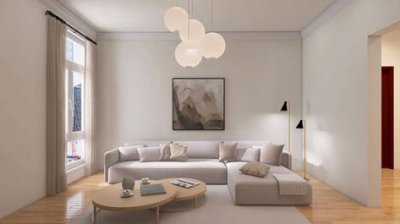
A senior who has lived in the same house in Cresskill for nearly 30 years has recently started struggling with stairs. The two-story colonial home has the bedroom upstairs, and after knee surgery, going up and down several times a day has become burdensome. In such cases, many people think of single-story condos or townhomes primarily built on one floor. If the terminology is unfamiliar, think of it this way: condos often have a layout where living is all on one floor, while townhomes are somewhere in between single-family homes and apartments, with designs that frequently place bedrooms on the first floor.
Looking at the prices of single-family homes in Cresskill, the average home value according to Zillow is $790,377, and the median sale price over the last 12 months according to Redfin is $969,500. However, in the last month, there have been cases where prices dropped to $735,000, so it's important to note that there can be significant fluctuations depending on the timing (based on 2026 data from Zillow and Redfin). Cresskill itself is primarily a neighborhood of single-family homes with very few condos or townhomes available. Therefore, when considering downsizing, many people often compare condo prices in neighboring Fort Lee or Palisades Park as well.
Let's talk about heating and cooling costs. The average summer temperature in this area is 75.6°F, while winter averages 35.2°F, and there are about 29 days a year when temperatures exceed 90°F (based on 2026 climate data for Bergen County). Electricity is supplied by PSE&G, with an all-in rate of 27 cents per kWh, which is 60% higher than the national average. The average annual electricity bill per household is around $2,910. However, gas prices are expected to decrease by 5% starting in October 2026, which may slightly reduce heating costs (based on 2026 data from PSE&G and NuWatt Energy). In a two-story single-family home, heating and cooling must be managed separately for each floor, so total usage is typically higher than in a condo. Simply put, this means that even if the temperature is set the same, larger homes will incur higher bills.
Here's a summary of the characteristics of different housing types:
- Single-family home - There is movement between floors and a larger area for heating and cooling, but there are no or low HOA fees.
- Townhome - Designs can be found that focus on the first floor, and external maintenance is handled by the HOA, but there are monthly HOA fees.
- Condo - There are the fewest concerns about stairs and lower maintenance burdens, but HOA fees are generally the highest.
Property taxes also need to be addressed. The effective property tax rate in Bergen County is about 1.69%. If you are over 65, you can receive a 50% property tax deduction through the Stay NJ program, with a maximum of $6,500 for those with an income under $100,000. The income cap was adjusted to about $200,000 after the passage of the 2026 budget (based on 2026 data from the New Jersey Division of Taxation). You can apply for this alongside the Senior Freeze, so it's important not to miss the application period.
Active senior communities (55+ communities) can also be considered. If this community is unfamiliar, think of it this way: it is a complex designed primarily for those over 55, with layouts focused on the first floor and landscaping maintenance handled by a management company, which can be found in various towns in Bergen County near Cresskill. However, the more amenities available, the higher the HOA fees, so it's wise to first assess whether the facilities are actually useful.
It's also good to note the differences in insurance costs. In a single-family home, the owner is responsible for insuring the entire roof and exterior walls, while in a condo, the HOA's master insurance covers the building's exterior, and individuals only need to obtain separate insurance (HO-6) for their interior space. This difference alone can lead to significant variations in annual insurance premiums.
It's advisable to also calculate the additional costs associated with moving. When selling a long-term single-family home, there may be repair and cleanup costs, and brokerage fees and closing costs will also arise in proportion to the sale price. When purchasing a condo, there are additional procedures such as HOA screening and management fee deposits, so it's best to carefully review the management regulations before signing a contract.
What started as a concern over a single staircase ultimately requires looking at heating and cooling costs and property taxes to find a solution. This is not investment or legal advice, and it is recommended to consult with professionals before making any final decisions.
 GomexK
 SpicyDietSpy







 Sugar Cream Door Bulletproof Noodles |
 urbanmint |
 |
| 
 Premium Gas Camp |
 CA Real Estate |
 Living in New Jersey blog |
 Anytime Journey |
 Lemon Kim |
 forestbon |
 shaket |
  horse |
  moodansa 77 |
  zymit |
  maplefox |
  Fun Flex Life |
  hopeful |
  Reeno |
  Coastal city |
  meonetoo |
  Winter bear |
  Peach Jam Eating Laughter |
  Nando Raldo |
  American Man in a Mask |
  wendra |
  silver |
  bada2002 |
  horizon |
  Nanana Nanana Nanana |
  victoria jung |
  Kkikki Ppappa Shout Out Loud |