

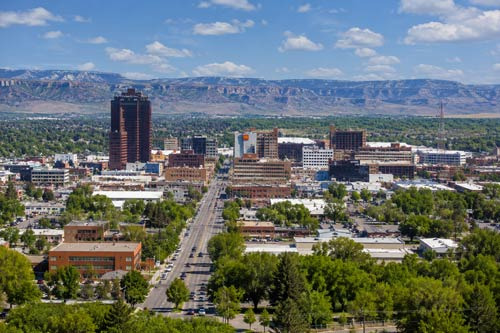
Billings, MT, with a population of about 120,000, has significantly less traffic compared to major U.S. cities.
However, the road infrastructure is extensive for the city's size, and a car-centric lifestyle is firmly established. For those considering a move or interested in life in Billings, let's summarize the transportation system and everyday traffic conditions.
The road traffic in Billings is organized around major arterial roads. Interstate 90 (I-90), which runs east-west through the city, and Interstate 94 (I-94), which connects north-south, are the main highways in Billings. The intersection of these two routes is a key traffic hub, and congestion can occur during rush hour. However, it is much lighter compared to the severe traffic jams in New York or Los Angeles.
The average commuting time in downtown Billings is about 15 to 20 minutes. Commuting from the outskirts to downtown usually does not exceed 30 minutes. Considering the national average commuting time in the U.S. is about 27 minutes, Billings offers relatively low commuting stress. Rush hour typically occurs between 7:30 AM and 9:00 AM, and 4:30 PM to 6:30 PM, with major bottlenecks at the I-90 and 27th Street intersection and routes heading to Billings Heights.
In terms of public transportation, Billings is somewhat lacking.
There are bus routes operated by MET Transit (Metropolitan Transit), but the number of routes and frequency are limited. MET Transit operates about 10 routes, with weekday service running approximately from 6:30 AM to 7:00 PM, ending early in the evening. Weekend service is even more limited, making nighttime travel on weekends inconvenient. There is no subway or light rail, and living in Billings without a car is quite difficult.
Bicycle infrastructure is gradually improving. The city of Billings has been investing in expanding bike lanes and shared lanes, and there are well-established bike and pedestrian-only trails along the Yellowstone River. However, seasonal winter snow and ice effectively limit bike commuting to spring through fall.
Ride-sharing services are available in Billings. Uber and Lyft operate here, but the number of drivers is lower compared to larger cities, which can lead to longer wait times. Especially during late-night hours or severe winter weather, it may be difficult to use these services. Taxi services are also available in Billings, but they are not widely used.
Winter road conditions are an important consideration for drivers in Billings. During heavy snowfall, snowplows are deployed, but if a significant snowstorm occurs within 24 hours, road conditions can deteriorate significantly. Four-wheel drive vehicles or winter tires are considered essential for winter living in Billings. Overall, Billings is a car-centric city, making it practical to plan for personal vehicle ownership before moving.
 OceanValley94
 NachoMan
 CaressMinist


 eatontown blog |
 Toaster Pizza Magic Show |
 US Embassy |
 fortbliss |
 Folding Instructions |
 Childbirth Drabble Blog |

 tarvion |
 Tonky |
  viroma |
  cookie |
  Live and that's it |
  Alright Twain |
  HAWAII Korean Church News |
  Amore |
  linex |
  Balancework |
  laro90 |
  MEDBIO American Doctor Blog |
  SWAT TEAM BLK |
  DREAM BIG |
  frostbite |
  330 Forever My Love |
  El Dorado |
  dralix58 |
  Gorama Round |
  Skydiving |