

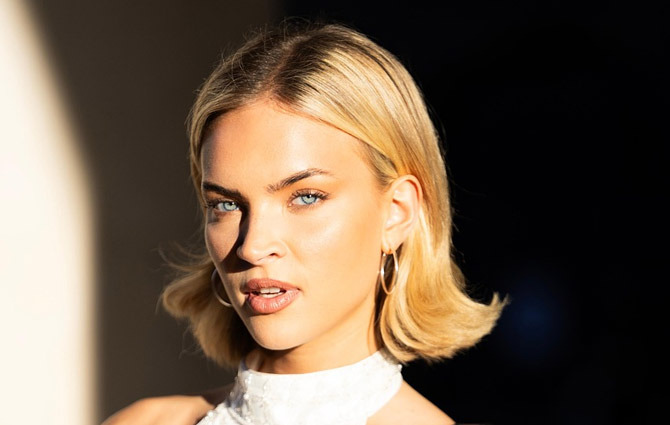
When people commonly think of 'white blonde women', the image that comes to mind is that of a glamorous blonde hair beauty, as if she just walked out of a movie.
However, it is already a well-known public secret that among women with blonde hair, there are very few with genetic blonde hair descended from Nordic ancestry, and most are dyed blonde.
Those who originally have the true blonde gene are born with very little melanin in their hair, resulting in a very light blonde, which often fades and darkens as they grow older.
So, while they were definitely blonde in childhood, it is common for their hair color to naturally change to a dull blonde known as 'dirty blonde' or even to brunette as they age.
Ultimately, they have no choice but to constantly visit salons to maintain their blonde image through bleaching and dyeing. Especially in the streets of America or Europe, the perfect platinum blonde seen is mostly not natural but a salon creation.
The simplest way to check if someone is truly blonde is to look at their eyebrows. Real blonde women have low melanin not only in their hair but also in their eyebrow hairs, making their eyebrows almost colorless.
At first glance, they can appear faint as if they have no eyebrows. Conversely, if the hair is bright blonde but the eyebrows are dark brown or black, it is safe to assume that it is dyed blonde.
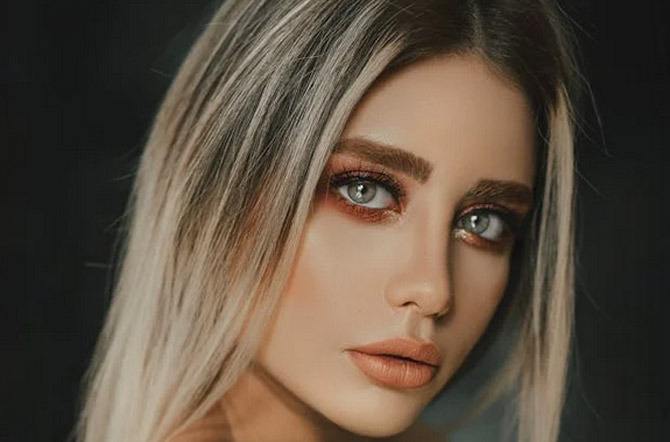
Of course, many people bleach their eyebrows or draw them in with makeup to hide these characteristics.
Thus, services like 'eyebrow tint' or 'eyebrow bleach' are quite popular in beauty shops nowadays, which is actually part of the effort to make them look like true blondes.
Because of this background, the images of blonde beauties appearing in movies, fashion shows, and advertisements instill the illusion of 'eternal blonde' in the public, but in reality, it is a fantasy that is hard to maintain without constant care and dyeing. Research shows that, except for some regions in Northern Europe, natural blondes are gradually decreasing over generations.
Globally, there are overwhelmingly more black and brown-haired individuals, and blondes are just a tiny minority. This rarity and symbolism associated with being blonde can become even stronger.
Interestingly, in Western society, blonde hair is often consumed as a kind of social image.
Just the word 'blondie' can carry stereotypes of being bright and lively or being viewed lightly.
Therefore, the glamorous blonde women we commonly see today are actually products of artifice rather than nature, and behind them lies an invisible effort of endless bleaching, color management, root touch-ups, and eyebrow corrections.
In other words, being blonde is a congenital trait of some Northern Europeans who hit the genetic lottery, but at the same time, it is a constructed aesthetic created by many women who invest time and money.
Once you understand this difference that can be quickly identified just by looking at eyebrow color, it becomes hard to believe that the glamorous blondes you encounter on the street are still natural. However, despite this, the allure of being blonde does not fade away.
Blonde dyeing among K-POP idols is already common, and East Asian women tend to suit blonde dyeing due to their light skin tone and fine hair texture, while Black women often have thick, curly hair that can easily get damaged during the bleaching process, making it difficult to achieve the desired bright blonde color. Additionally, due to their darker skin tone, blonde often appears unnatural and artificial, leading to lower preference.





 Nevada Teppanyaki |
 Marisol |
 zoryan |
 Nevada Vegas UNLV |
  laro90 |
  MEDBIO American Doctor Blog |
  SWAT TEAM BLK |
  DREAM BIG |
  frostbite |
  330 Forever My Love |
  El Dorado |
  dralix58 |
  Gorama Round |
  Skydiving |
  dreamport |
  Yellow Snowman |
  Toaster Pizza Magic Show |
  velvetnom |
  Anytime Journey |
  Mrs. Duluth |
  jaxter |
  Atlanta Mama |
  Baguette Blog |
  Tan Sol |