

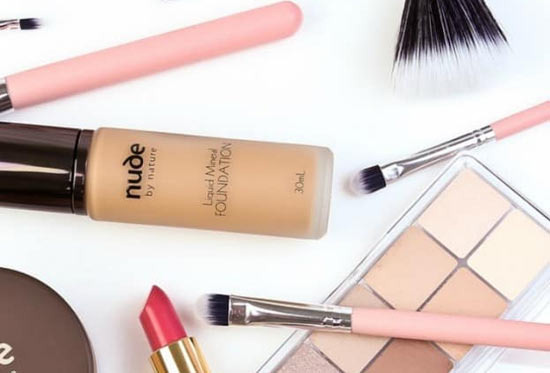
When I was in Korea and even after coming to study in San Diego, I bought a lot of makeup.
Looking back now, I think it was a kind of shopping addiction, and it was quite severe.
Whenever a new product was released, I would be the first to search for reviews on Google and watch videos from beauty creators on YouTube, getting caught up in the thought of "I have to buy this."
In fact, I think I was more addicted to the excitement of clicking the purchase button than to the enjoyment of using the products themselves.
At my worst, I spent an average of $200 a month on makeup, and in some months, I spent over $300.
Whenever a new skincare product came out, I would buy it, and when a famous brand released an eyeshadow palette, I would buy that too; I would easily open my wallet at the mention of a limited edition.
As a result, I ended up with endless piles of lipsticks and eyeshadows in similar colors, as well as unused skincare products at home.
However, the products I used every day were always quite similar.
Then one day, I was shocked when I visited a friend's house.
Michelle, who was born and raised in the U.S., was the most minimalistic person I knew. Her makeup pouch was unbelievably simple.
"Where's your makeup?"
When I asked, Michelle smiled and showed me a small pouch.
Inside, there was just a tinted moisturizer, a mascara, and one lip product.
She even said that she usually doesn't carry more than three makeup products with her.
At first, I couldn't understand it.
I was the type of person who would have two pouches when traveling and would pack various items just in case when going out.
But what surprised me even more was Michelle's skin condition.
She wasn't using multiple steps of special skincare products, nor was she chasing after the latest trendy makeup, yet her skin looked clean and healthy.
Her makeup was very natural but looked even more sophisticated.
From that day on, I began to look at my makeup collection objectively for the first time.
Each drawer was filled with products I didn't use, and there were quite a few expired cosmetics as well.
"Did I really need to buy all of this?"
Feeling a bit angry, I decided to stop buying eyeshadow palettes from then on.
That's because I realized that most impulse purchases started with palettes.
After maintaining this for a few months, I changed my consumption habits to only buy products when the ones I was using ran out.
I only refilled products I actually used daily, like foundation, powder, and mascara, and reduced the behavior of trying new products.
After about a year, a remarkable change occurred.
The excitement I used to feel when new products were released gradually faded, and I no longer felt the need to check beauty shopping sites every day.
From that point on, I started to organize my collection seriously.
I boldly disposed of nearly empty products, expired items, and products I had never used.
It wasn't easy. But once I organized everything, I felt an incredible sense of liberation.
The bigger change was in how I applied my makeup.
In the past, I thought that perfect skin and glamorous makeup were a given.
I believed that my bare face looked lacking and that I had to use multiple products to go out.
However, as time passed, my thoughts changed.
Now, I feel that a light tinted moisturizer or tone-up product, a bit of powder, eyebrow grooming, and mascara are enough.
In fact, I prefer looking more natural and comfortable than before.
Now, I am much more satisfied with my neatly organized makeup station. The small pouch that Michelle showed me changed my consumption habits.
Sometimes, having less can give you a much greater sense of freedom than having more.
 TeachBongnam
 OceanDream91







 Texas Runner |
 Study Abroad Life Know-How Tips |
 Curry Dragon |
 US Regional Information Local News |
 Jellia Angel |
 Sandiego Auntie |
 Flounder and Tuna Side Dish Recipes |
 Shintongbangtong Shin Naerin James Park |
 Always Flowing, That's All |
 U.S. Supreme Court Judge Kim |
  My Love DS |
  Leapfrog Move |
  Finding Superfoods |
  COLO COLO |
  morixa |
  nero kim |
  USA Hyundai Kia |
  OC Real Estate Business Information |
  My Town My Way Blog |
  Splendid Mission |
  Yonori Nori |
  Unknown Dog Walk blog |
  Dingho and USA News |
  Enjoyable American Life Diary |
  Nevada Vegas UNLV |
  Sammy Beach |
  Nanana Nanana Nanana |
  UNI Lover |
  Sunny's Travel in America |