

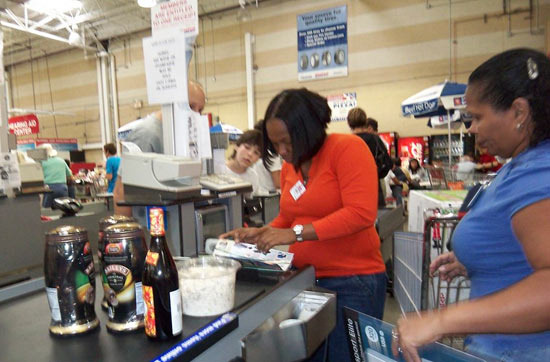
Anyone who has been to Costco while raising kids has likely had this experience at least once.
When leaving home, you might think, "I need to get eggs... I need milk... I should buy snacks for the kids and some meat."
But when you get to the checkout and see the receipt, it's common to find totals of $187, $242, or even over $300.
So why do we end up spending so much money at Costco?
It turns out that Costco is more like "a massive psychological experiment based on membership."
In the U.S., there's a saying that has been around for a long time.
"Costco is not a company that makes money by selling products; it's a company that makes money through membership fees."
At first, I thought it was a joke, but looking at the company's revenue structure, it's true.
The interesting fact is that membership fees are real money. Costco keeps its margins relatively low.
Instead, the fees paid by millions of members each year become a stable source of income.
In simple terms, whether we buy a $20 chicken or a $1,000 TV, from the company's perspective, renewing the membership might be more important.
The second point is that members don't tend to leave. Costco members are unusually loyal.
Why is that? Once you get used to it, it's hard to leave.
The quality of the meat is good, the fruits are fresh, and with gas prices being high these days, the gas is cheap, plus you can use the pharmacy.
In the end, you think, "I'll be back next year anyway," and renew your membership.
The third point is Costco's real magic.
You go in intending to buy only what you need, but your plans completely fall apart.
I recently went in to buy just eggs and milk. As soon as I walked in, cherries were on sale.
"Cherries are cheap this year."
As I walked a bit further, the salmon looked good.
"Eating salmon instead of meat is healthier."
Before I knew it, I was adding bread, cheese, and nuts to my cart.
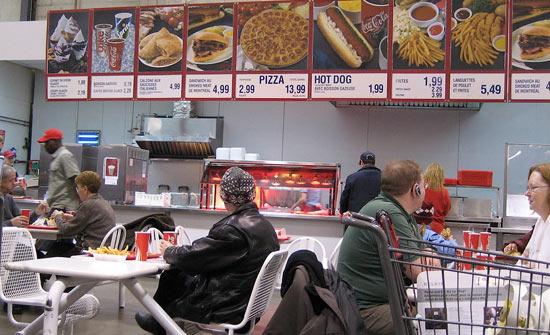
The problem doesn't end there.
You have to pass through the household goods section to get to the checkout.
Toilet paper on sale.
Detergent on sale.
Kitchenware on sale.
Towel on sale.
Eventually, the cart gets fuller and fuller.
Especially during the holiday season, Christmas decorations, gift sets, chocolates, wine glasses, and the affordable, cozy blankets I always end up buying appear.
During vacation season, camping chairs, coolers, beach towels, outdoor lights, and barbecue supplies catch your eye. You go in to buy side dishes but end up coming out with camping gear.
The fourth interesting fact is that Costco hardly advertises.
When you think about it, I can hardly remember seeing a Costco ad on TV. That's because members promote it themselves.
In fact, this topic often comes up in gatherings of Korean moms.
"I heard cherries are in this week."
"Salmon is on sale."
"Toilet paper discounts have started."
They spend no advertising money, and members become the promoters.
The fifth point is that Costco understands human psychology very well.
As soon as people buy a membership, they unconsciously think,
"I paid the membership fee, so I should go often." "I need to get my money's worth."
With that mindset, they visit and end up spending even more.
But they still go back. Because strangely, even after buying a lot, they don't feel like they've lost out.That might be the real reason Costco has been successful for decades.
"The ability to make people spend money while making them feel like they got a good deal." Isn't that Costco's most formidable competitive edge?
 MacaronJoy
 skyvalleycreator1968
 redsunsetwalker1998





 Michigan Enthusiast |
 Anna Life |
 JESIKYEOALBA BLOG |
 Dad's Tribute TC |
 Glow Yo |
 Your Curiosity Resolved |
 Jellia Angel |
 Jean Claude Bundang Blog |
 Nuchuhan Exploration BLOG |
 Mr. Largo |
  breezem |
  Omelet Rice for Strength |
  Vermont Capt |
  Softy |
  solid90 |
  waltz |
  Ohio Ohayoung Hello |
  parlon |
  Shoot Me |
  festive |
  You Turn Me On |
  Supplemental Security Income (SSI) Information |
  Sams Market |
  ansdal |
  VVV 80 |
  BIODOCTOR NEWS |
  Gold Bar |
  Tamfa Fan |