

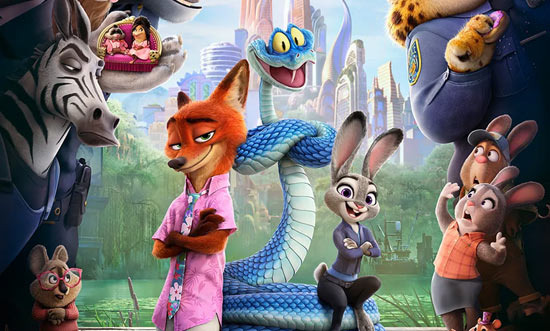
'Zootopia 2' was a project that started with a lot of pressure before its release.
The first film, 'Zootopia 1', was so well-crafted, and at a time when Walt Disney Animation Studios was perceived to be in a slump, there were significant concerns and worries about the sequel's production.
However, once it was released, it cleverly expanded the original's universe without forcing it, and most importantly, the chemistry between Nick and Judy came alive, firmly establishing the series' identity. Thanks to this, the overall reviews have been very positive, even earning a fresh rating on Rotten Tomatoes.
The most noticeable change is the pace of the story. During its 1 hour and 47 minutes runtime, the narrative hardly takes a break. Just as one crisis is resolved, a bigger challenge appears, and as the protagonists get swept up in the chaos, the audience is drawn in as well. This fast pace leaves no room for boredom, and the occasional animal-themed jokes naturally relieve the tension. While the first film flowed heavily around social messages, this installment feels much more entertaining in genre.
In terms of characters, Nick's presence is particularly prominent. It is not an exaggeration to say, "This film's protagonist is Nick," as his growth and emotional journey are delicately handled. Nick and Judy navigate conflicts centered around the theme of partnership as they interact with Zibros, Forbert Lingsley-Gary, acknowledging each other's differences and limitations as they mature. This process accumulates naturally without feeling forced, creating emotional depth beyond a simple buddy movie.
However, there are criticisms as well. This film clearly divides the minority group represented by Gary as the heroes and the majority group symbolized by the Lingsley family as the villains, leading to a perceived lack of political depth compared to the first film. From the perspective of American audiences, the Lingsley family almost directly satirizes the elite power structure, which can give the impression of a flat good-versus-evil dynamic. To establish this dichotomy, the Lingsley family displays excessive malice, resulting in Judy trusting Gary too easily, revealing a flaw in plausibility. Many viewers also feel that the entertainment value is weaker compared to the first film, regardless of box office success.
Nevertheless, this film significantly enhances the dimensionality of its characters, compensating for the weaknesses of a simple good-versus-evil narrative. The villains are depicted as more ruthless and cold, avoiding childishness, and both the protagonists and supporting characters have well-defined inner motivations. The theme of coexistence that transcends species is even more directly expanded than in the first film, moving beyond merely pointing out societal issues to understanding and embracing minority groups. In this regard, this film can be seen as a clear advancement rather than a mere repetition of the first.
Particularly, Gary's character is very symbolic. The fact that he is voiced by Ki Hong Lee resonates with the history of American immigrants, and the scene where he is falsely accused of attacking with poison evokes the struggles of the African American community against violent prejudice. The fear of Gary, a snake with poison, mirrors the post-9/11 fear of Arabs. More broadly, the structure of the majority group treating the minority as a common enemy connects with realities in various countries, and scenes depicting community breakdown during urban development subtly hint at modern societal conflicts.
Ultimately, 'Zootopia 2' maintains the first film's reputation while definitely taking a step in a new direction. The narrative tension, character growth, and more direct messaging create a balanced foundation for the next chapter of the series. While it may not be perfect, it clearly shows that Disney still has many stories to tell within the fun universe of Zootopia.







 HAWAII Korean Church News |
 Gorama Round |
 LIZ Legal Information Blog |
 Egg Steamed Pot |
 novapixel |
 U.S. Supreme Court Judge Kim |
 Learn English Accurately |
 Peach Jam Eating Laughter |
  Pinky Seven |
  Tonky |
  viroma |
  cookie |
  Live and that's it |
  Alright Twain |
  eatontown blog |
  Amore |
  linex |
  Balancework |
  laro90 |
  MEDBIO American Doctor Blog |
  SWAT TEAM BLK |
  DREAM BIG |
  frostbite |
  330 Forever My Love |
  El Dorado |
  dralix58 |
  Skydiving |