

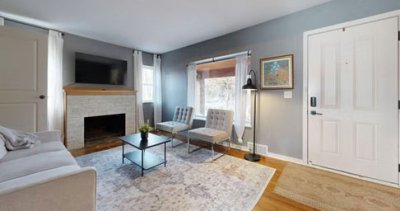
As one of the largest housing markets in the U.S., LA has such significant regional variations that it's difficult to describe the entire city as a single trend. However, looking at the median price trends over the past five years, a clear upward trajectory is evident. The price movements around the Westside, the Valley, and Koreatown have been characterized by different speeds, which is a notable feature of this market. Given the vast area and the hundreds of individual communities coexisting, there has been a considerable difference in the market temperature felt across different regions during the same period.
At the beginning of 2021, the median home price in LA was around $800,000. By 2026, it is estimated to be around $1.06 million, indicating a cumulative increase of approximately 33%. Compared to the national average increase of 35-40% during the same period, LA's growth appears to be slightly below or on par with the national average. It's also worth noting that the condo market has seen relatively limited price increases.
From 2021 to the first half of 2022, the overall market surged due to the low-interest rates stemming from the pandemic. However, from the second half of 2022 to 2023, interest rate hikes led to a correction phase in some premium areas, and from 2024 onwards, the recovery speed varied by region. Recently, a widening gap in price increases between high-end areas like the Westside and the Valley has been observed. The condo market near Koreatown has maintained a relatively stable price range based on rental demand.
Factors influencing LA's housing prices include jobs in the entertainment and tech industries, a chronic shortage of new housing supply, and demand for home purchases driven by rising rents. Recently, post-wildfire reconstruction demand and rising insurance costs have also emerged as new variables affecting prices in some areas. There are frequent reports that increases in earthquake and fire insurance premiums are becoming a significant burden on purchasing decisions.
Future outlooks need to be approached cautiously, considering regional disparities. Areas with good access to the city center are likely to continue showing relatively stable trends, while regions at risk of wildfires or facing insurance issues may experience greater volatility, suggesting that a more granular assessment of regions is advisable.
Including areas near Koreatown, LA's neighborhoods with a high concentration of Koreans are often seen as having a relatively stable demand base. For Korean households considering a purchase, it is essential to comprehensively evaluate school districts, commuting distances, and insurance costs. If contemplating a sale, it seems reasonable to adjust the timing based on the differences in recovery speeds across regions. Households holding multi-family homes or small apartments for rental purposes should also check for changes in insurance premiums and property taxes.
Compared to major cities nationwide, LA can be considered to be in the middle range in terms of price increases. While cities in the Sun Belt, like Miami or Tampa, have surged over 50%, areas like San Francisco have seen lower increases due to the initial population outflow during the pandemic, placing LA somewhere in between.
In terms of mortgage rates, the LA market has been sensitive to fluctuations. As 30-year fixed rates have fluctuated between the 3% and 7% range, the monthly payments for homes at the same price have varied significantly, which has been a key factor influencing purchasing power, especially in high median price areas like LA. It will be important to continue monitoring how changes in interest rates affect recovery speeds in different regions.
Ultimately, LA can be seen as a city where multiple distinct markets coexist. Rather than focusing solely on overall average figures, it seems necessary to examine the trends in specific neighborhoods of interest individually. Whether buying or selling, a good strategy may be to observe recent transaction cases in the areas of interest over the past few months without rushing into decisions.
 GoldenHarbor73
 Snowman




 garlic bread |
 Sugar Cream Door Bulletproof Noodles |
 urbanmint |

 Premium Gas Camp |
 Weekend Movie Blog |
 coloradoman |
 Victory 1988 |
 Superman Cat Blog |
 Anjollinya Blog |
  Round and Round Children's Song Kingdom |
  Mia Flori |
  nova nova |
  healthy |
  leaves |
  sparkling |
  maryland park |
  persiste |
  conte |
  blueman |
  Going Once |
  Eldorado 88 |
  cherrydino |
  middlekick |
  Moscow Kim |
  nivex85 |
  quanta7 |
  Tomato Health Club blog |
  horse |