

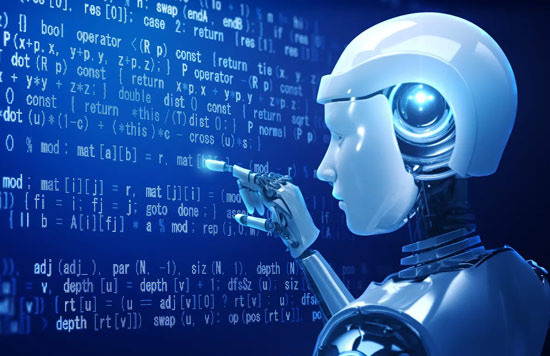
Can AI do everything but write poetry?
I live in San Jose. Let's keep the company name a secret. It's just one of those tech companies that everyone in this area knows about.
These days, the internal Slack at the company is filled with discussions about LLMs, RAGs, agents, and benchmarks.
Even while waiting in line for lunch, people are talking about GPT-5 and Claude Opus 5.
Honestly, it gets tiring filtering through the debates as everyone tries to outdo each other with their knowledge.
However, amidst all this, I discovered a very interesting fact.
AI can write code, summarize papers, create synthetic images, perform medical diagnoses, and even pass the bar exam.
But when it comes to writing poetry, it seems to struggle in some way.
So, I decided to give it a try.
I asked it to "write a short poem about an autumn dawn." Here's what it produced.
Autumn Dawn
The blue darkness has not yet left the window,
The breath warmed by summer is nowhere to be found,
A piece of cool air
Brushes past my nose first.
The silence left by the crickets last night
Lies low at my feet,
The warmth of the blanket
Feels particularly dear.
Is it because the season lowers its body
To enter our hearts?
What do you think? It's hard to say it was poorly written. The rhythm is right, the word choice is decent, and it faithfully follows the theme of an autumn dawn.
But after reading it, nothing lingers. It's like a noodle that's salty but lacks flavor. Everything is there, but something is missing. That's the key point.
In contrast, what about Kim So-wol's "Let's live by the riverside, mother and sister"? It has only seven words.
Yet, within that short line, there's the mother, the sister, the riverside, and a vague sense of longing from the speaker.
AI fills in the words, while poets empty them. This difference is crucial.
Why is AI weak in poetry?
Let's switch to developer mode and dive in. LLMs operate by predicting the most likely next word based on probabilities.
When "autumn dawn" comes up, the model, having learned that words like "fog," "dew," and "wind" statistically follow, tends to go in that direction.
The problem is that poetry works exactly in the opposite direction. Good poetry places an "unlikely word" after a "likely word."
This is the essence of the shock that poetry delivers.
When I write, "The poor me loves the beautiful Natasha, so tonight it's snowing heavily," the illogical connection between "loves" and "it's snowing" is what makes it poetry.
AI is trained to choose the statistically most natural next token.
Poets know how to choose the statistically most unnatural next token.
This is what I believe to be the true reversal of logic in art.
Let's go one step further. Code has correct answers. Medical diagnoses have them too. Legal texts have them.That's why AI excels. It can learn from the correct data humans have created.
But poetry has no correct answers. More precisely, the only correct answer is the singular experience of "the sense of helplessness felt by this poet at the riverside this dawn."
That experience is not in the dataset. No, it can't be. No one captured what was in that person's mind at that moment.
I am not an AI skeptic. I use LLMs every day at work. I have AI handle code reviews, meeting notes, and draft specifications. The efficiency is tremendous.
AI poetry is similar. While it may not stand as a completed work of art, it can be useful as a tool.
For someone struggling to write poetry, getting a draft from AI and rewriting it in their own style is a good workflow.
It's also great for practicing rhythm and generating ideas.
However, posting the poem generated by AI on social media and calling it "my work" is a bit problematic.
That's not poetry; it's an autocomplete result.
So my conclusion is that even if AI takes over everything, poetry will remain a human endeavor.And perhaps that's the greatest comfort for us living in the age of AI.





 Twist Kim |
 U.S. Weather Bureau News |
 Community Cross |
 Conflite Teacher |
 SEVEN SEVEN |
 Tarzan's Joyful Imagination |
 Churros Train Conductor |
 Living Economy Information Blog |
 Rushing Youngest Rabbit Toto |
 Shining Our Own World |
  Real Estate |
  Forest Gump |
  Real Estate Investment Korean American |
  Dollydori, Lover of Movies |
  dmzline |
  travelo |
  American Food Information & Calories |
  Splendid Mission |
  sparklingo |
  Watch Walker |
  Soy Angelino |
  autumn |
  K-POP TV News |
  cortiva6 |
  Nevada Teppanyaki |
  aerion99 |
  Golado |
  Maximum Pro |
  Joyce blog |
  Atlanta Business Information |