

When the topic of casinos comes up in San Jose, the first question is always whether they are "legal or not." However, the real issue is the vulnerability of certain racial groups to gambling.
On the surface, they are labeled as California Native American casinos, but the way they operate is much more blatant than one might think.
From the perspective of the Asian immigrant community, this is not just an entertainment industry; it is more like a sophisticated mechanism for extracting money.
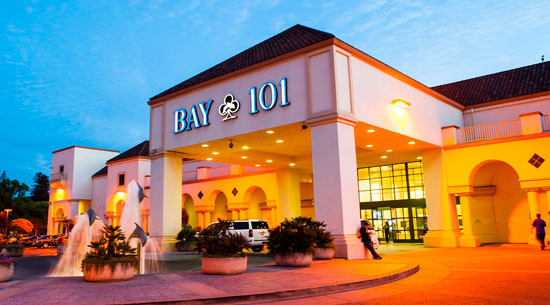
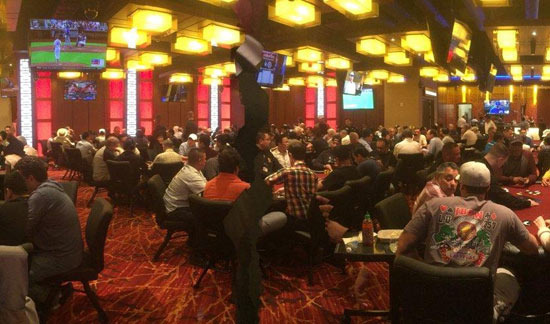
Take a look at Bay 101, a prominent card club in downtown San Jose, and you can feel the atmosphere. Legally, slot machines and dealer-led gambling are restricted, so it is packaged as "card games." However, once you step inside, it is essentially no different from a casino.
The lights never go out all night, various gambling tables keep running, and the people keep changing.
The important thing is that in this system, the long-term winners are not the players but the casinos.
Just a short drive from San Jose, large tribal casinos like Cache Creek Casino Resort and Thunder Valley Casino Resort await.
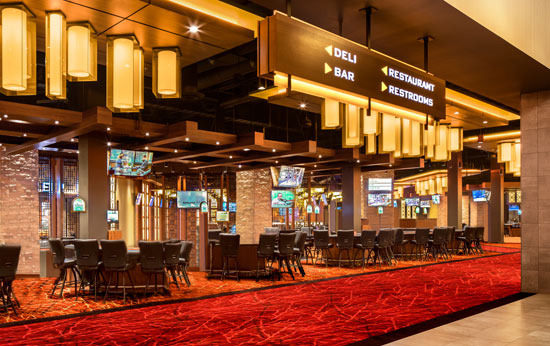
On the surface, they appear to be resorts, with hotels, restaurants, shows, and relaxation. But the core is ultimately the gaming area.
Here, I need to address an uncomfortable truth. This structure particularly resonates with Asian immigrants. Looking at the Korean, Chinese, and Vietnamese communities, there is a cultural background of card games, mahjong, and hwatu. It often starts as a "light-hearted game."
However, in a casino environment, it becomes a completely different game. It is a space calculated for odds, house edge, and psychological manipulation.
Surrounding card clubs, you will naturally see signs in Korean and Chinese. The advertisements and shuttles are clearly targeted. This is not a random gathering; it is a structure designed to attract.
When elements like the unique loneliness of immigrants, economic pressure, and social isolation overlap, casinos become not just entertainment spaces but "escape spaces." And this escape ultimately comes at a cost.
To put it bluntly, this is a pathetic structure. The California state government pretends to regulate and manage it, but in reality, it maintains this system for tax revenue and local economic reasons.
With the political justification of being Native American casinos, it becomes even harder to touch.
Ultimately, if you look at who loses money, the answer becomes clear.
Those who lack time and money are the biggest losers. Especially, the immigrant community often becomes the target.
Of course, not everyone experiences problems. Some people enjoy themselves moderately and leave.
However, structurally, it is designed to make it difficult to maintain a standard of "moderation." It keeps you seated, keeps you betting, and ultimately clouds your judgment. This cannot be viewed solely as a matter of personal will.
From a data perspective, it becomes clearer. Gambling is mathematically designed for the house to win.
This is not debatable. You may win in the short term, but in the long term, you will inevitably lose.
Yet, the reason people keep going in is the illusion that "this time will be different." Casinos are very skilled at maintaining that illusion.
The casinos around San Jose are legal. They are easily accessible. The facilities are well-equipped. But that does not mean they are a "good environment."
Especially from the perspective of immigrants, caution is essential. This is not just a place to spend money; it is a system designed to extract money.
On the surface, it may seem glamorous, but looking inside reveals a rather cold and calculating industry.
 USAToday




 US Regional Information Local News |
 nero kim |
 OC Real Estate Business Information |
 Nevada Vegas UNLV |
 My Love DS |
 U.S. Weather Bureau News |
 Only Dentalbay |
 Shining Our Own World |
 Tarzan's Joyful Imagination |
 Time is GOLD |
  Wenda |
  Roman Pan |
  Nuchuhan Exploration BLOG |
  Who's watching? |
  Strawberry Pancake Warrior |
  What can make money? |
  Egg Steamed Pot |
  New Jersey News Local Stories |
  Study Abroad Life Know-How Tips |
  Leapfrog Move |
  Finding Superfoods |
  COLO COLO |
  morixa |
  USA Hyundai Kia |
  My Town My Way Blog |
  Splendid Mission |