

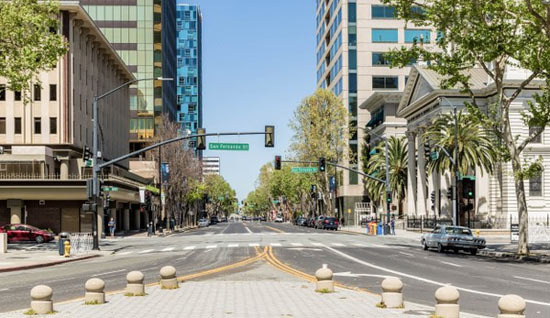
When I first came to San Jose, the most surprising thing was the transportation.
I'm used to taking public transportation.
In Korea and when I lived in New York, taking the subway or bus was all I needed.
But when I got here, I thought, "Oh, this is a completely different world."
Honestly, life without a car is frustrating. At first, I thought, "It'll be okay to be a little uncomfortable," but it turned out to be quite the opposite.
This city is fundamentally designed for driving. The neighborhoods are spread out, and it's not structured for walking.
There are many highways around, so you end up driving on 101, 280, 880, and 680 all the time.
The nearby cities, like Santa Clara, Sunnyvale, and Cupertino, are well connected. The problem is there are just too many cars.
Try going out during rush hour. From 7 AM to 9 AM and 4 PM to 7 PM, you really need to prepare yourself.
Especially 101 and 880 are notoriously bad. A distance of about 10 miles usually takes no time, but during those hours, it can take 40 minutes to an hour.
At first, you wonder, "Why isn't it moving?" but eventually, you just resign yourself to it. Everyone living here feels the same way.
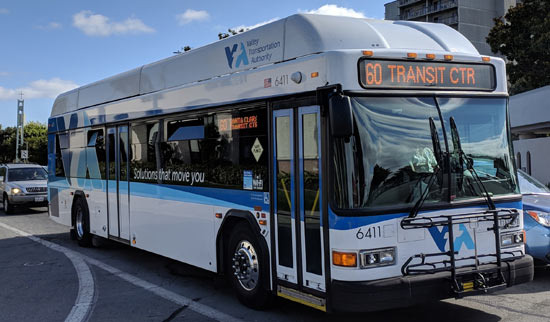
So what about public transportation? It exists. There are buses and light rail operated by VTA, but to be honest, it's at a level of "better than nothing."
The intervals are long, and the routes aren't very dense. If you're expecting something like San Francisco or New York, you'll be quite disappointed.
It's tricky to time your trips, and transferring can be a hassle. So most people end up going back to driving.
However, there is one useful option: the Caltrain. It's a train that goes straight from Diridon Station to San Francisco, and it's pretty good.
It takes about an hour and a half, and many people use it for commuting. These days, it's been electrified, so it's much better than before.
Many people take their bikes to the station and then ride the train. It feels surprisingly well-organized for the U.S.
There is also BART, but it's still a bit awkward to get to downtown San Jose. You have to catch it from the eastern side, which makes it a bit inconvenient.
However, it's expected to be extended to Diridon in the future, so that's something to look forward to. Once it's completed, getting around will definitely be easier.
Surprisingly, biking is also a good option. The weather is so nice that it's comfortable to ride.
The bike paths are quite well developed, and there are trails, so many people use them for exercise and commuting.
If you check out the Coyote Creek Trail or Guadalupe River, you'll see people consistently using them.
However, this is only "possible"; commuting by bike is still not easy.
Ultimately, San Jose is a city where having a car is convenient, and not having one is consistently inconvenient. You need to think realistically to adapt.
You have to plan your living expenses, including not just the car price but also insurance and maintenance costs. If you don't account for this, you'll be caught off guard later.
On the other hand, people who work from home or have jobs near the Caltrain line can manage without a car to some extent. There are also those who use company shuttle buses. Under these conditions, it's somewhat manageable.
One thing I really want to tell newcomers is, "It's not that it's inconvenient here; it's just a different way of doing things."
Accepting that quickly is key to adapting.
If you stubbornly cling to the old ways, it will only make things harder. It took me some time to realize that too.





 Texas Migration Story |
 Moo Tang Clan |
 Peter Pan Pet |
 timemachine |
 Fortress K |
 Time is GOLD |
 Shining Our Own World |
 Breaking Bad Drama |
 Grow Your Gut Bacteria Well |
 Infinite Style |
  Starry Eyes |
  Desert King |
  Texas Real Estate Blog |
  U.S. Retirement Pension Information |
  Seattle - Emerald City |
  Unknown Dog Walk blog |
  California Dreamer |
  Bearded Strawberry Smoothie |
  JESIKYEOALBA BLOG |
  Heart Ticker |
  Jellia Angel |
  Khan Film Blog Production |
  yenne |
  neroyo |
  solvix18 |
  Next Year, Let's Become Rich |
  Investment Campus Home Ownership |