

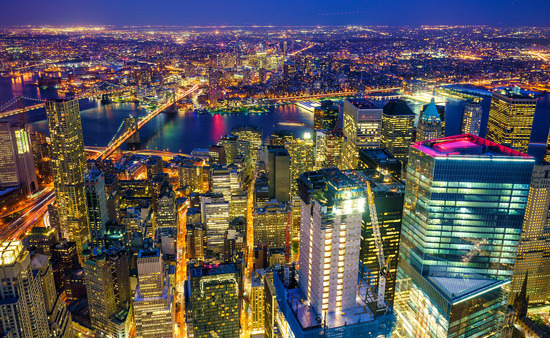
When you look at the city of New York, you see glass skyscrapers, lights that never turn off at night, and homes with prices that are hard to imagine.
But if you think about it, a natural question arises.
"Where does the money that maintains New York real estate come from?"
In places like Tribeca in Manhattan, lofts converted from old warehouses go for over five million dollars.
It's not just because the homes are nice. This area has already become a 'storage place for assets' for global wealthy individuals.
It's not about earning money to buy; it's about safely storing the money that already exists.
Whenever there is political instability or economic turmoil anywhere in the world, funds flow into New York. The stability of dollar-denominated assets is particularly significant.
The traditional affluent area of the Upper East Side has a different character. This is where old money, or generational wealth, resides.
While there are many stories about doctors, lawyers, and finance professionals, most of the people here already have a structure of wealth in motion.
Children are sent to good schools, and the wealth of the previous generation continues to grow through investments. Here, money is more about "being maintained and increased" than "earning."
These days, a more extreme example is Billionaires' Row. A single high-rise condo can cost tens of millions of dollars, yet there are not many people actually living there.
The saying that there are more empty homes is not without reason. This is not a home; it's a vault.
It's a place where wealthy individuals from the Middle East, Russia, China, and South America store their money. The important thing here is not "demand" but "capital movement." Money flows in, so prices are maintained.
In areas like West Village or SoHo, cultural capital creates wealth. People from fashion, media, and the arts come together to create trends, and those trends, in turn, elevate real estate values. In simple terms, "image" becomes a source of wealth.
This is what sets New York apart from other cities. It's not just a place to live; it becomes a brand.
Even outside Manhattan, similar trends exist. Brooklyn Heights maintains its prices solely based on the Manhattan view.
Ultimately, in New York, 'location' itself is money. Places like Forest Hills Gardens thrive on their planned luxury residential status.
Todt Hill attracts the wealthy with its tranquility and privacy.
In summary, the money in New York does not come from just one source.
Wall Street financial capital lays the foundational groundwork,
foreign capital from around the world pushes prices up,
and the cultural industry creates the city's image to maintain its value.
And the most important point is that all three of these factors operate simultaneously.
Thus, New York is not simply a "expensive city." It is a structure designed to continuously bring in money and prevent it from flowing out.






 yentra |
 virex |
 vexon87 |
 seouljung |
 Well Done Sir |
 newyorker 101 |
 International Court |

 Moo Tang Clan |
 Things to Do to Buy a House |
  Conflite Teacher |
  summita |
  Ari Songhan American Immigration Life |
  marketbox |
  Investment Campus Home Ownership |
  Iowa Egen Aunt |
  donut33 |
  gravity |
  American Golf Course Travelogue |
  There Are Such Things in the World |
  Agenda Center |
  digital |
  timemachine |
  Starry Eyes |
  Desert King |
  Texas Real Estate Blog |
  U.S. Retirement Pension Information |
  Seattle - Emerald City |
  Texas Migration Story |