

Listening to stories about New York real estate can honestly be a bit intimidating.
Now that I'm in my 40s, I often find myself thinking, "Do I really want to keep living in New York?"
New York is undoubtedly an incredible city, but it can also be suffocating at times.
Especially for Koreans, the question of "Can I live here securely?" is something everyone discusses.
New York is truly a different world within the United States, and the reason is real estate.
In other cities, people talk about "homes," but in New York, it feels more like discussing "financial products."
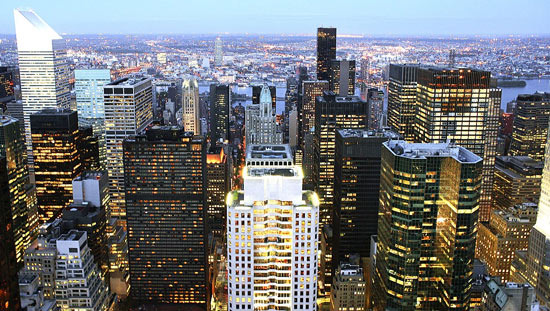
Particularly in Manhattan, it's not just about being in a nice neighborhood; it's where global wealth converges.
Wealthy individuals from China, asset holders from the Middle East, Wall Street financiers, and international investors are continuously pouring money in. This is why housing prices are hard for the average American to comprehend.
As of 2025, the average price of a condo in Manhattan has already surpassed $1 million, and honestly, people in New York aren't even surprised by that number.
In fact, in neighborhoods like Tribeca, Soho, and West Village, there's a vibe of "$2 million is still reasonable."
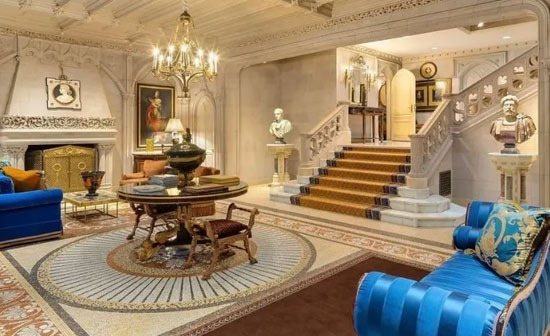
Some buildings have lobbies that feel like hotels, and many residents are actors, hedge fund managers, or famous entrepreneurs.
But what's more complicated about New York is the structure of the homes themselves. In other cities, people buy single-family homes, but Manhattan is almost entirely an apartment world.
Additionally, the concept of co-ops is unique to New York. When you first hear about it, everyone gets confused.
A condo is simply the idea of owning your home, but a co-op means buying a share of the building. The problem is that the approval process is extremely rigorous.
If you want to go through this, you need to provide bank statements, job details, and income, and in some cases, you even have to go through an interview. It feels like a job interview just to buy a home.
That's why many Koreans realistically look at Queens. Areas like Flushing or Bayside have Korean markets, hospitals, and convenient living conditions.
Families with children are drawn there even more due to school districts. So even when the economy is bad, prices don't easily drop.
The problem is that it's still expensive there. The days of saying "Queens is affordable" are long gone.
Brooklyn has also completely changed its vibe. It used to feel like a place for those who couldn't get into Manhattan, but that's not the case anymore.
In places like Williamsburg, young high-income earners have transformed the atmosphere entirely.
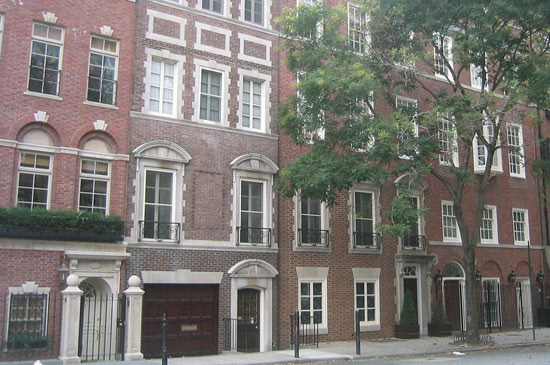
Even a single café is made to look trendy, and old brownstone homes are selling for millions. The phrase "Brooklyn vibe" didn't come from nowhere.
But honestly, what's frightening is the prevailing sentiment that prices will continue to rise. Even into 2026, there are ongoing discussions about a supply shortage.
The pace of building homes can't keep up with the influx of people.
Moreover, New York is viewed as a safe haven for global capital.
Even if stocks drop, many believe that prime Manhattan real estate will ultimately endure.
The real issue is for those who actually live there. It's not just that housing prices are high in New York; the maintenance fees are also exorbitant.
In Manhattan, condo maintenance fees can reach several thousand dollars a month. When you add property taxes, insurance, and maintenance costs, the rate at which cash flows out is truly alarming.
The costs involved in buying a home are no joke either. Legal fees, broker commissions, closing costs, and title insurance all add up.
Plus, if the price exceeds $1 million, mansion taxes apply, but the funny thing is that in New York, even a regular condo can easily exceed $1 million.
Though it's called a mansion, many times it feels just like a regular apartment.
So when looking at New York real estate, I sometimes think,
"Who will ultimately survive in this city?" Of course, New York is attractive.
There are many opportunities to make money, a rich culture, and a continuous energy. But at the same time, it's a city that constantly pushes people to compete.
Especially for Koreans, it becomes a more realistic calculation. Considering children's education, living expenses, and housing costs, it's not an easy city to make decisions in.
Still, what's fascinating is that despite all the difficulties, people keep coming to New York.
Ultimately, there is a power in this city. It's scary, expensive, and complicated, yet it strangely has a magnetic pull on people.
 KikiLook
 MayoBike
 Anova
Anova




 yentra |
 virex |
 vexon87 |
 seouljung |
 Well Done Sir |
 newyorker 101 |
 International Court |


 Moo Tang Clan |
  Mr Cleveland |
  Sugar Cream Door Bulletproof Noodles |
  novapixel |
  lavender |
  macan 08 |
  Goroke Geureoke News |
  colo colo |
  U.S. Weather Bureau News |
  Dragon Lee |
  American Food Information & Calories |
  zephyrs |
  ness 6 |
  Montgomery Mom |
  SteelOrbit |
  Puddle Puddle |
  Arizona Cowboy |
  macaronpop |
  marydock |
  peachpanda |
  U.S. College Admission Information |