

When you first encounter the American healthcare system, the first thing you might feel is, "Why is it so complicated?"
This is because it operates on a multi-layered structure, unlike Korea's large hospital-centered model, with both hospitals and private clinics functioning simultaneously. Just looking at the numbers gives you an idea of how vast this structure is. There are over 6,000 hospitals operating in the U.S., most of which are what we commonly refer to as community hospitals.
Community hospitals, simply put, are facilities that provide basic inpatient, emergency, and surgical services to local residents. They account for over 80% of all hospitals and can be further divided into three types. The largest segment consists of non-profit hospitals, with over 2,900 in operation. These hospitals do not distribute profits to shareholders but reinvest them into facility improvements and healthcare services. As a result, they are often affiliated with university hospitals and play a central role in their communities.
Next are private for-profit hospitals, which number around 1,200. As the name suggests, they are operated for investment returns. They seek both efficiency and profitability in healthcare services, leading to rapid changes in facilities and operations. Finally, there are about 900 public hospitals operated by state or local governments, which often serve as safety nets for low-income or uninsured patients.
In addition, there are specialized hospitals. Approximately 200 hospitals are operated by the federal government, including the system for veterans. There are also over 600 non-federal psychiatric hospitals specializing in mental health, along with other specialized facilities categorized separately. Just looking at hospitals, you can see that the structure is already divided into several layers.
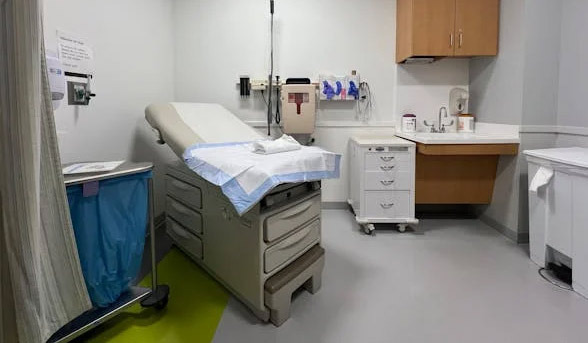
However, what you will encounter more often when using American healthcare is not hospitals but 'medical offices.' In Korean terms, this would be equivalent to local clinics or private practices. Most medical consultations in the U.S. begin at these private clinics. Outpatient care for colds, skin issues, and chronic disease management is typically handled here, with referrals to hospitals occurring only when necessary.
It is difficult to get an exact count of these medical offices, but they are estimated to number in the tens of thousands nationwide. They range from small clinics run by a single doctor to group practices with multiple specialists. This structure has led to the concept in the U.S. that "you see your primary care physician before going to the hospital" becoming a natural part of the healthcare experience.
The dental market is also significant on its own. As of 2023, the U.S. dental industry has grown to about $140 billion. Interestingly, while there are still many private dental practices, there is a growing trend of operating multiple dental offices under a Dental Service Organization (DSO). In fact, over 10% of dentists are now affiliated with such organizations. This indicates a strong trend toward corporatization and networking in healthcare.
In summary, the American healthcare system is not centered around "large hospitals" but rather operates on a structure of "clinics + hospitals + specialized institutions." While the number of hospitals may seem high, in reality, private clinics are much more densely distributed, handling primary care. Hospitals play a role at the next level, providing inpatient or specialized treatment.
If you don't understand this structure, you might end up looking for a hospital first and incurring high costs. Conversely, if you understand the structure and approach it correctly, you can receive necessary care step by step while managing costs. The American healthcare system is complex, but it is a system with clearly defined roles. Ultimately, what matters is knowing where to go first and how to navigate the different levels of care.







 neroyo |
 nivex85 |
 Old English |
 nixxon |
 LIZ Legal Information Blog |
 Weekend Movie Blog |
 Beauty, Health, Lifestyle Blog |
 coloradoman |
 Superman Cat Blog |
 Awesome Blog |
  manchester |
  constant |
  Leapfrog Move |
  vibranto |
  Tora Tora |
  yellowbutter |
  Dolly |
  US Embassy |
  NYC saladbar |
  Finding Superfoods |
  lightyear |
  song bang |
  vexomo |
  Indiana Jones |
  meloncat |
  novapixel |
  mortrix |
  Esther 1983 |
  fortbliss |
  Moscow Kim |