

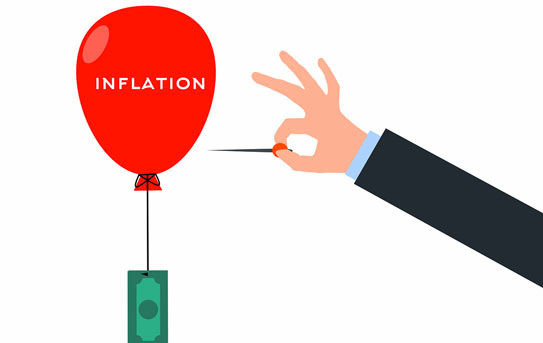
These days, when looking at the U.S. economy, the news talks about fighting inflation, while on the other hand, there is talk of economic expansion. Trump's tariff policy was essentially a political maneuver and an economic experiment.
It was said that hitting China would revive U.S. manufacturing, but in reality, the burden of tariffs has largely fallen on American consumers and businesses. Prices have risen, and costs have increased, yet factories have not significantly returned to the U.S.
However, Trump used this as a negotiating card to pressure China and Europe, successfully instilling an image of a strong leader among his supporters. Despite this, consumer spending in the U.S. did not stop, and the economy continued to grow while absorbing the shock of tariffs.
Ultimately, tariffs did not collapse the U.S. economy, and this was another example of how resilient the consumer-driven structure of the U.S. is.
As of early 2026, the Fed is clearly fighting inflation. They have rapidly raised interest rates and are now gradually lowering them. Despite imposing unprecedented tariffs since last year, consumer spending remains strong. Airline tickets are selling well, hotels are mostly fully booked, and shopping performance has not been bad. Home prices are only temporarily stabilizing in some areas before gradually rising again.
This country does not function without spending. Whether Biden or Trump is president, changes in tax policy and regulatory direction do not suddenly make Americans' spending habits frugal.
This is both a culture and a structure. In a country where one can buy today with a credit card, stopping consumption is close to a system collapse.
Thus, the Fed is stepping on the brakes to control inflation, while private consumption and corporate investment are stepping on the accelerator. It's like one side of the car is braking while the other is accelerating. This is why economic indicators are conflicting.
Employment is strong, wages are rising moderately, and corporate performance is generally good. At the same time, there are no signs of rent, insurance, tuition, or medical costs decreasing. Even if the political landscape changes, this structure does not change significantly. During election seasons, there are always calls to revive the economy, but in reality, the U.S. economy is already functioning well enough.
What is controlled by policy is the speed and direction, not whether consumption is turned on or off. Therefore, regardless of who is in power, shopping malls are crowded, travel continues, and credit card debt increases. Even while expressing fear of inflation, people do not actually close their wallets.
Currently, the U.S. is fighting inflation while simultaneously being in an economic expansion phase. This contradiction is the reality of the U.S. economy today. The media may talk about recession and crisis, but the street scenes are entirely different.
In conclusion, the essence of the U.S. economy is consumption. Regardless of whether the administration is Democratic or Republican, Americans are accustomed to spending, and as a result, the economy seems to keep running. I believe inflation is evidence that the money that has been released is still exerting its influence.





 Moscow Kim |
 coloradoman |
 Montgomery Mom |
 GOGO SING |
 Hajiwon Blog Hair Salon |
 Weekend Movie Blog |
 Beauty, Health, Lifestyle Blog |
 Superman Cat Blog |
 Awesome Blog |
  manchester |
  constant |
  Leapfrog Move |
  vibranto |
  Tora Tora |
  yellowbutter |
  Dolly |
  US Embassy |
  NYC saladbar |
  Finding Superfoods |
  lightyear |
  song bang |
  vexomo |
  Indiana Jones |
  meloncat |
  novapixel |
  mortrix |
  Esther 1983 |
  fortbliss |