

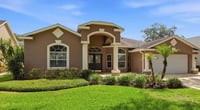
There is a case where a homeowner decided to put their house on the market after disputes with neighbors over property boundaries. After months of back-and-forth regarding tree branches extending into the neighbor's yard, they concluded that they no longer wanted to deal with such management issues. This scenario is not uncommon when considering retirement housing in Tampa.
Looking at the electricity rates in the Tampa area, TECO charges $172.30 per month for 1,000 kilowatt-hours of usage. Typical Tampa Bay households use between 1,000 and 1,200 kilowatt-hours per month, resulting in bills ranging from $130 to $156, which totals $1,560 to $1,870 annually. During the summer, it is common for cooling costs to exceed $220, with some months surpassing $300. In January 2026, the rate for 1,000 kilowatt-hours will increase by $8.88, raising the average rate to about 13 cents per kilowatt-hour.
For single-family homes, the responsibility for cooling costs, yard maintenance, roof repairs, and boundary management with neighbors falls entirely on the homeowner. In contrast, condos and townhomes require a monthly HOA fee, which allows the building management office to handle external maintenance. Standard single-family home communities in Tampa have monthly fees ranging from $60 to $180, while those with extensive landscaping and amenities can reach $250 to $450. Condos and townhomes typically have much higher monthly fees, ranging from $400 to $650, as condo buildings must maintain a master insurance policy that covers the entire exterior, which is reflected in the management fees.
In terms of home prices, the median price for single-family homes in Florida is $414,000, while condos and townhomes are at $310,000, suggesting a similar trend in the Tampa area. It is important to note that these figures are based on state-wide data, not just Tampa.
- Single-family homes - lower management fees but direct responsibility for boundary and yard maintenance
- Condos and townhomes - lower purchase prices but management fees that are two to four times higher than single-family homes
- Active senior communities - management offices handle maintenance and conflict resolution
Property taxes in Hillsborough County have a total millage rate of about 15.73 mills, of which 6.50 mills are allocated for school taxes. The Homestead Exemption allows for a deduction of $51,411 as of 2026, and low-income seniors over 65 can apply for an additional senior exemption of up to $50,000. However, this exemption only applies in Tampa, Temple Terrace, and unincorporated areas, and is not available in Plant City.
Active senior communities are worth considering as they can reduce friction with neighbors. Most management offices standardize rules regarding landscaping boundaries and noise, resulting in fewer individual conflicts that are common in single-family home communities. If you consider that conflict resolution services are included in the management fees, it becomes difficult to compare costs simply. If moving to Tampa from another state, it is also important to check insurance rates for hurricane season, as single-family homes may vary based on roof conditions, while condos may change annually depending on the renewal of the building's master insurance policy. A thorough comparison of total costs, including management fees, insurance, and property taxes, is necessary to understand the actual financial burden.
When the numbers are laid out side by side, the answers become relatively clear. If neighborhood disputes or yard maintenance are burdensome, moving to a condo or active senior community, even with management fees, can provide peace of mind. Conversely, if rising management fees are a concern, maintaining a single-family home while outsourcing only necessary tasks is a viable compromise.
The fee and tax information in this article is based on the time of publication and may vary by location and county. It is advisable to consult real estate and tax professionals before making any agreements. This article does not constitute investment or legal advice.
 blueseavibemaker1935
 TofuGymKing







 Sugar Cream Door Bulletproof Noodles |
 urbanmint |
 |
| 
 Premium Gas Camp |
 CA Real Estate |
 Yes Dorian |
 Tamfa Fan |
  Kyo Sho |

 Splendid Mission |
  horse |
  moodansa 77 |
  zymit |
  maplefox |
  Fun Flex Life |
  hopeful |
  Reeno |
  Coastal city |
  meonetoo |
  Winter bear |
  Peach Jam Eating Laughter |
  Nando Raldo |
  American Man in a Mask |
  wendra |
  silver |
  bada2002 |
  horizon |
  Nanana Nanana Nanana |
  victoria jung |
  Kkikki Ppappa Shout Out Loud |