

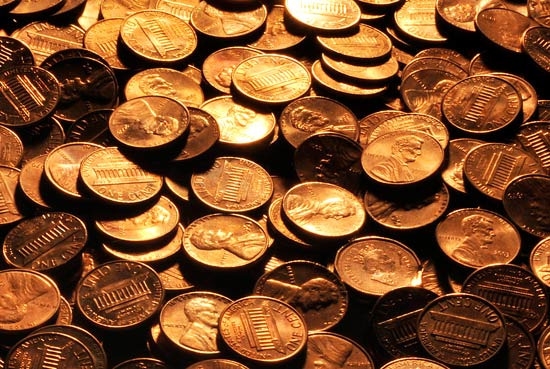
On November 12, 2025, the penny, a 1-cent coin from America, passed away after living for 232 years.
In fact, many Americans have long forgotten about the penny. While it still rolls around under vending machines or in the gaps of car consoles, it has become a symbol of "it's fine to have it, but it's fine not to have it" and is rarely used in real life. So, is there really no problem if the penny, which has faded so much, is not produced anymore? In fact, not producing it would be much more beneficial for the country.
The first reason is very clear. The production cost is higher than its value. The U.S. Mint has been operating at a loss for a long time due to penny production. The value of one coin is 1 cent, but it has often cost more than 2 cents to make one. Does that make sense? It's like spending 2 dollars to make something that costs 1 dollar. This is not a matter that can be covered by sentiment or tradition; it is the epitome of inefficiency.
Second, it is hardly used in real life. People are already annoyed by receiving coins. At the checkout, most people say, "I don't need pennies, please put them in the donation box," and when they do get coins, they often throw them at home and eventually throw them away. Would consumers suffer if there were no pennies? The likelihood of that is also very low. Many stores are already operating mainly on digital payments, and the proportion of cash payments continues to decrease. Moreover, countries like China and Sweden are moving towards cashless societies, so there is no reason for America to cling to the 1-cent coin and feel regret.
The third reason is even funnier; it is the fear that prices will skyrocket if the penny disappears. People worry that rounding will cause consumers to lose out, but studies show that consumer harm is almost nonexistent. In fact, if rounding rules are applied neutrally, both stores and consumers do not feel much difference. Furthermore, most payments are made by card, and rounding does not apply to electronic payments.
So why has it been maintained until now? The reason is simple. Tradition, sentiment, and symbolism. The emotional logic is that "it's a historical coin with Lincoln's face on it, and if we get rid of it, it feels like something of America's soul is disappearing." But to speak coldly, this symbolism has long lost its power.
However, even if penny production is halted, the pennies already in circulation are still considered 'legal tender,' so banks generally accept deposits or exchanges. However, these days, attitudes vary slightly from branch to branch; places with coin counting machines accept them without issue, but smaller branches that require manual processing may be reluctant and impose limits.
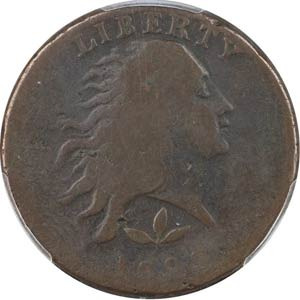
So, is there any collectible value?
Looking on eBay, the first penny from 1973 is trading from $3,000 to several thousand dollars. However, most of the pennies currently in use are said to have little value in the future.
There are already billions in circulation, and it is difficult to expect more than 1 cent in value for regular pennies.
However, exceptions include the 1909-S VDB, 1914-D, 1922 No D, 1955 double die, and recent errors or famous error coins, which are likely to continue to carry premiums in the collector's market.
Well, later on, high-grade pennies rated as "Mint State" may gradually increase in value due to their rarity, but... to invest, you would have to collect too many pennies (100 dollars would be ten thousand coins, haha), so I have no intention of starting.







 lightyear |
 Moscow Kim |
 coloradoman |
 Montgomery Mom |
 GOGO SING |
 Weekend Movie Blog |
 Beauty, Health, Lifestyle Blog |
 Superman Cat Blog |
 novapixel |
  US Embassy |
  Korean Mom |
  My NYC |
  moo moo |
  Mr Oh |
  forevergee |
  festival |
  manchester |
  constant |
  Leapfrog Move |
  vibranto |
  Tora Tora |
  yellowbutter |
  Dolly |
  NYC saladbar |
  Finding Superfoods |
  song bang |
  vexomo |
  Indiana Jones |