

Last month, a client who visited the consultation office was worried that with retirement approaching and their house being their only asset, if they used it as collateral for living expenses, there would be nothing left to pass on to their children. Having worked in this field for a long time, I have met many people with similar concerns, and it is essential to provide accurate information in response to such questions.
First, let's clarify what this product is. A reverse mortgage is a loan product for homeowners aged 62 and older that allows them to borrow against the equity of their home. Unlike a traditional mortgage, where payments are made monthly, in a reverse mortgage, the borrower receives funds in a lump sum, monthly payments, or a line of credit from the lender. In simple terms, it allows homeowners to access the value they have built up in their home as cash, with the principal and interest repaid later when the home is sold, the owner passes away, or the owner no longer resides in the home. The most common product is the HECM (Home Equity Conversion Mortgage), which is the only type of reverse mortgage insured by the Federal Housing Administration (FHA).
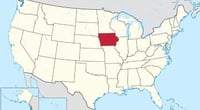
Specifically looking at the situation in Iowa City, as of June 30, 2026, the average home value is $305,697, which is a 4.4 percent increase from a year ago. For a home of this value, there may be significant equity remaining after settling any existing mortgage balance, indicating that there is potential to utilize that equity. However, property tax obligations must also be considered, as Iowa's average effective property tax rate is about 1.3 percent, which is higher than the national average. This figure is important because even after obtaining a reverse mortgage, the homeowner must continue to pay property taxes and homeowners insurance. Failing to manage these payments can lead to a risk of default.
To summarize the advantages, securing cash flow for medical or living expenses without monthly repayment obligations is significant. Additionally, HECM is a non-recourse loan structure, meaning that if the home value decreases below the loan balance, the heirs are not required to pay the difference thanks to FHA insurance.
However, the concern that the client initially had about reducing the assets passed on to their children is indeed valid. As the loan is drawn upon, the equity in the home decreases over time, which in turn reduces the inheritance. Furthermore, the origination fees and mortgage insurance premiums (MIP) add to the initial costs, which are definitely higher than those of a traditional mortgage. MIP is known to be around 2 percent initially, with an annual rate of about 0.5 percent.
There are three main factors to check in order. First, whether the residency requirement is met. Second, whether the existing mortgage balance can be paid off with the reverse mortgage loan amount. Third, whether the homeowner can continue to pay property taxes and insurance premiums, passing a financial capability assessment. Notably, Iowa has a population of about 17.8 percent aged 65 and older, indicating a steadily aging population, so the demand for such consultations is expected to increase in the future.
Before deciding on this product, it is also necessary to consider alternatives. Options include a traditional home equity line of credit (HELOC) that only requires monthly interest payments or downsizing by moving to a smaller home. If choosing the line of credit option for a reverse mortgage, the unused credit limit increases over time, making it worth considering if immediate funds are not needed. However, it is essential to remember that this method ultimately depletes the equity in the home.
Before applying for HECM, it is mandatory to undergo counseling from a HUD-approved counseling agency. Since there are actual scams related to reverse mortgages targeting the elderly, it is advised not to rush into decisions without proper counseling and discussions with family. This article does not constitute investment or legal advice, and it is recommended to consult with a professional before entering into any contracts.
 AngelicBus
 RapidTrail98









 urbanmint |
 |
| 
 Premium Gas Camp |
 CA Real Estate |
 Iowa Egen Aunt |
 pet dog |
 U.S. Weather Bureau News |
  horizon |
  Nanana Nanana Nanana |
  victoria jung |
  Kkikki Ppappa Shout Out Loud |
  Lululala |
  Toaster Pizza Magic Show |
  nortrix |
  Mau Nui |
  novapixel |
  fixed |
  AL ALASKA |
  amola |
  History Repeats Itself |
  Doori Ark |
  Rainbow Bridge to the Sky |
  Sunny Fullerton |
  GOGO SING |