

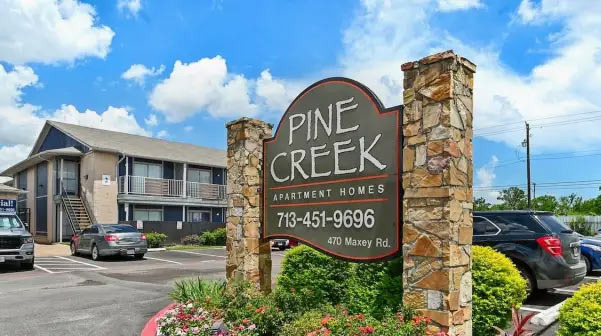
When Houston comes up in conversation, there's a common question: "Isn't it hot?" Yes, it is. And humid.
First-time visitors in the summer often step out of the airport and think, "Is this a sauna?" Moreover, if you enter the wrong neighborhood, there are definitely areas with safety concerns.
However, despite this, I believe Houston remains a very attractive option when considering the cost of living in a major city in the U.S.
As one of the four largest cities in the U.S., Houston has a significantly lower cost of living compared to New York, Los Angeles, and Chicago.
In particular, the difference in housing costs is substantial. While it's common to find 1-bedroom apartments in Manhattan or the Westside of Los Angeles for over $2,500 to $4,000 a month, you can find decent apartments in Houston for about half that price.
As of 2026, the average rent for a 1-bedroom apartment in the Houston metropolitan area is approximately $1,200 to $1,600 per month.
Of course, there are variations by area. Popular neighborhoods like Downtown, Midtown, and Montrose can see rents rise to $1,600 to $2,500 or more, but even then, it's still much more affordable compared to New York or San Francisco.
Midtown and Montrose are particularly favored by young professionals.
With restaurants, cafes, bars, and performance venues nearby, it's convenient to live here on foot. While Houston is known as a car city, this area allows for some walkability.
The main reason Houston's rents are relatively low is due to the Texas state and local governments' "supply expansion-focused policies."
Unlike California or New York, where development regulations are strict, the environment here allows for a significant amount of housing construction.
First, Texas has relatively loose land use regulations. Notably, Houston is one of the few major U.S. cities without a traditional comprehensive zoning system. Developers can relatively easily supply apartments and homes according to market demand.
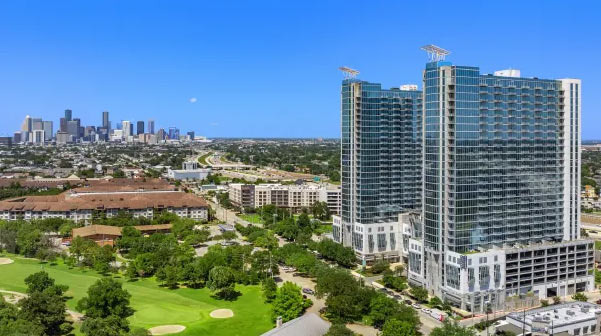
Additionally, Texas has ample land and allows for suburban expansion.
As the population grows, new housing developments and apartments can continuously be built on the outskirts, preventing severe supply shortages.
In contrast, California often faces restrictions on new housing supply due to environmental regulations, permitting processes, and resident opposition (NIMBY).
The state government actively encourages business attraction and population influx while maintaining development-friendly policies.
In recent years, tens of thousands of new apartments have been supplied in the Houston metropolitan area, which has helped to somewhat curb rent increases.
The areas preferred by the Korean community are somewhat different. Sugar Land is popular among families due to its excellent school district and stable living environment.
For a 1-bedroom, rents are around $1,200 to $1,500, and the safety and amenities are quite good.
Katy is also a consistently growing popular area. With many new apartment developments and relatively affordable rents, it has attracted many young families. A 1-bedroom typically costs around $1,100 to $1,400.
If you're looking for a more spacious environment, The Woodlands is also a good choice.
With plenty of trees and a planned city layout, it offers high living satisfaction. However, rents are somewhat higher than in downtown Houston, expected to be around $1,400 to $2,000.
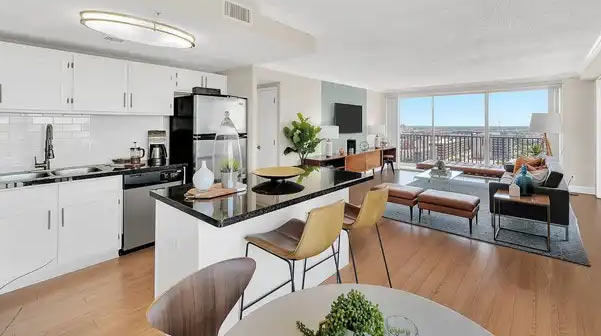
Of course, there are downsides. The biggest drawback is the weather. In the summer, the perceived temperature often exceeds 40 degrees Celsius, and with high humidity, outdoor activities can be challenging.
Additionally, during hurricane season, heavy rain and flooding risks must be considered.
In fact, when looking for a home in Houston, it's common to check not only the apartment facilities but also the flood history and drainage conditions.
Safety also varies greatly by area. Houston is a very large city, and good neighborhoods can be just a few blocks away from less desirable ones.
Therefore, newcomers should consider crime statistics and the surrounding environment rather than just the rent when signing a lease.
Nevertheless, Houston is one of the few places in the U.S. where you can enjoy the infrastructure of a major city at a relatively low cost.
With world-class medical facilities, airports, diverse races and cultures, and a rich job market, housing costs are still much lower than in New York or California cities.
Ultimately, Houston is not a perfect city. It is hot and humid, and choosing the right neighborhood is important.
However, when considering the cost burden while working or doing business in the U.S., it is a place that best fits the description of a "cost-effective major city."
The fact that rent is half that of New York while still enjoying most of the benefits offered by a major city is still a strong competitive advantage for Houston.
 MedReggae
 RedCapeCha





 neapolis |
 moo moo |
 ultron78 |
 garlic bread |
 Sugar Cream Door Bulletproof Noodles |
 Things to know |
 Korea Dan Kim |
 California Information News |
 Shintongbangtong Shin Naerin James Park |
  Flix Flex TV |
  Key spots |
  berrypup |
  Yo Lock Me Up |
  Oh my Julia |
  bibigoo |
  silents |
  Team Korea Psychoanalysis Research |
  North Dakota Ragdoll Cat Owner |
  El Dorado |
  Cap Com |
  Trot King News |
  Blondee |
  some fame |
  rapidfire |
  walnutbo |
  Shinbaram Dr. Blog |
  breaddough |
  Michigan Enthusiast |
  Only Dentalbay |
  postcard |