

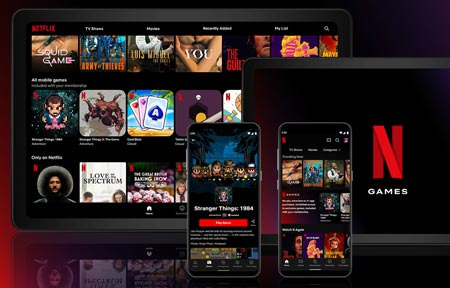
Netflix is now the most popular streaming service in the world, but the company's development process, which faced many challenges in the beginning, is fascinating.
Founded in 1997 by Reed Hastings and Marc Randolph in California, Netflix initially was not a rental store with physical locations. Instead, customers would request DVDs on the Netflix website, which would be delivered by mail, and after watching, they would return them via the mailbox. This was an innovative service at the time because traditional video rental stores were always a hassle due to late fees and limited operating hours.
Netflix's rental service had no late fees and allowed unlimited rentals for a monthly fee. This was one of the key reasons for its popularity. Without the pressure to return within a specific period like traditional rental stores, customers could enjoy movies much more freely. Moreover, the mail rental and return system was very convenient and efficient in a vast country like the United States. Instead of the hassle of going to a rental store, customers could select movies with just a few clicks from home and wait for them to arrive by mail.
At this time, Netflix's red envelope and logo became iconic. The image of "red envelope = Netflix" is still remembered by many people today. The convenience people felt while selecting DVDs and creating order lists opened a new chapter in movie rentals and hinted at Netflix's growth potential.
Netflix expanded the choices of movies available and allowed customers to receive their desired films without the hassle of going to a rental store. Eventually, Netflix successfully established itself in the online DVD rental service and later created the Netflix we know today through another innovation: streaming services. From this point on, Netflix officially entered the online streaming market, marking an innovative turning point that would change the world.
Netflix's growth rate is incredibly fast. In the early 2010s, improvements in internet speed and the proliferation of smartphones and smart TVs led to rapid growth of Netflix's streaming service worldwide. Particularly, the original content that began in 2013 was the key to Netflix's rise as a global entertainment giant. Original series like "House of Cards" and "Orange Is the New Black" received enthusiastic responses from both the public and critics, making Netflix's original content a significant competitive advantage.
Currently, Netflix's scale is undoubtedly enormous. It provides services in over 190 countries, and its subscriber count has surpassed 200 million. As of 2023, Netflix's revenue is estimated to be around $31 billion, with a net profit of about $5.6 billion. Netflix has also proven its influence by winning numerous Academy Awards and Emmys. It continues to maintain the quality of its content by presenting various high-quality movies, dramas, and documentaries every year.
One interesting story about Netflix is that the term "Netflix effect" emerged, indicating how it changed people's viewing patterns. The culture of binge-watching spread through Netflix. The method of releasing an entire season at once completely overturned the traditional TV model, which was often trapped in cliffhangers. This led to the formation of a new culture where people would watch Netflix all day long, significantly shaking the TV industry and broadcasting models.
Another interesting fact is that one of Netflix's earliest investors was the legendary investor Ben Horowitz, known as 'Watson.' He made significant profits from his early investment in Netflix in 2007.
Netflix is still a growing company that significantly impacts global culture and content consumption. In the past, people had to go to theaters to watch movies and be home at specific times to watch TV shows, but now we live in an era where we can easily watch the content we want anytime, anywhere.
The Success of 'Squid Game' on Netflix

'Squid Game' played a crucial role in Netflix's significant success in the global market. This drama was released on Netflix on September 17, 2021, in over 190 countries and quickly gained explosive popularity, becoming a global phenomenon.
First, the story and themes were very unique and fresh. The premise of 456 economically struggling individuals participating in deadly games for a massive cash prize was not just a simple survival game. It contained messages criticizing social inequality, human nature, and extreme competition in capitalist society. This deep meaning and social message resonated with many people and captured the public's heart.
The success of 'Squid Game' on Netflix was truly explosive. Within just four weeks of its release, it was watched by 142 million households, setting a record for the most viewers for a non-English content in Netflix's history. This record has been difficult for other content to catch up to. As the popularity of 'Squid Game' continued worldwide, many countries saw parodies and memes related to the drama. In particular, the iconic game costumes and massive game scenes from "Squid Game" were reproduced in social media and various cultural content, continuing to be referenced.
Additionally, the drama served as a catalyst for the globalization of Korean content. The success of "Squid Game" paved the way for other Korean dramas like "Now, Our School Is," "My Name," and "Hell" to gain international attention on global streaming platforms like Netflix. Netflix expanded its investment and interest in Korean content through "Squid Game," further strengthening its position in the global entertainment market.
The success of the drama did not stop at merely increasing Netflix's subscriber count. Korean director Hwang Dong-hyuk gained recognition at various international awards, including the Emmys, and the lead actor Lee Jung-jae became an international star. Through this successful outcome, 'Squid Game' remains a representative case showing how Netflix can grow globally through its content.
Ultimately, 'Squid Game' was a significant milestone in Netflix's successful implementation of its global content strategy and a work that had a profound impact on the world, including Korea, demonstrating that Netflix opened new horizons related to content.






 HAWAII Korean Church News |
 Gorama Round |
 LIZ Legal Information Blog |
 Egg Steamed Pot |
 novapixel |
 Things to know |
 U.S. Weather Bureau News |
 SEVEN SEVEN |
 Texas Real Estate Blog |
 Premium Gas Camp |
  round1 |
  Way to easy |
  musicque |
  road98 |
  Churros Train Conductor |
  gleeful |
  Burbank Lee |
  Olivia's Blog |
  Bushing Around Life |
  Active |
  Cherokee Rose |
  Kor. Master |
  Holey Moley |
  Conflite Teacher |
  Hodong Prince Over Flex |
  Mist inn |
  citrus pop |
  Onion Ring |
  phoenixia |
  viewtop |