

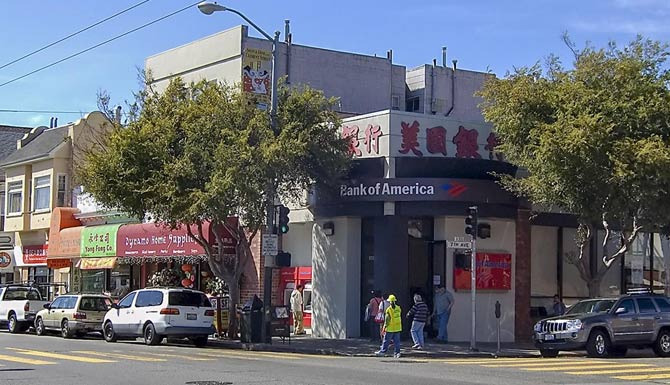
Many people are familiar with San Francisco's Chinatown, but few know how it began.
The establishment of Chinatown in this area started with Cantonese immigrants who crossed the Pacific during the Gold Rush in the 1850s. According to my research, the first record of Chinese immigrants dates back to 1848. The first record of Korean immigrants to the U.S. is from 1902, meaning they arrived over half a century later.
The Chinese who settled here in the mid-19th century endured daily life as laborers on construction sites and railroads, while also establishing social clubs, community centers, temples, and markets. Although it was devastated by the 1906 earthquake, it was rebuilt with a tourist concept featuring Oriental-style eaves and lanterns, laying the foundation for Chinatown.
Grant Avenue was designed like a promenade, and Stockton Street became a market with boxes of fish and vegetables stacked high. The old SRO buildings, known as single-room occupancy, housed elderly residents at low rents, while sewing factories operated in the basements, and the alleys were filled with shops selling ritual items, herbs, pastries, and noodle dishes.
However, as immigrants from mainland China began to arrive in larger numbers, the street language shifted from Cantonese to a mix of Mandarin, and signs began to coexist in traditional and simplified characters. The dining scene also changed, with shops opening that featured regional specialties like spicy hot pot, mala tang, Xi'an-style cold noodles, and Chongqing-style noodle dishes.
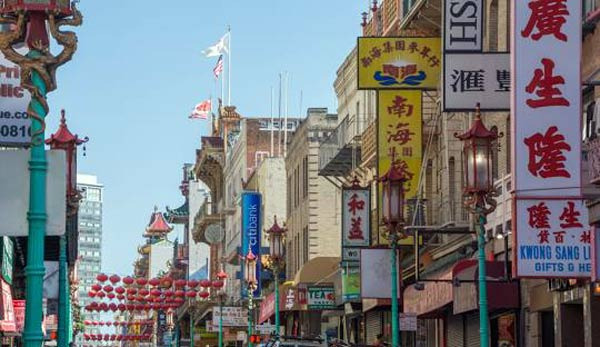
The pandemic in 2020 temporarily froze the alleys of Chinatown, but experiments like outdoor tables, partitions, and weekend pedestrian-only streets brought the alley culture outside, creating a new landscape. Young businesses began to move into the spaces of closed shops, changing menus and interiors.
However, during that time, struggling tenants faced pressure from rent and living costs, and the commercial area began to share customers with suburban Chinatowns in Richmond, Sunset, Millbrae, and San Mateo, leading to a decline in the presence of traditional herbal medicine shops and ritual supply stores.
That said, the roots of Chinatown have not been shaken. Associations and hometown organizations still hang lanterns during festivals, perform lion dances, and drum, serving as a bridge between generations. Children's Chinese language schools and senior meal programs help sustain the community.
Economically, the focus has shifted from cheap labor-intensive work to small business branding, store experience design, and content creation. On platforms like YouTube and TikTok, videos of cooking a plate of fried noodles garner hundreds of thousands of views, attracting customers.
Since 2010, the influx of immigrants from the mainland has ultimately turned Chinatown into a crossroads of "tourist destination and residential neighborhood." During the day, tourists take photos with souvenirs and sweet coconut buns, while in the evening, local workers unwind with spicy flavors, and at night, tenants open their narrow windows to hang freshly ironed shirts, wrapping up their day.
In the future, Chinatown will continue to change with new signs hanging under the old lanterns, preserving its roots while adapting its branches, which is precisely how the city of San Francisco has always thrived.






 ultron78 |
 garlic bread |
 Sugar Cream Door Bulletproof Noodles |
 urbanmint |
 |
| 
 Peter Pan Pet |
 Nuchuhan Exploration BLOG |

 Strawberry Pancake Warrior |
  NYC saladbar |
  Finding Superfoods |
  lightyear |
  song bang |
  vexomo |
  Indiana Jones |
  meloncat |
  novapixel |
  mortrix |
  Esther 1983 |
  fortbliss |
  Moscow Kim |
  My Two Way |
  toastyfox |
  FLORIDA Acus |
  tracker |
  TONTON COFFEE |
  sunrise |
  uplifted |